Sheila returned to Baluchistan, via Dubai, where she stayed with Mohammed Matar, her old blind friend and chest partner from Zanzibar days. On the brief transit stop she managed to see his magnificent museum ‘crammed full of every possible item – chests, carpets, guns, jewellery, clothes, shells – almost anything you could expect to see in any place around the Indian Ocean. It was astonishing and it was quite clear he was very proud of it.’ Amazing really – as he was totally blind. I now understand from his grandson that on his grandmother’s death the collection was distributed among the remaining sons.
After a few days in Karachi, where I had put her in touch with Heinemann’s Pakistani agent, Zia Hussein (who became a great friend), she flew off to Turbat to meet Valeria, Guiseppe, Angela and Francesca where they were ensconced in the Kech Mahal guest house. There they were reunited with ‘The Captain’, Rashid, who gave them a bottle of whisky. For a dry country, whisky features a lot in the diaries – always doled out by the men, and extraordinarily to the female members of the party. Obviously not considered women by Baluchi standards.
Capt Rashid whose English ‘is extremely hard to follow as it is blurred, guttural and extremely peculiar’ told them that it was he who had shot and killed Said bin Taimur, Sultan Qaboos’s father, at the palace coup which began the modernisation of Oman under the reign of the latter. The Baluchis form the elite fighters in the Omani army – notwithstanding, that is quite a claim to fame!

In Turbat, they continued where they had left off – visiting the bazaars, seeing old friends, delivering photographs, having endless cups of hot sweet tea, meeting the ladies, being gifted several Baluchi-style shalwar kameez. Ugo and Francesca had de-camped to Kalatuk, where they were staying with their old friends from 1987, Munir Khan and his family, absorbing the local way-of-life.
Tump & Mand
Her first major outing was to Tump and Mand, nearby villages. Sheila had been introduced to Zubeida, who had started a school for girls, first in her home but, when the demand outstripped her space, the government eventually built them a school which took the students up to matriculation. Quite an achievement in a small Baluchi village. Zubeida and mum were to remain great friends, with Zubeida even visiting England for medical treatment (her father was wealthy, having worked in intelligence in Kuwait).
Zubeida drove her to the Iran border, where petrol was smuggled across and provided a great local livelihood. ‘On the way back a vehicle was most annoyingly hanging back behind, its lights shining on us. Eventually we stopped to let him pass. Oh he said, I thought you were government and didn’t want to pass. I suppose he was smuggling and didn’t want to get caught’. Zubeida also helped women drug addicts in her area, a truly modern woman.
According to a conversation she had with some retired Omani servicemen, ‘they both agreed there was no work or anything for them to do in Makran, so why not drink, smuggle a bit and make some money. They were convinced they’d go to hell anyway’.
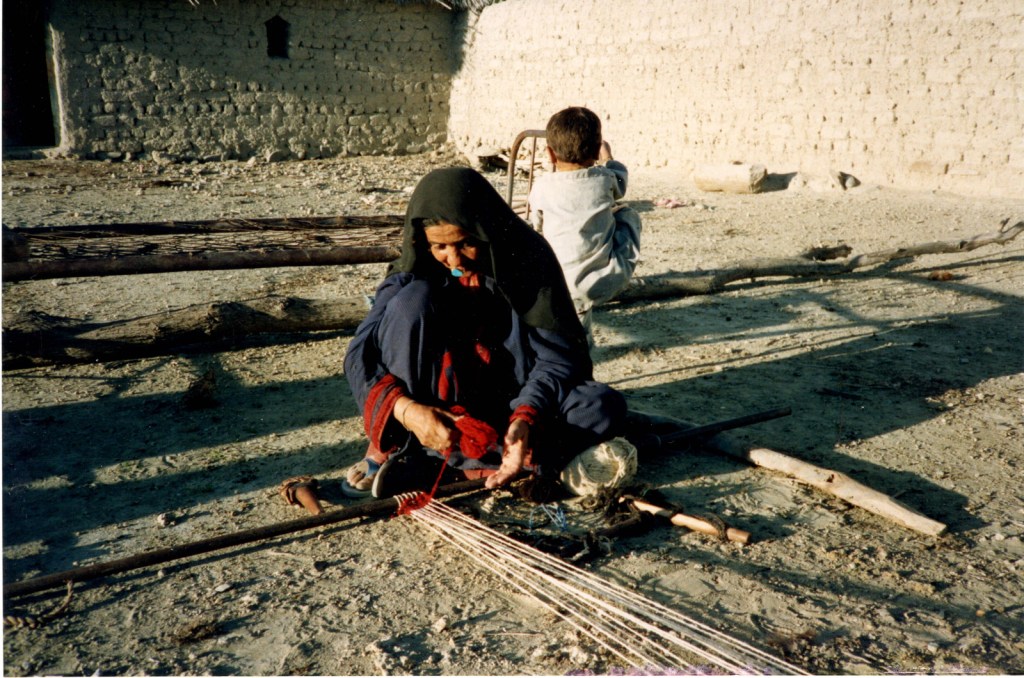
A highlight of this trip were two wedding invitations.
The first was to a wedding in Dash Khodan, Capt. Rashid’s home village. Sheila set off on her own as the the others were busy, accompanied by the ubiquitous levies, The car was crammed full of various relatives, food and two ‘sad’ chickens, Sheila squashed in the back. At the Captain’s house, in addition to rather upmarket furnishings, were numerous photographs of Rashid shaking hands with Qaboos, so his story of shooting Qaboos’s father, might well be true .
The wedding celebrations involved several vehicles full of women visiting the groom’s village – a sort of raiding party ostensibly to deliver henna and ghee and in return be given money and cups of tea: mum says she must have had at least 12 that day. They were also fed a huge meal. It was quite an adventure as there was no road ‘but the Suzuki wove in and out of tamarisk trees, over raised banks and ridged fields…at times the sand was so deep we stalled…a real moon landscape, dusty and desolate, with mountains on the far horizon all around’ . To reach the village they had to ford a river, down a 45 degree precipice.
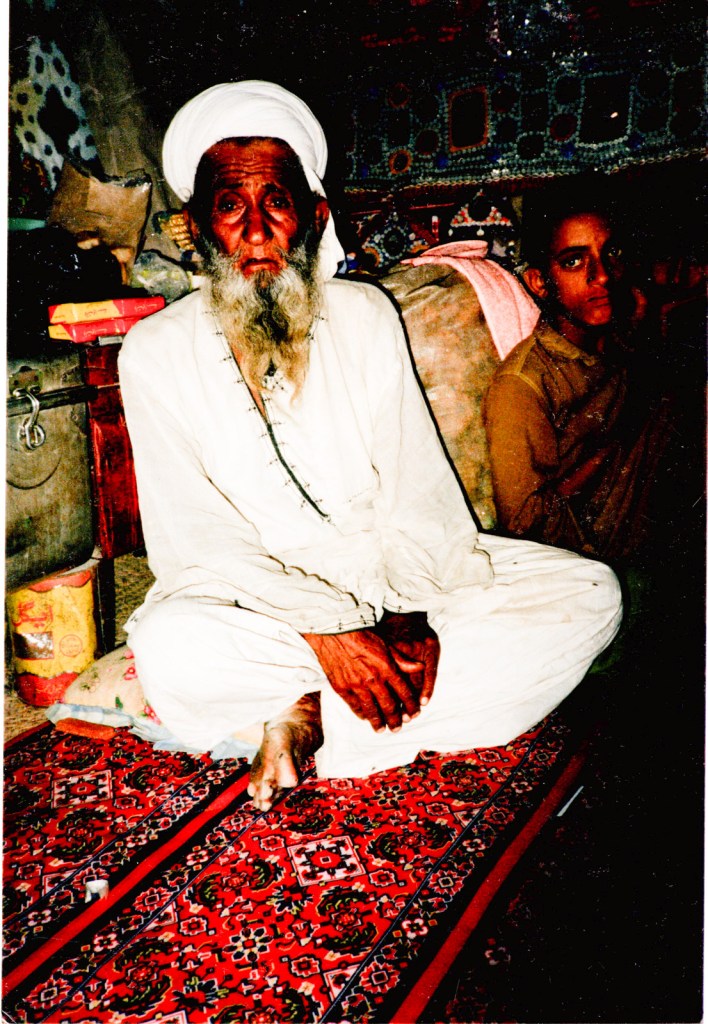
In preparation for the final day, Sheila’s hands were henna’d. However, going to this wedding on her own, staying with a family who spoke no English, was really an ordeal, as she recorded in her diary: ’14 + hours of constant attention, understanding virtually nothing and being shouted at in consequence, is very wearing…somehow without someone to do the even the smallest interpreting you begin to feel imprisoned, and despite reasoning that you aren’t, the sort of panic you get when stuck in a lift comes on.’ Poor mum! Later, she was rescued and given so many gifts, she was embarrassed; she says ‘I began to feel ashamed of my hemmed-in feelings when everyone is so kind’.
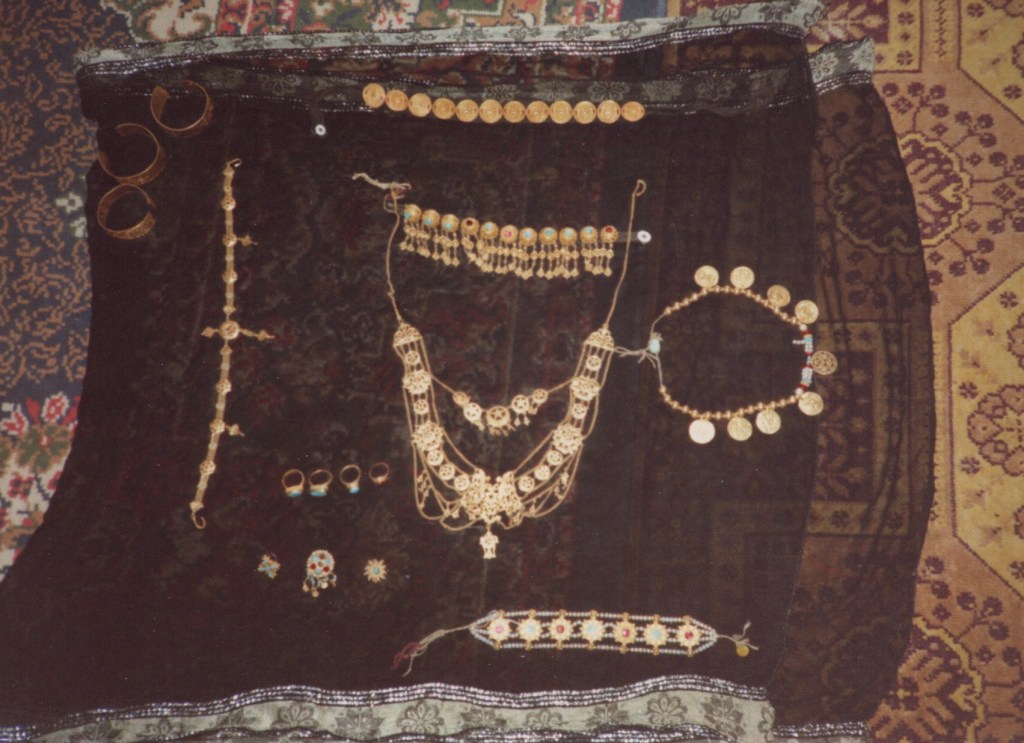
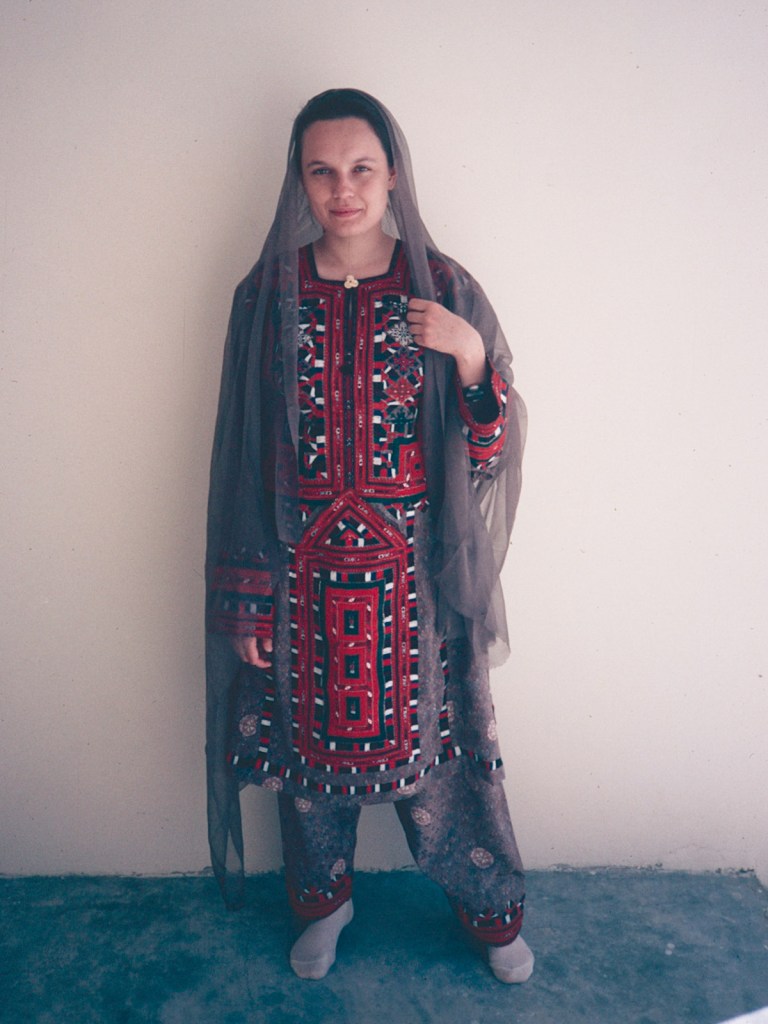
The second wedding was in Hosht Kalat, a village they knew well and they were to stay with their old friend Munir Shah and his family – Inayat the son, who two years ago was a boy, was now a ‘strapping young man, with a moustache and father of a baby’. She went with Francesca who had borrowed some beautiful Baluchi suits – Sheila had her own – and posed for photos, complete with jewellery. Ugo was in the men’s group.
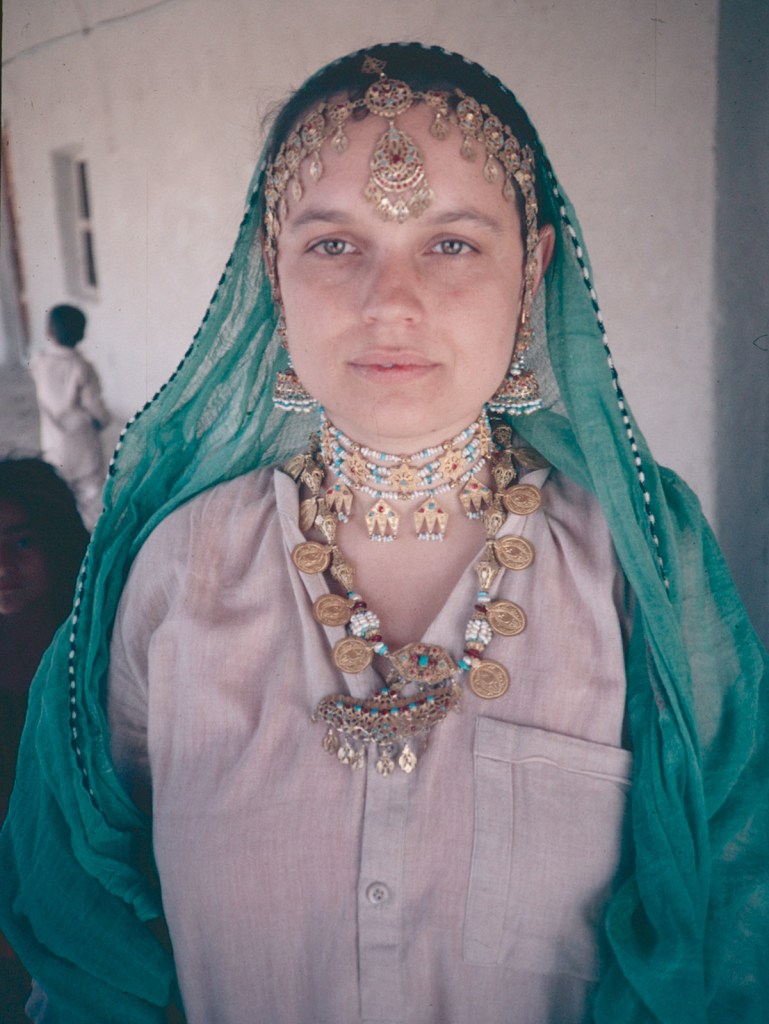
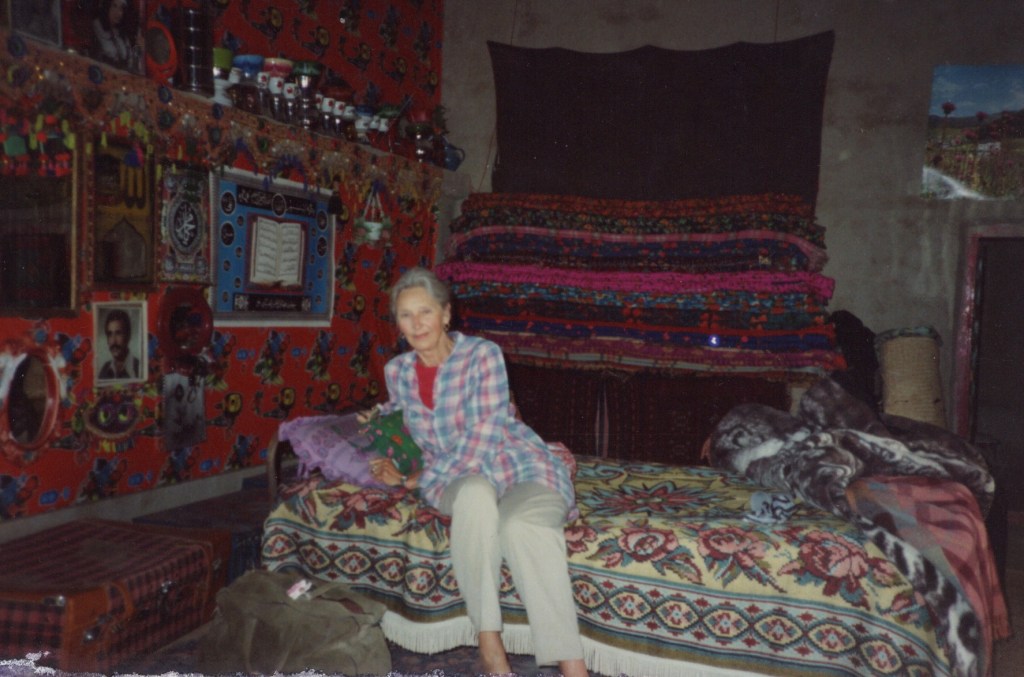
They set off to visit the bride in a group of four to five vehicles ‘above a darkened moon sat in a bright crescent and as we left a startling volley of shots announced our departure…the road wound past Ginna…through a sleeping village, past a huge tractor and bulldozers until at last Hosht Kalat was reached…more shots fired and even some fireworks’. More ‘deafening volleys of the kalashnikovs accompanied the departure of the bridegroom for the bride’s house…to the wedding room, crammed with women and children who had been admiring the bride and groom sitting side by side but very much apart on a magnificently draped bed, curtains bright red with gold embossing, heaps of thick round bolsters covered with brightly coloured cloths and trimmed with tinsel.’ They stayed overnight and attended more ceremonies – including a return to the wedding room, where the bride and groom were still sitting on the bed in the same position! ‘One hopes they were left alone at some period during the night’.
As ever there were huge rows between the team members, who had now risen to nine; and there was a rival archaeological group from Quetta (American-educated) which caused much anxiety for Valeria, as ‘there are several countries trying to get a foot into Pakistan, Makran in partricular’. Not helped by internal rivalries between Sindhis (outsiders and sometimes even Christian, like the unpopular Commissioner) and local Baluchis, very fierce and independent.
In fact later, the group came across two rather scary incidents: the first when they were told by the Captain about ‘a certain Malik who had been robbing and kidnapping and shooting’ and, later, Valeria overheard the very sophisticated DC ‘quietly instructing’ a levy to have Malik killed ‘and that was to be the end of the bloodshed in this affair. To let him be would mean more deaths so he had to die himself. She said the calm and charming DC seemed unbelievable in his role as executioner, but apparently this is how it’s done in Baluchistan and everyone accepts the justice of it.’
The second was in a house in the remote oasis village of Buleda ‘where people are lawless and have a passion for guns…yesterday a woman produced five rifles and shotguns out of a wardrobe, all carefully wrapped up. I expressed horror but my guide explained that if someone did you a bad turn, you had to kill him.’
Pasni
A new place, SE from Turbot, on the coast. They were to stay in the German contractor’s camp – they were building a port there – in converted shipping containers, which were remarkably comfortable and luxurious, with ‘a proper loo’. They all enjoyed a change to European food – spaghetti, cabbage, caraway seeds on everything, fruit salad and ice cream.
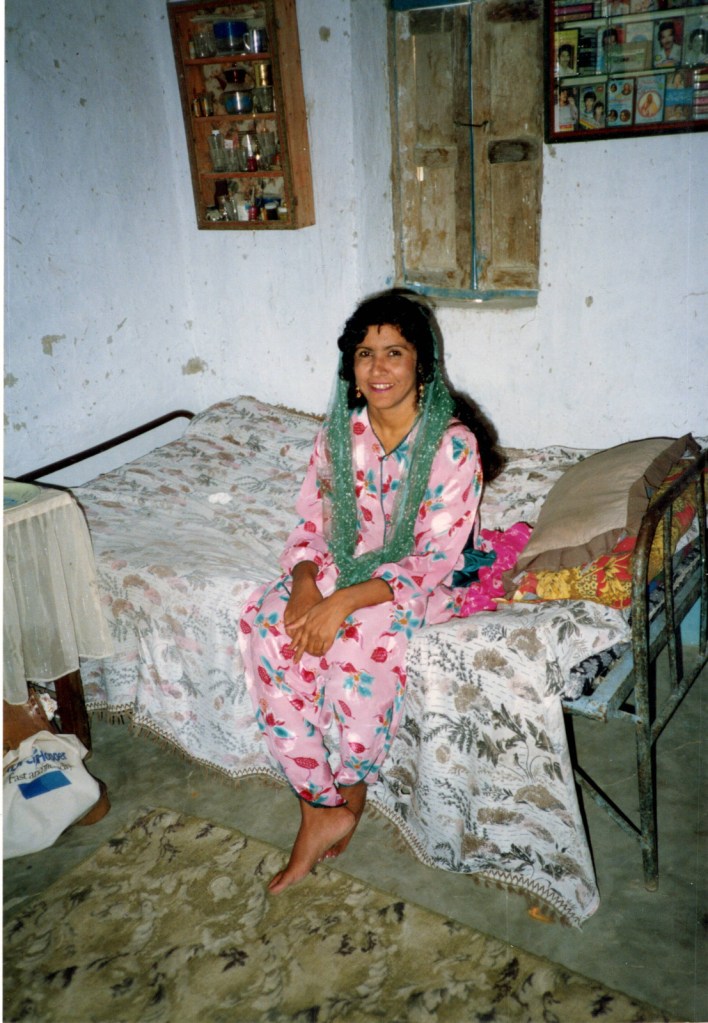
Pasni itself is a jumble of houses in a topsy turvy array, separated by narrow lanes, which somehow big pick-ups manage to squeeze through…I don’t know about the loos, I suppose they are either emptied into pits or as elsewhere in Baluchistan are raised above ground…whatever, there’s quite a nasty smell of drains everywhere.
A note here about loos – all were long drop/squatters and staying in remote villages, in people’s house, could be quite challenging. Chapeau to mum and the rest of the team, especially with their constant upset tums, for surviving them for weeks on end. It must’ve been challenging – as I remember from travelling to India overland in 1976, or more recently in Bhutan, China etc. Not for the fainthearted.
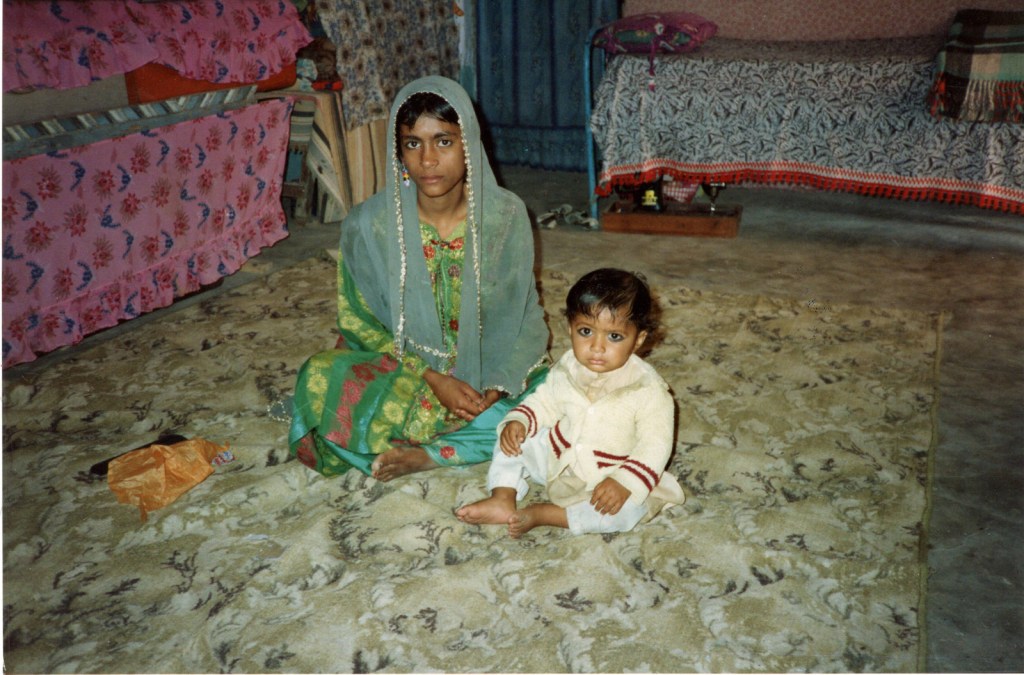
Most of the group spent time at the Muslim cemetery in Pasni, but Sheila did her own thing. On the first night she was awoken by great banging on the door and shouts in Swahili, emanating from the Kenya-born German site-manager who was thrilled to find a fellow East African!
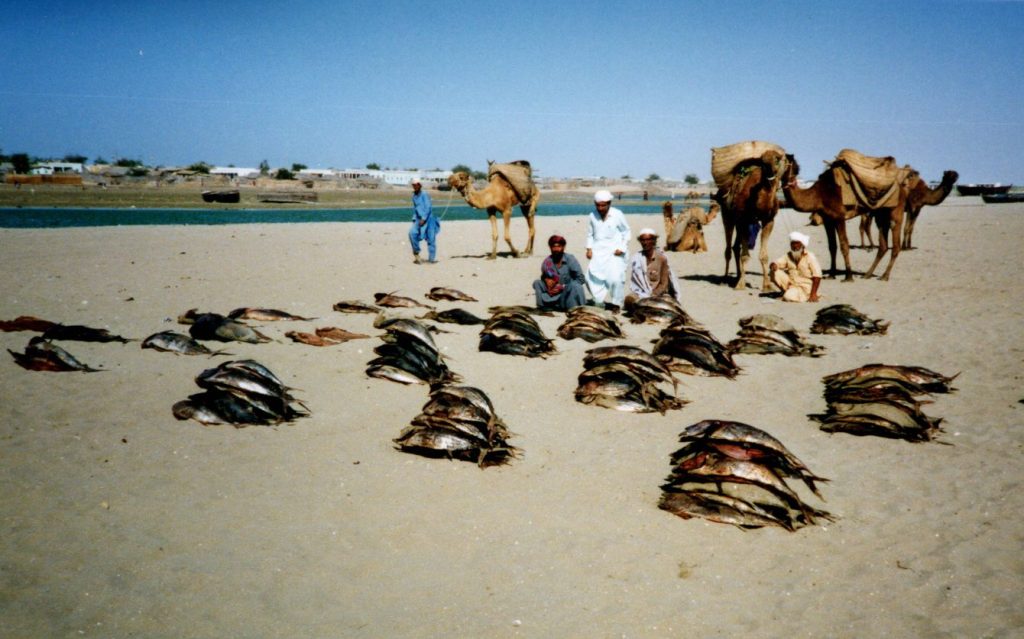
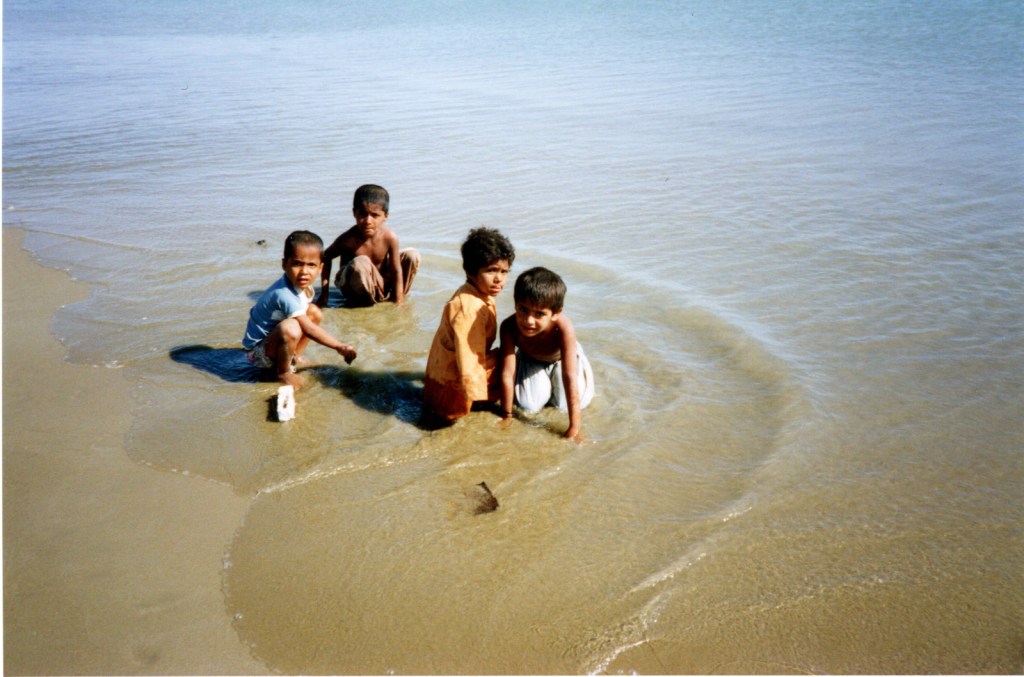
As ever, Sheila spent her time in the bazaar – where she befriended the makers of halwa and fish kebabs – and on the sea shore, looking at the boats and fishermen. On her second visit to the beach she found a Swahili-speaking dhow captain who had sailed to Dar, Mombasa, Lamu, Zanzibar, Kisimayu, Aden and the Yemen.
She also visited the local Ismaili community, as she did in every big (!) town, as on the whole they spoke English and were educated – a good source of information. At the local school, the headmistress gave her a bright yellow Baluchi suit – much to her embarrassment: she was always overcome by the generosity of people who had so much less than her. This outfit is now in my cupboard and has been worn now and again!
Ormara
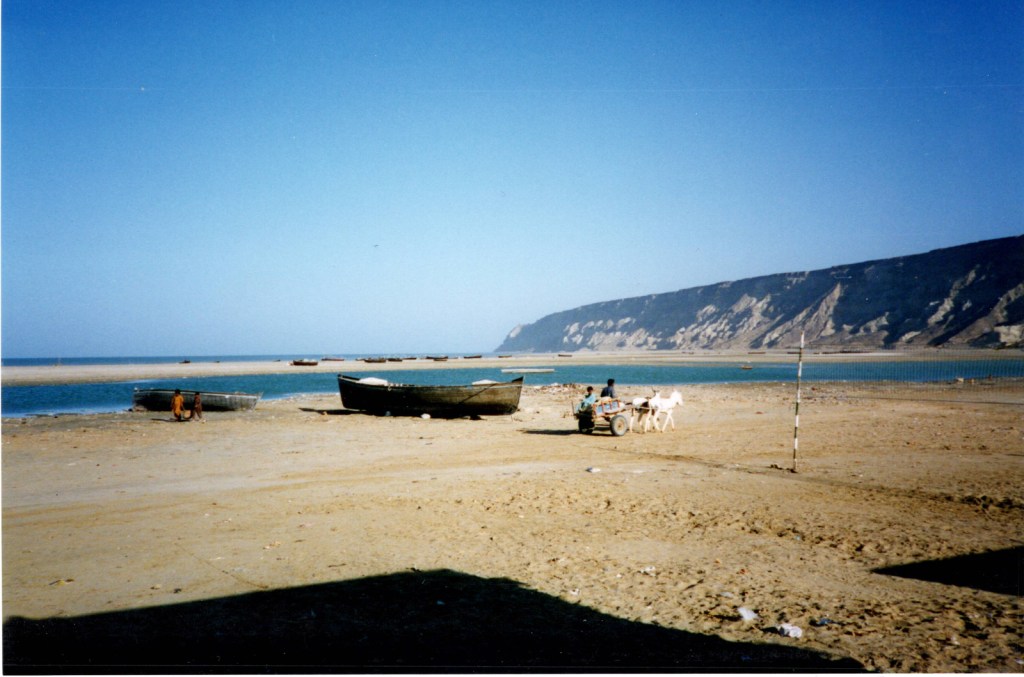
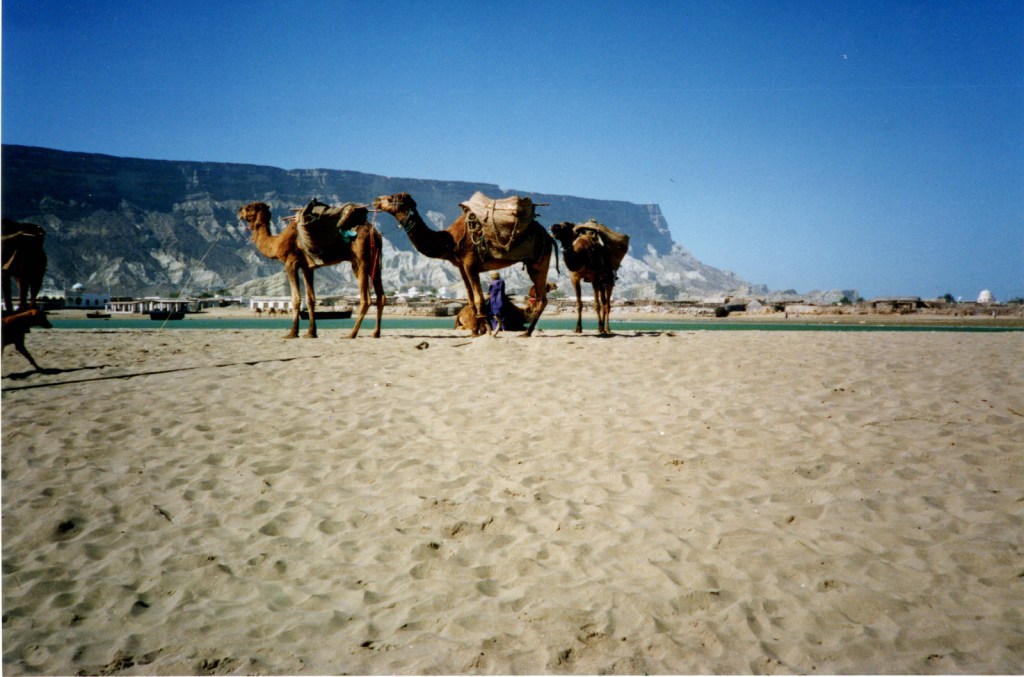
The village of Ormara is sandwiched on a sandy strip about a mile wide, between the seashores, east and west. A huge mountainous mass juts into the sea to the south, like an enormous hammerhead, similar to Gwadar... At the moment there is no phone, no airport, limited electricity and a bad road. Good for anthropologists but bad luck on them.
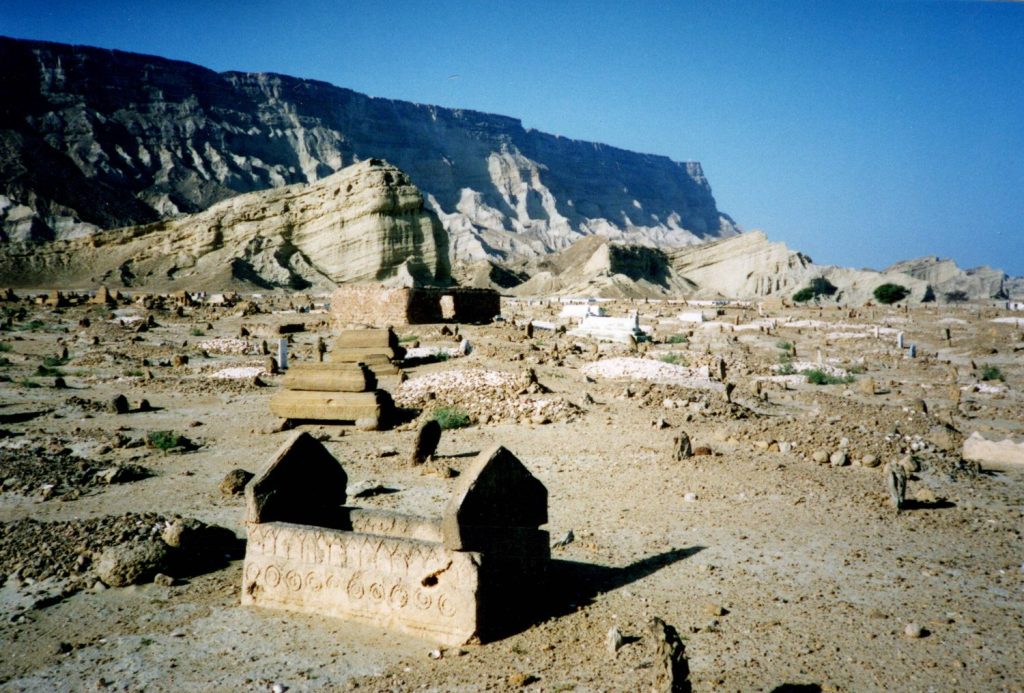
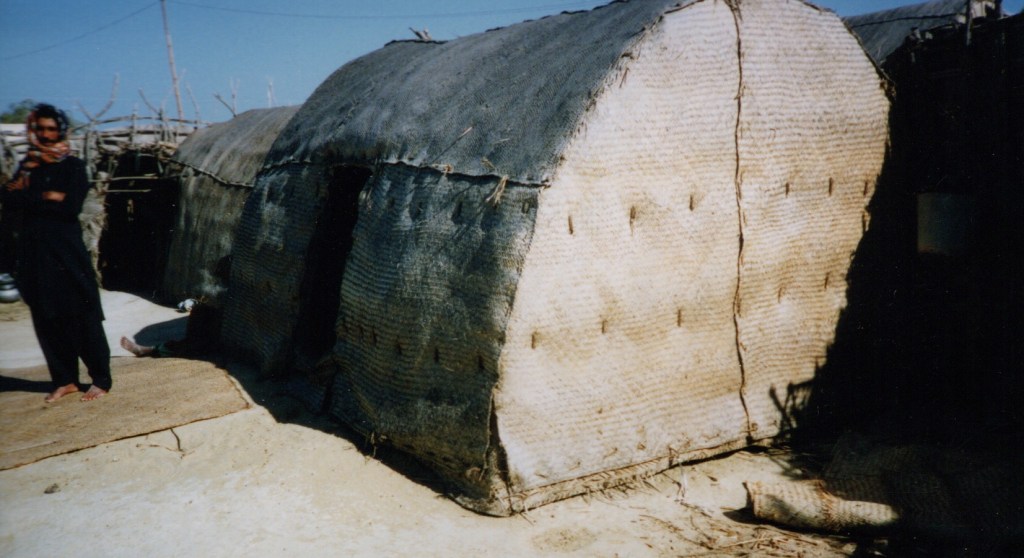
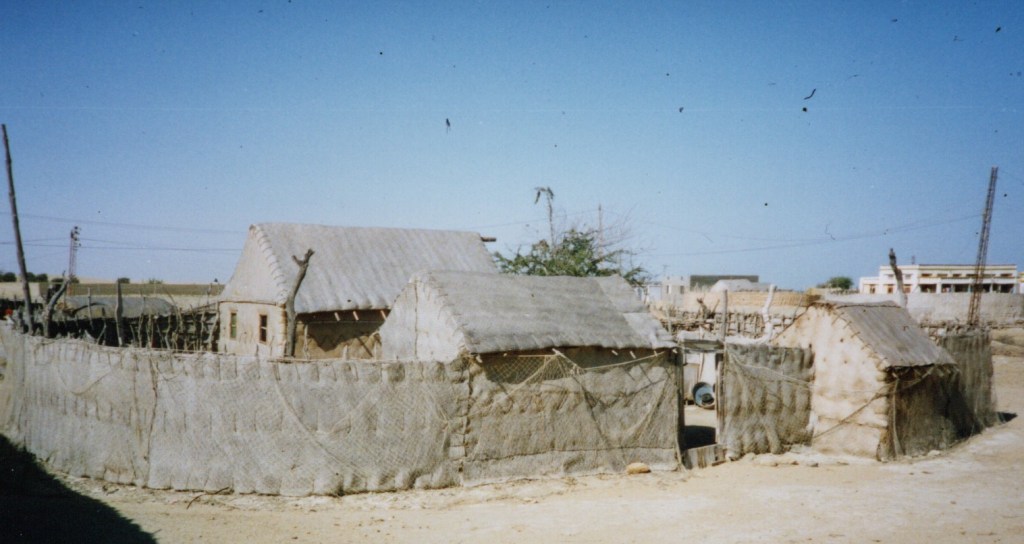
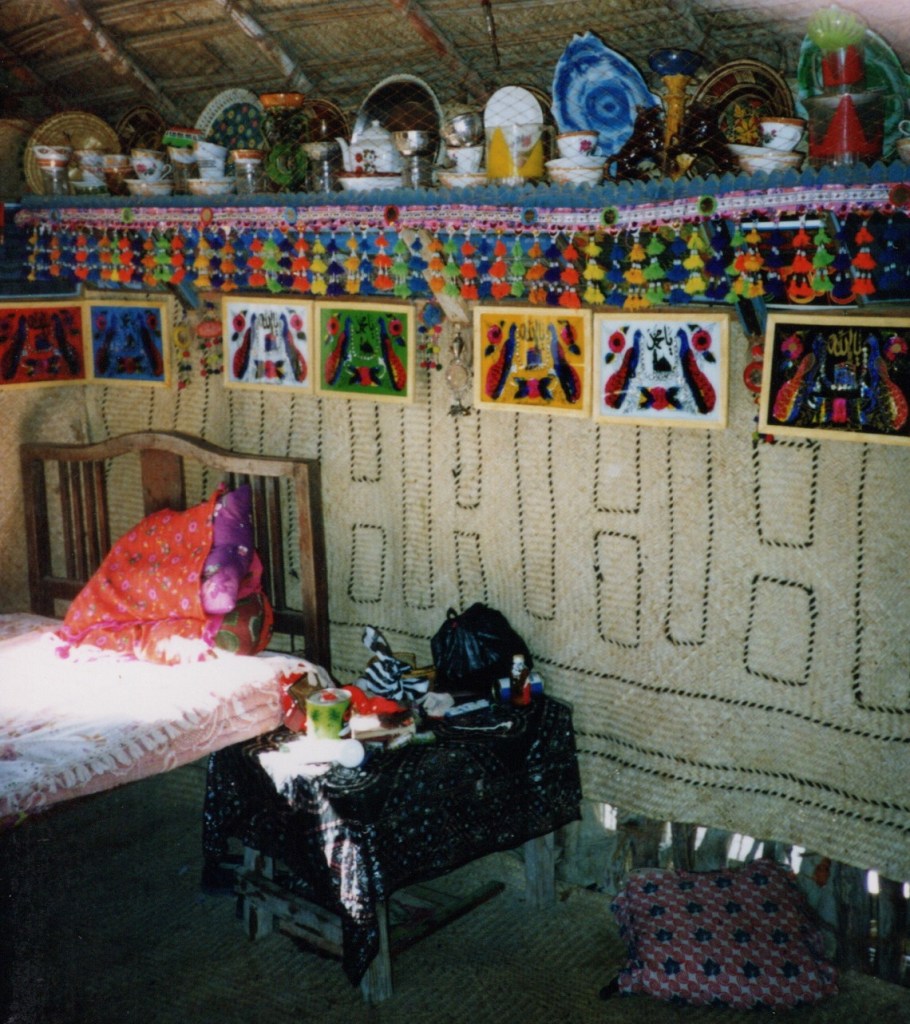
The cemetery here wasn’t so interesting as at Pasni, but the houses were different from elsewhere: ‘sewn matting – inside the houses neat and tidy – the mats being decorated by tufts of goat hair pushed between the matting. The usual shelf at eye-height holds special crockery, utensils, photographs, and there are glass-fronted cupboards with blankets and quilts on top.’

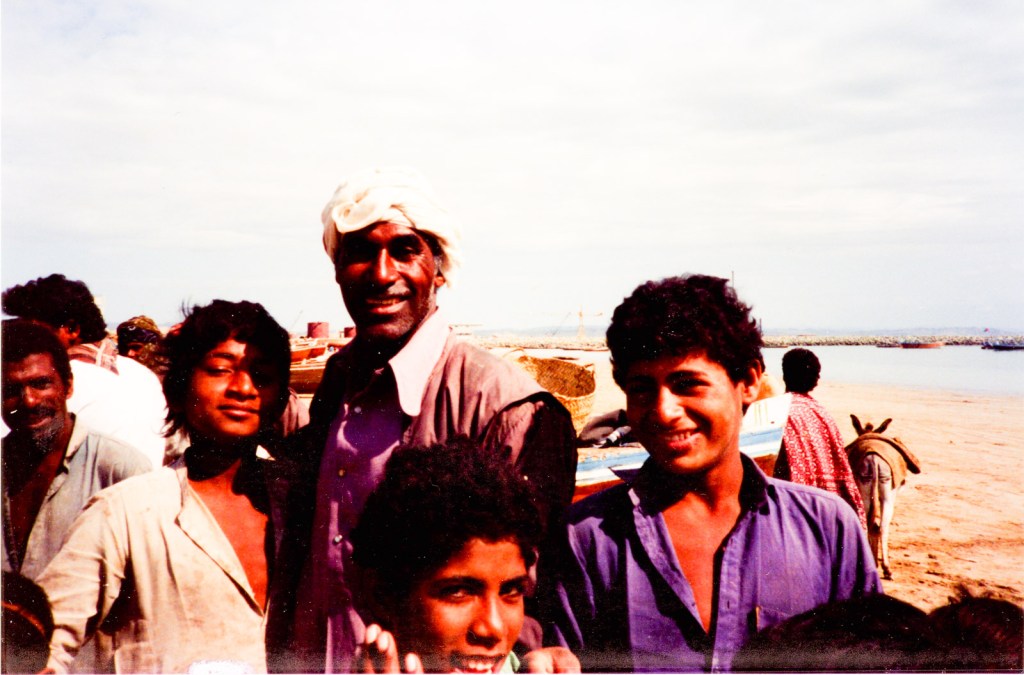
Again she visited the local communities – Zikri (a sect unique to Baluchistan of Shia Muslims that don’t believe in the Prophet but rather a Madhi figure as their spiritual leader) and the Ismailis – there were 40 or so there, but I expect there are virtually none now as the children were all being educated in Karachi and it would be unlikely they would come back to Ormara!
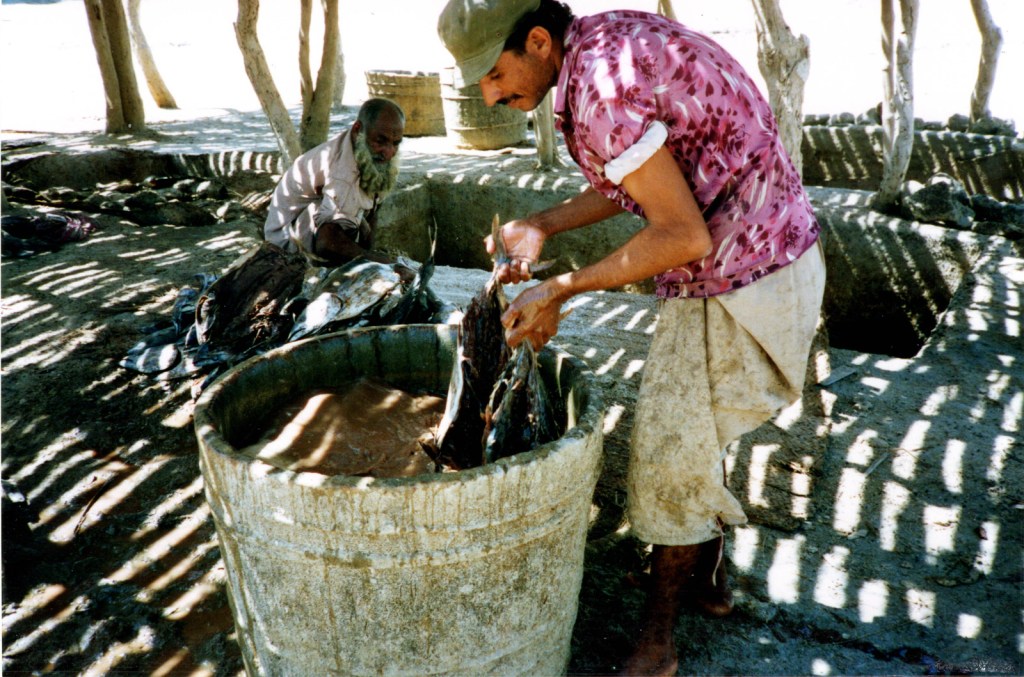
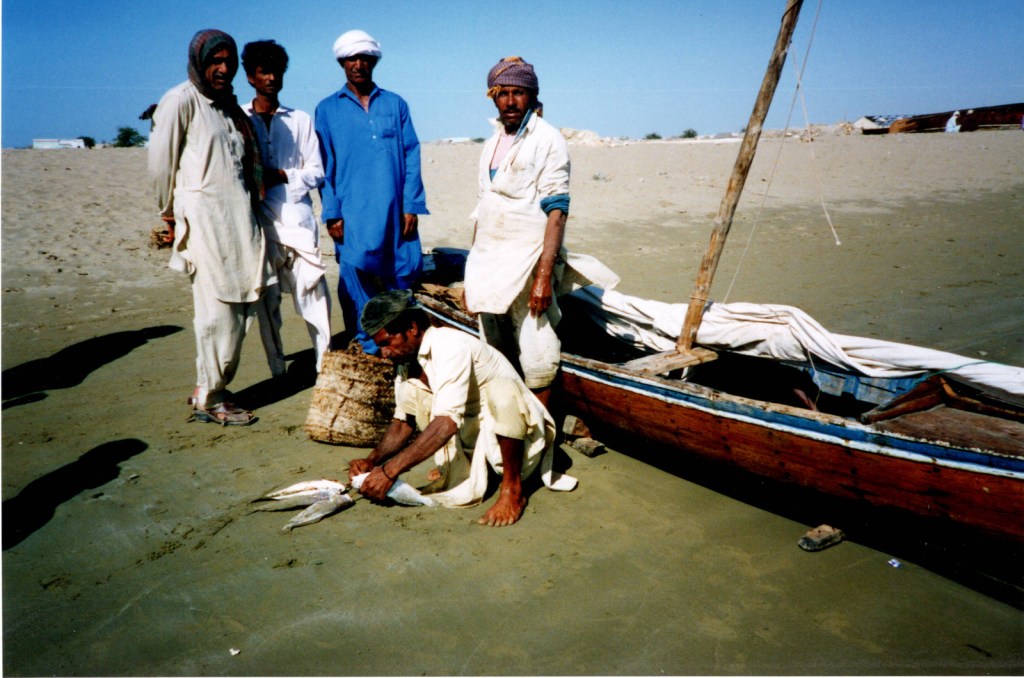
The two Ismaili brothers told her that ‘in the past, boats had sailed from Ormara to Basra, Colombo, and Africa, taking mats to Zanzibar, dried fish to Colombo and coming back with timber from Calicut, mangroves from Zanzibar and dates from Basra.’
Buleda
Their final visit was to Buleda:
…down an incredible gorge through the mountains – one track narrow and twisting, Rocky sides, reaching up high, bleak and sometimes sheer. Occasionally a vehicle or motorcycle rushing round a blind corner, but thankfully we had no face-to-face crash. Eventually the mountains subsided into hills, the hills to plains – until in the distance you could see a thin green line stretching from east to west – the oasis.

As ever, the archaeologists went one way and Sheila another – to visit homesteads. It was a great advantage to be reunited with her driver from previous trips, Janmohammed, as he knew everyone and thus she could gain access to more or less any house in the village – but being male he was not always allowed inside so a flask of tea would be sent out to the verandah where he would sit and wait.
It was here that Valeria and Sheila had to spend a difficult night (after whisky of course) with no loo, rats, and over-assiduous hosts who tucked them in and even offered to sleep with them (to protect them) to which Valeria -‘very prim said “No we don’t want a man in with us.”‘ Sheila found all this highly amusing but had to stifle her laughter. However, the next time Valeria went Buleda on her own, the couple did sleep in the same room as her and she had to fight off the drunk husband’s advances, much to her fury. Heads rolled.
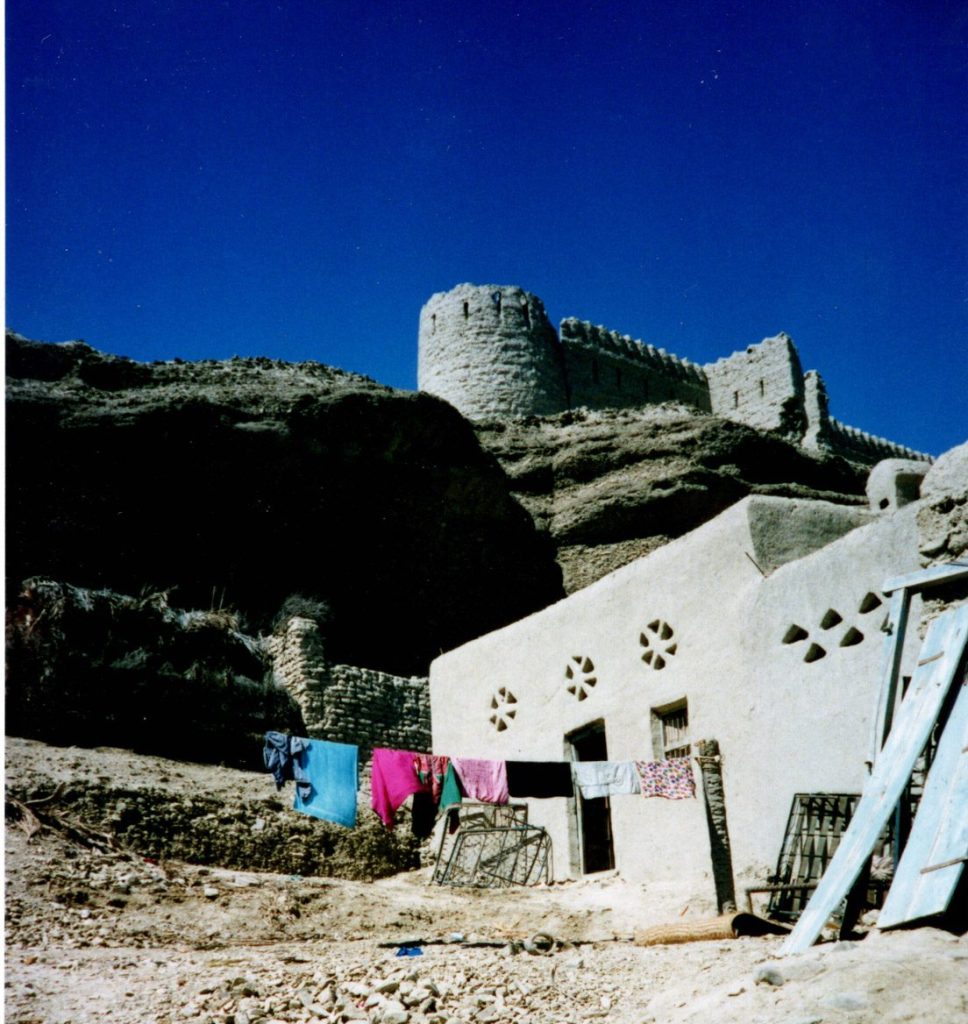
There was an impressive Kalat – castle – in Buleda built by the British in the 1880s. A nearby village was famous for its carpet-making, so they visited and mum bought a small kelim.
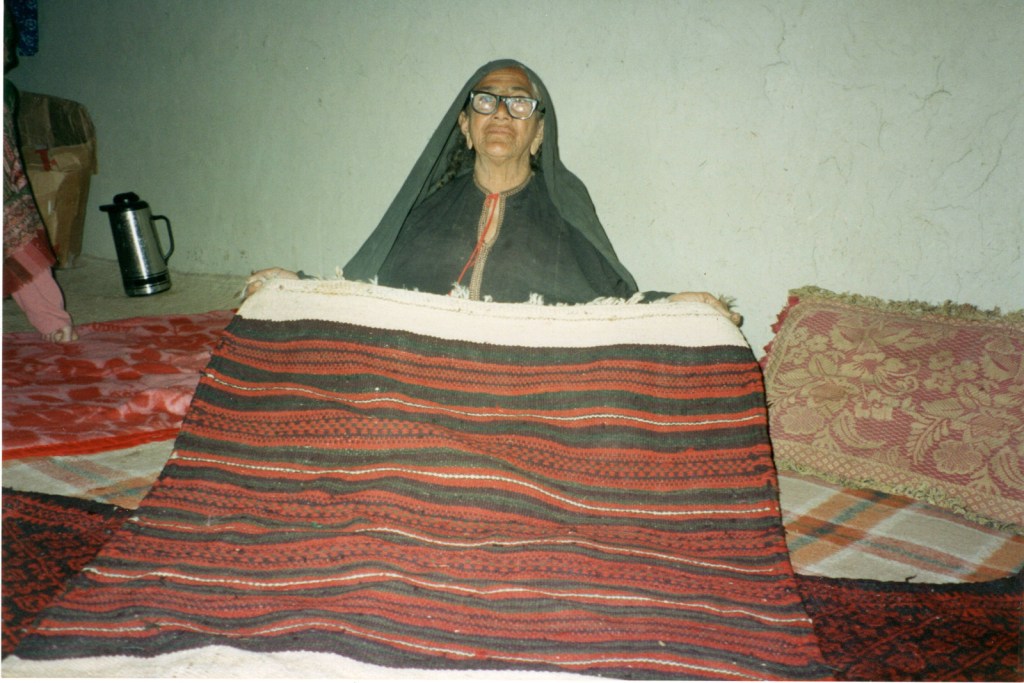
And so another month in Makran/Baluchistan came to an end. Mum always pleased to get home as it was tough both physically and mentally, and she always swore she would never go again. Nevertheless she always seemed to return!
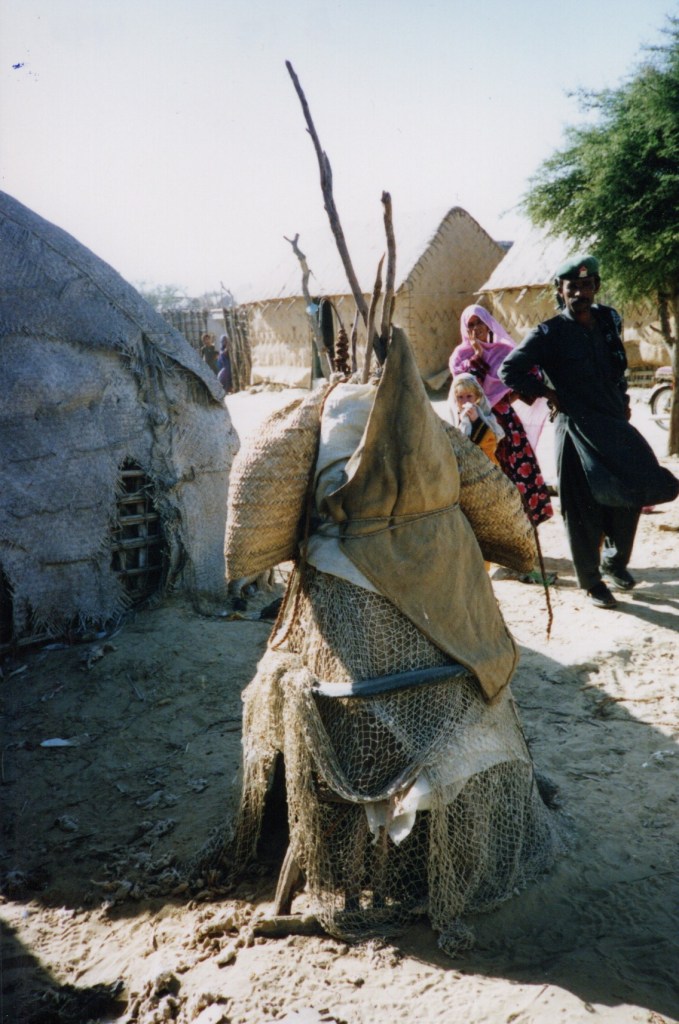
The next visit was in 1990, the following year. Apart from spending a lot more time in Quetta which she found rather frustrating – despite congenial company in the form of UN friends and academics who were staying at the Aga Khan’s Serena hotel – she re-visited all the old places and friends with some new colleagues. Captain Rashid was in fine form, as was her freind Zubeida, and countless others, but their kit, left behind on the last visit, had been pilfered and she lost some nice shirts and trousers. Entertainment and vast meals were produced everywhere they went and, on occasion, ‘whisky literally on tap. There must have been 8-10 bottles’.
There were some dramas, however: firstly the team dynamics were strained to breaking point with the addition on two young Italian PhDs ‘both rather arrogant (each under 30) compared to other members of the team ‘all stalwart, experienced workers with far more knowledge than these children’. Ouch!
Valeria continued to drive mum mad, ‘hypocritical and unreliable…has little judgement, wrapped up in herself, suffers from an inferiority complex.’ She belittled Sheila’s expertise and knowledge in the handcrafts area and made her feel ‘like a second-class citizen’.

Valeria was also constantly rowing with the Pathan Chief archaeologist for Baluchistan, who accompanied them for part of the trip, who had a French wife, and this made working relationships even more difficult.
Finally, the security situation deteriorated to such an extent that the ‘simple quiet middle-aged DC of Turbat was killed in a skirmish with smugglers near Mand…as well as a militia major, whom we have met and four levies as well and the nice AC Tump badly injured’. It really was a lawless place.

Her last entry for 1990 reads ‘I really wonder if I shall decide to come again – so uncomfortable, dirty and unhygienic…[I] am always at the end of the queue for transport, am seldom considered as a person worth bothering about. I am really fed up with Valeria’s temperament.’
However, she did return in 1991 and 1993!
 Travels with my mother