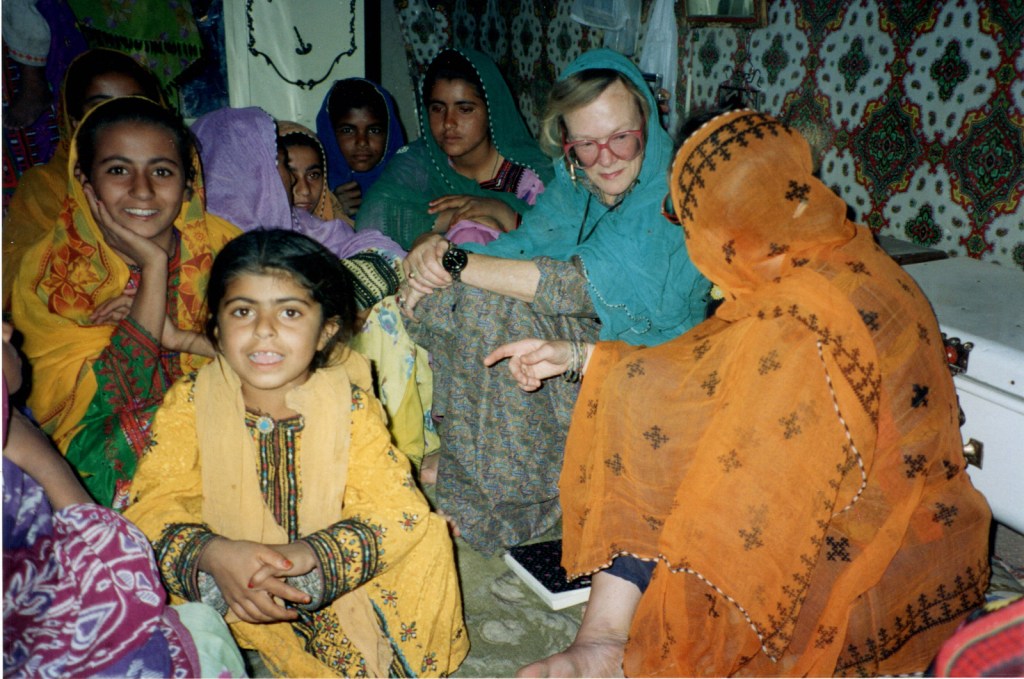
Sheila took a foil for Valeria with her on this next trip. Sheila Payne was a world-famous textile and embroidery expert who, by chance, lived in Blewbury where I was living at the time!
[we share] not only the name but our blood group, an unusual one – B – our wedding day and sisters who have had a drink problem. She’s much more dynamic than I, knows exactly what she wants while I drift along and sometimes miss the boat. Yet she’s kind and thoughtful, sticks up for me when Valeria tramples and translates when the conversation tumbles or is in fast Italian: she’s a linguist and interpreter with French, Spanish and Italian and, I think, German, and has written two books on embroidery as well as lecturing and having workshops in her house in Blewbury. She’s a person to be respected, intrepid and enterprising, quiet and reliable and we are lucky to have her.
Their first stop was Quetta, where mum had some friends from Branscombe working with WHO and Afghan refugees. They had a social time as SP also had some contacts there, and they went out and about, including several visits to the Serena hotel part of the Aga Khan’s business empire. But the pollution in Quetta was ‘so appalling ‘ that they all caught chesty coughs and colds and were relieved to finally get off to Turbat.
They had the fortune/misfortune to arrive at the same time as a UNICEF delegation, who were bing hosted by mum’s friend Zubeida. Good in that they got some excellent meals, but bad in that the best rooms in the hotel were taken! Despite it being the ‘posh new hotel’ the fans didn’t work and the door handle came off, locking mum in the loo for some time!
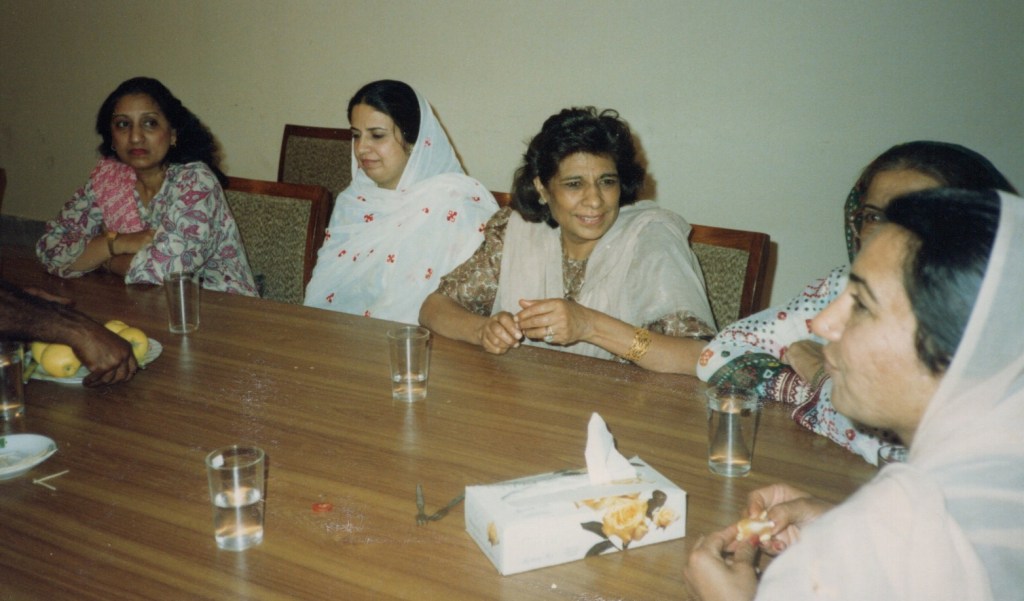
On another occasion they got locked out of their car and Janmohammed had to push a small boy in through the back window in order to get the door open!
As always old friends greeted them warmly – Captain Abdul Rashid ‘delighted to see us’, the driver Janmohammed was hired, and Valeria started to play up the minute she arrived, ignoring the two Sheilas and going off with Capt. Rashid and missing an important appointment. But all was well at the first dinner as the Captain produced some whisky ‘appropriately called Smugglers’.
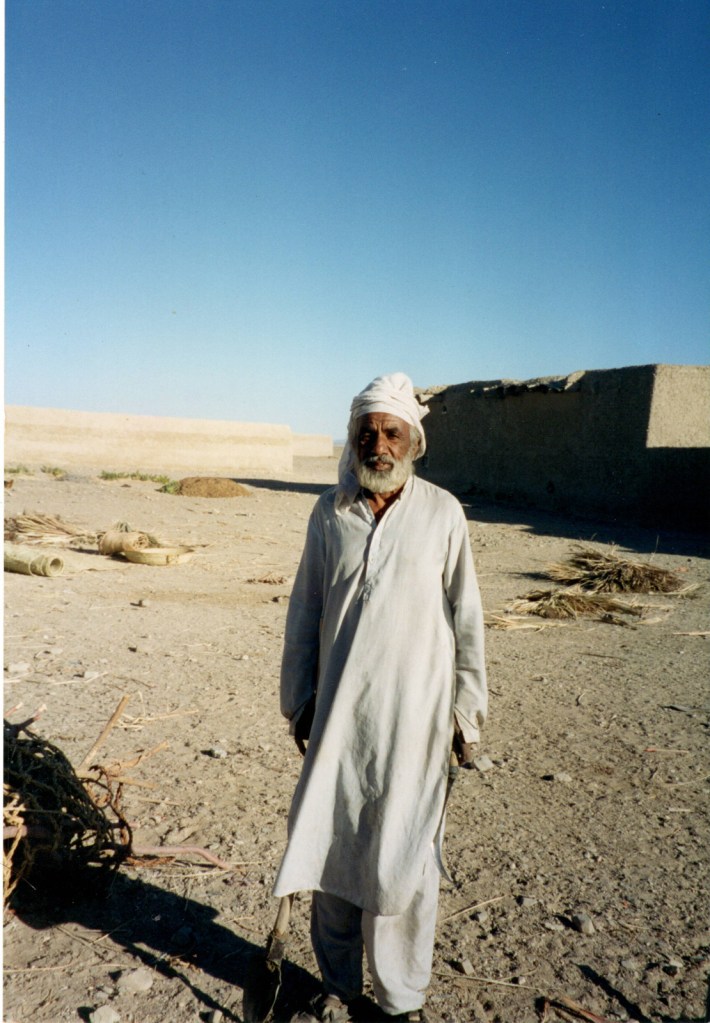
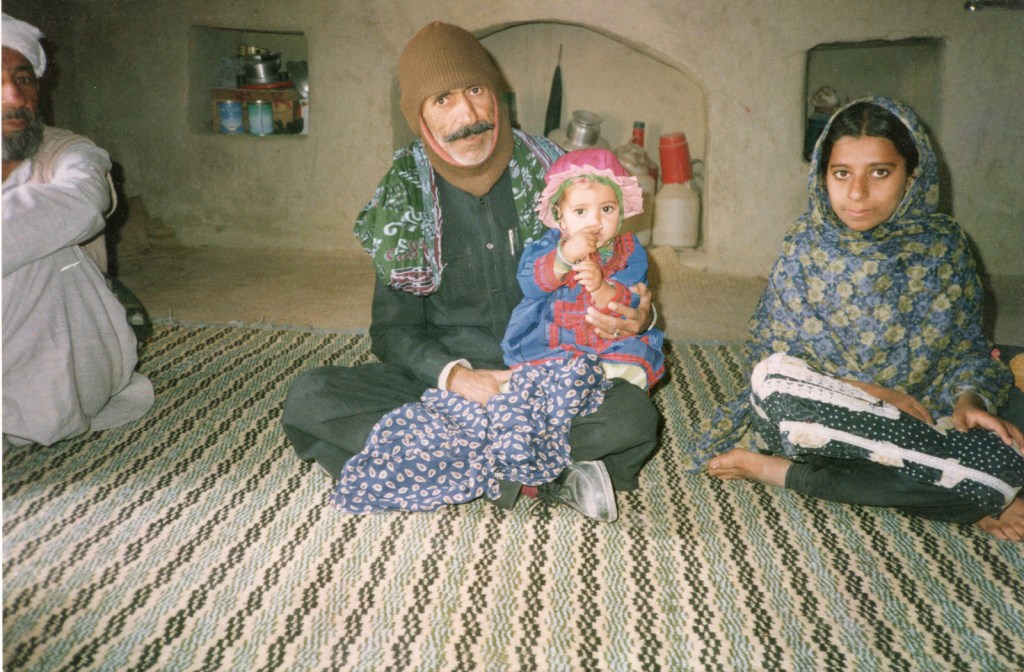
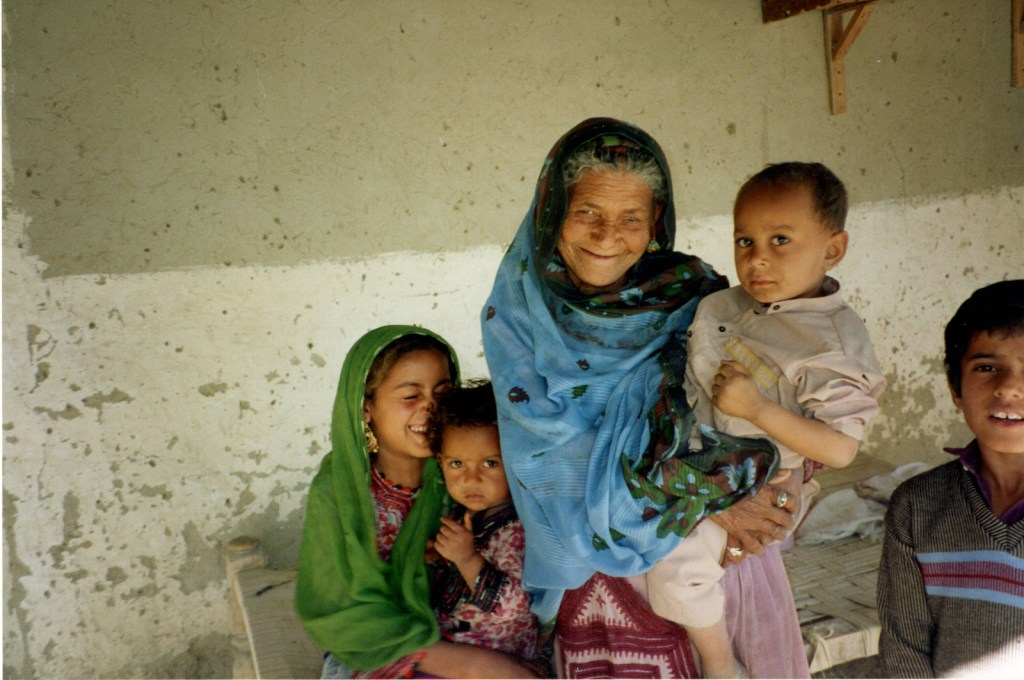
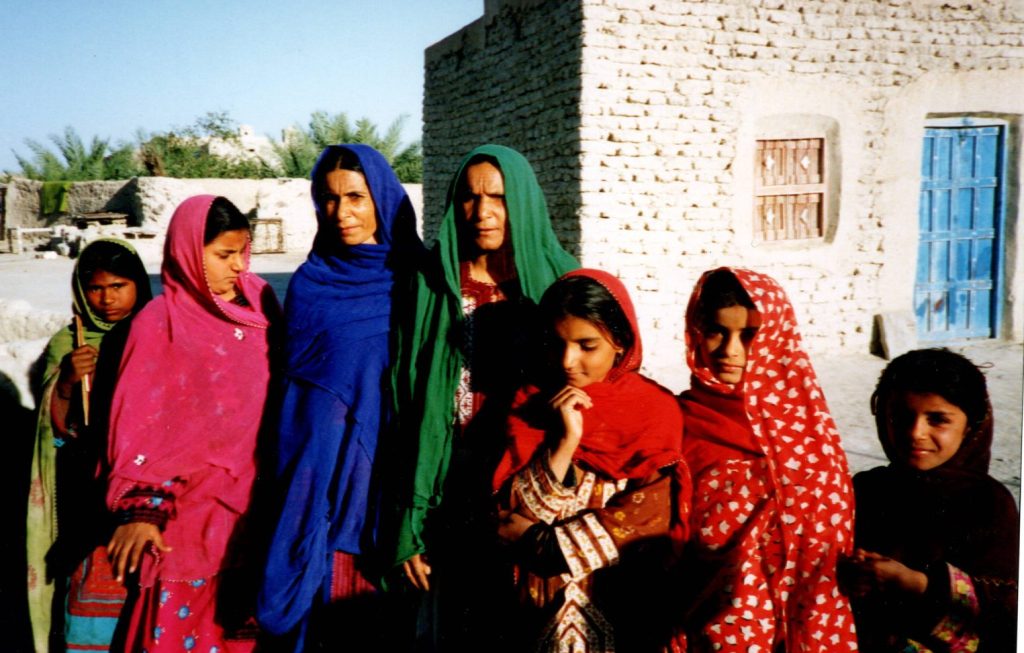
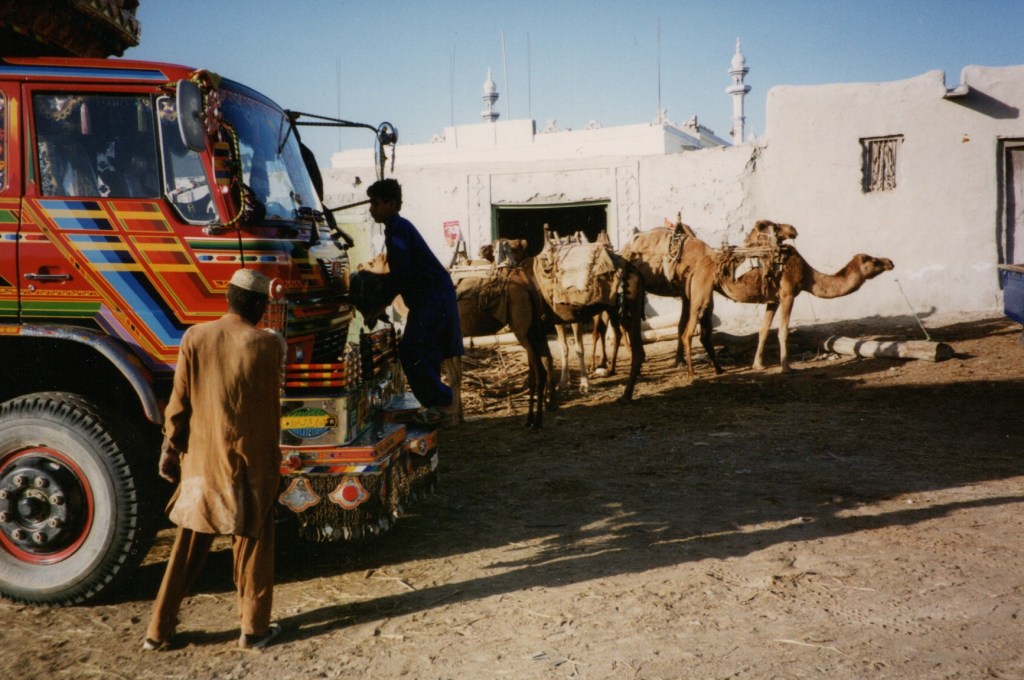
Villagers on the 1993 trip
Later at a dinner – with a mixture of old Smugglers and Grants – they met a retired Omani army officer who admitted to being a smuggler; he had a boat which brought spirits and clothes from Dubai. When asked how he actually got them in he replied, ‘Oh I don’t tell lies. I tell the customs man not to cover a certain place at a certain time, give him what he asks – sometimes Rs 20,000, sometimes less.’
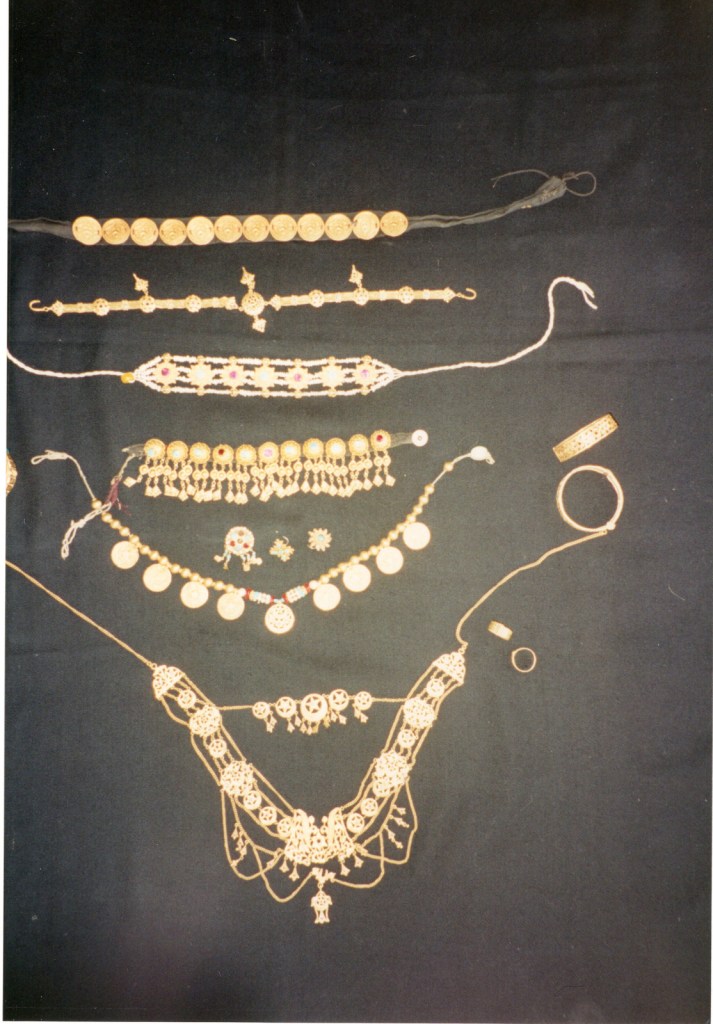
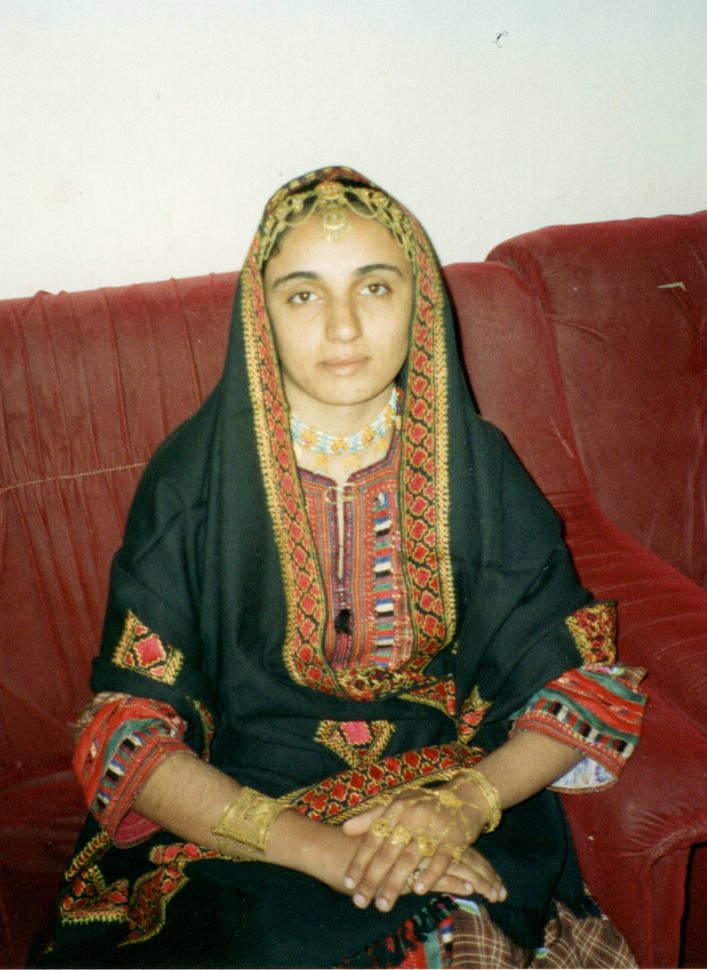
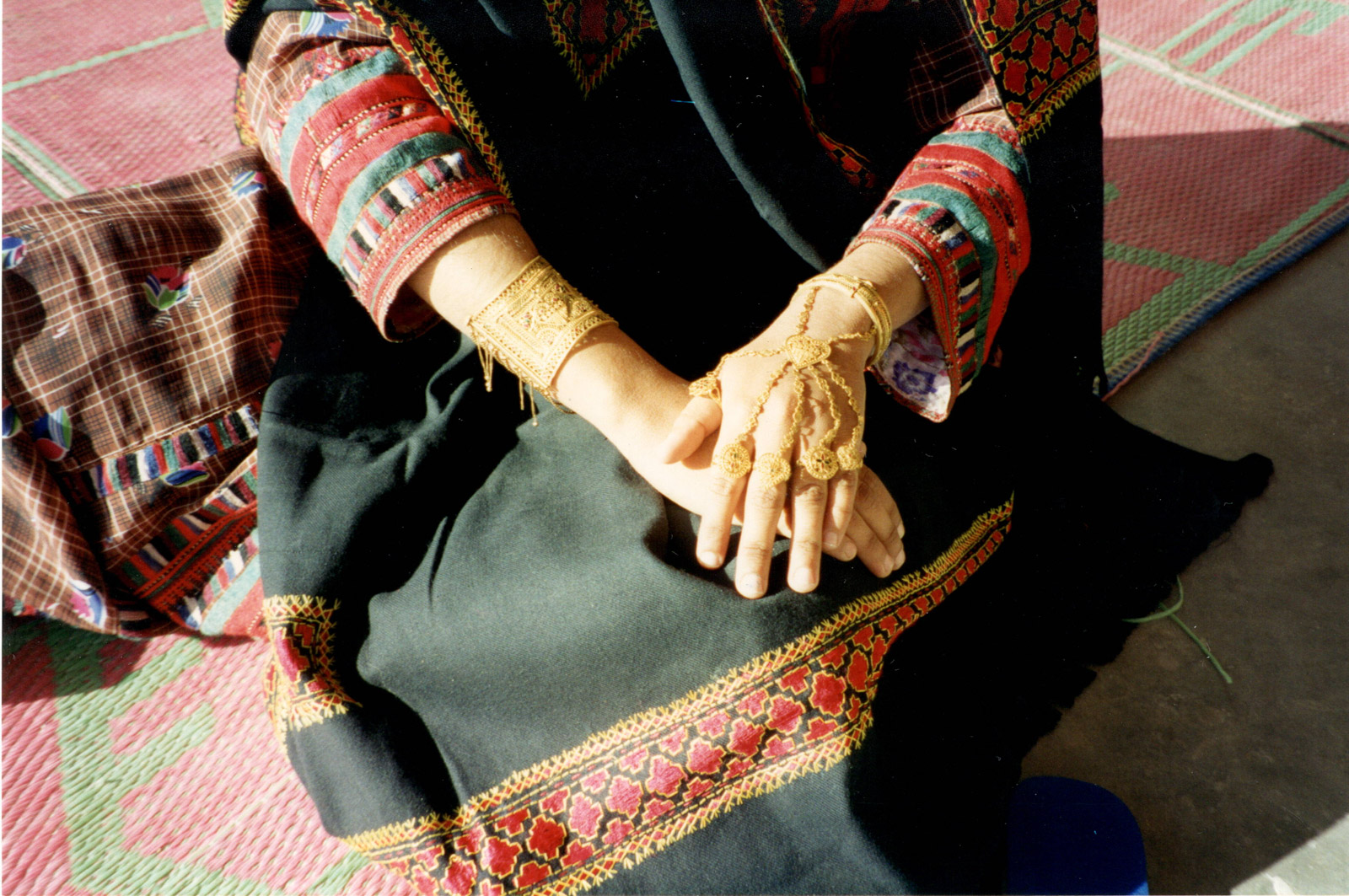
Baluchi jewellery
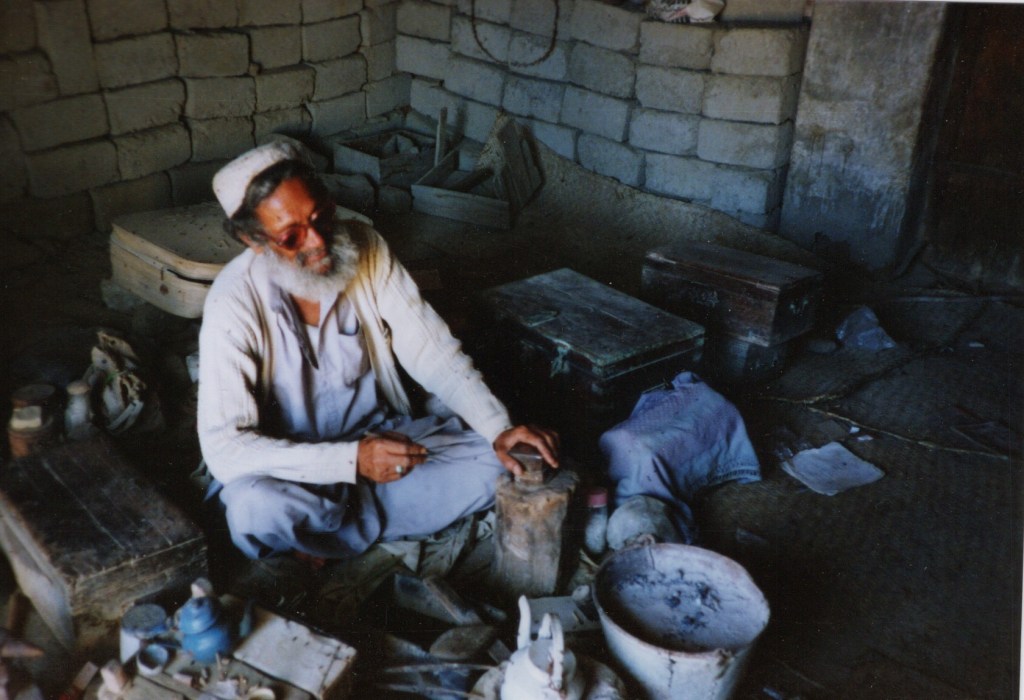
Shiela P concentrated on embroidery, mum on her lac and silversmith work. They returned to Gwadar, where Valeria started to ignore mum and address all her remarks and questions to Shiela P.

Valeria has given her precedence over me in most ways – with car and driver, with day-to-day instructions and often ignoring me completely if she is annoyed with me…I’m glad that she’s doing such an excellent job and that I introduced her but extremely put out that Valeria should have shifted her allegiances. For her part S sees the situation clearly, dislikes Valeria’s intransigencies and would like to finish her work on this trip and not return.
They had fallen out on the lac paper, which mum had ‘perfected according to instruction and is lying untouched for the last six months. I am bored and fed up with wasting three months of every year on Makran with incomplete results.’
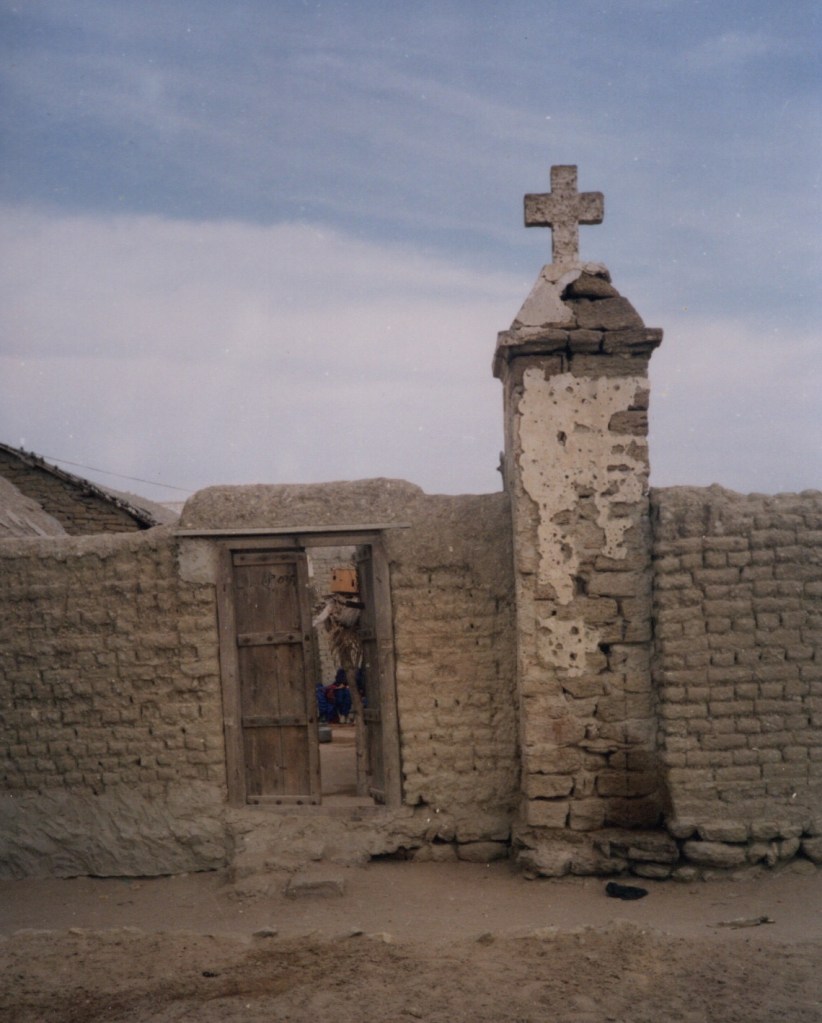
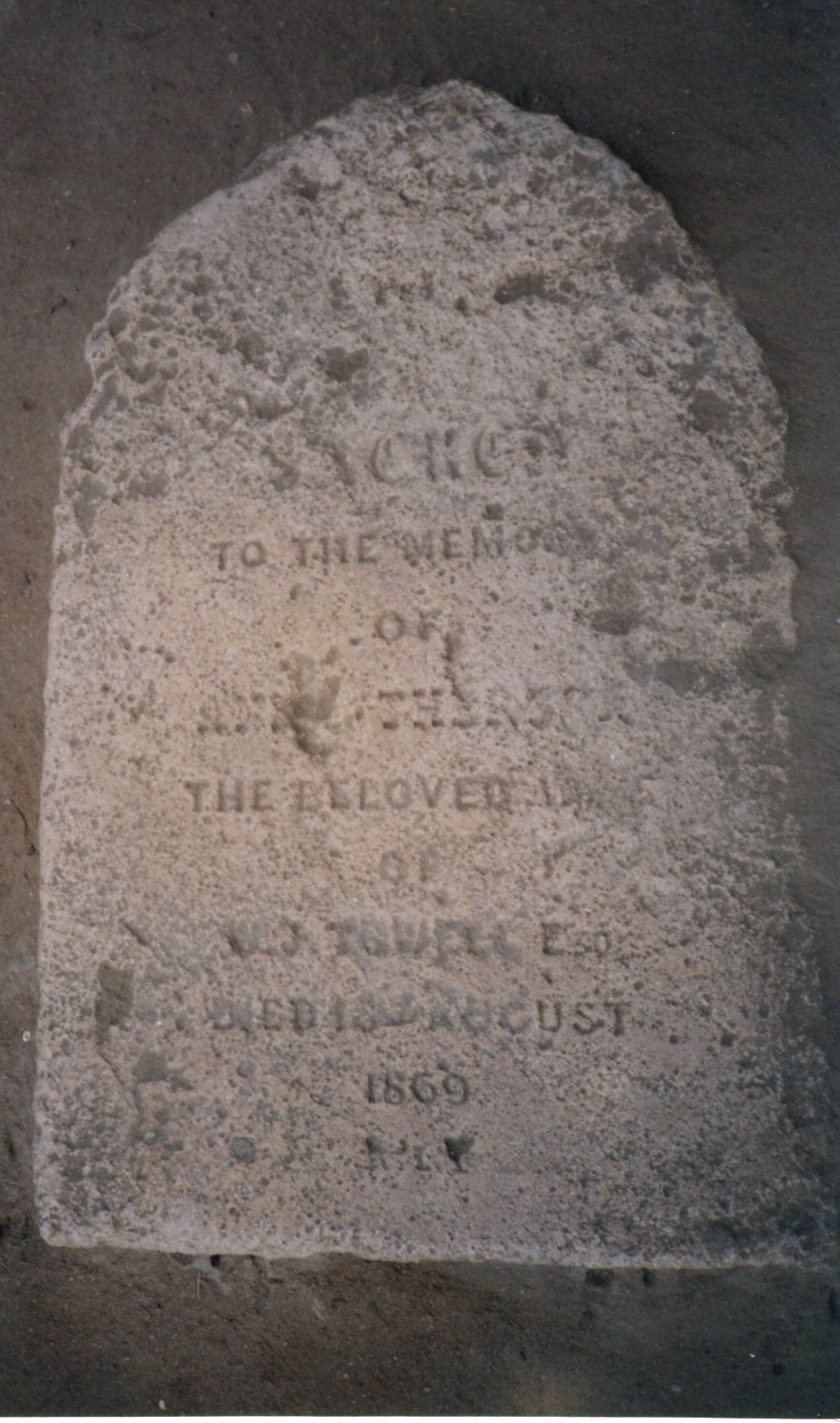
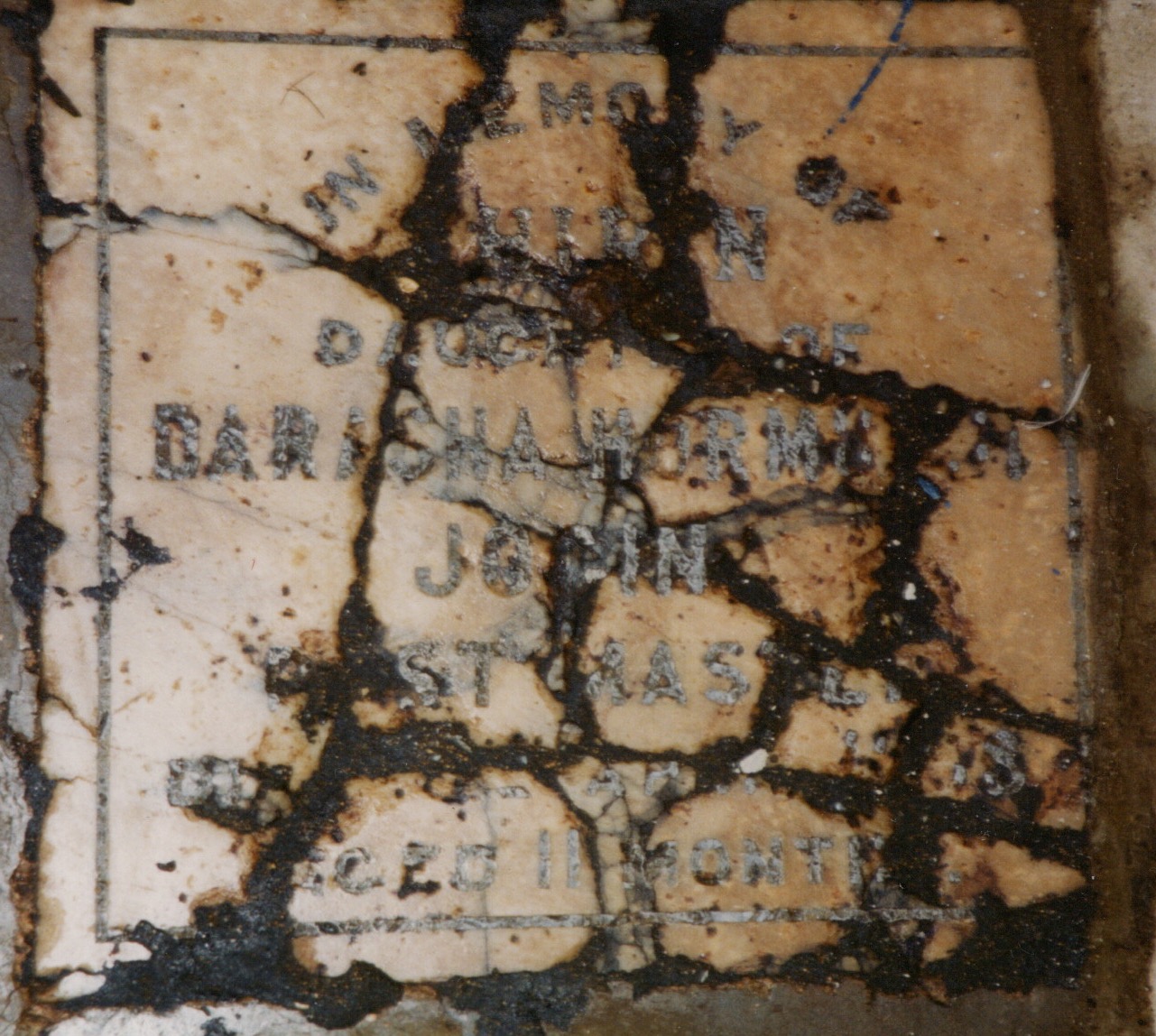
She discovered something interesting at the Zikri village (the Shiite sect who don’t believe in Mohammed as the Prophet), ‘a pillar, about 10-12 ft high, surmounted by a castle’. Apparently in British times they would come for whisky and tea, and they dug two graves inside the compound of a neighbouring house ‘they turned out to be of two Englishwomen, one inscription mostly illegible, but the second intact.’ There was also a grave of a child, John, aged 11 months. She decided that this was probably the burial place of the British Residency and the cross was a token church in a Muslim land.
The other ‘first’ was a visit to a snake charmer in Ginna. He explained how you ‘tamed’ snakes and offered to cast a spell to given mum protection from snakes. This involved holding her hands and chanting incantations from the Koran, and ‘blowing softly’ on her hand.

A few days later the two Sheilas went back to see the snake charmer, who had found a snake, ‘a meter long and very beautiful and elegant… he grasped it behind the neck and it waved its head about and he tapped it gently to arouse it… eventually he put his hand near its head and with flittering tongue the snake bit him sharply on the hand…he removed a tooth from his hand which was embedded… and then a small boy induced the snake to bite him, drawing blood. Neither of them was the least concerned. I didn’t dare to see if I too was immune.’
The trip’s finale was a grand Christmas dinner, planned a supervised by the two Sheilas. On the menu were chicken, cold peas, cabbage and un-sauteed potatos as the cooks got in a muddle, thinking the cabbage was for a salad.
‘The table looked very pretty with the tree, sparklers laid round each plate, on coloured tissues and everyone had a candle and a small halva xmas tree. Before the main course we had gazpacho and after it a splendid creme caramel…then followed cheese (processed in packet)’, produced by the Chief Archaeologist from Quetta, with the French wife, with whom Valeria was always squabbling. Then coffee, nuts and dates – all accompanied by Mum’s cassette of Christmas Carols from Kings College. And to finish off some cognac, ‘unearthed by Janmohammed, supposedly Napoleon, but it wasn’t very nice.’
Return in 1993
Despite huge ructions, Valeria included the two Sheilas on her 1993 expedition. It was not a happy trip, a combination of Valeria’s irascibility, various team members being uppity and selfish and, finally, what I now believe to be mum’s first TIA – characterised by high blood pressure, falling over and feeling faint for long periods of time. Perhaps five trips with Valeria to Makran had finally got to her. She never returned.
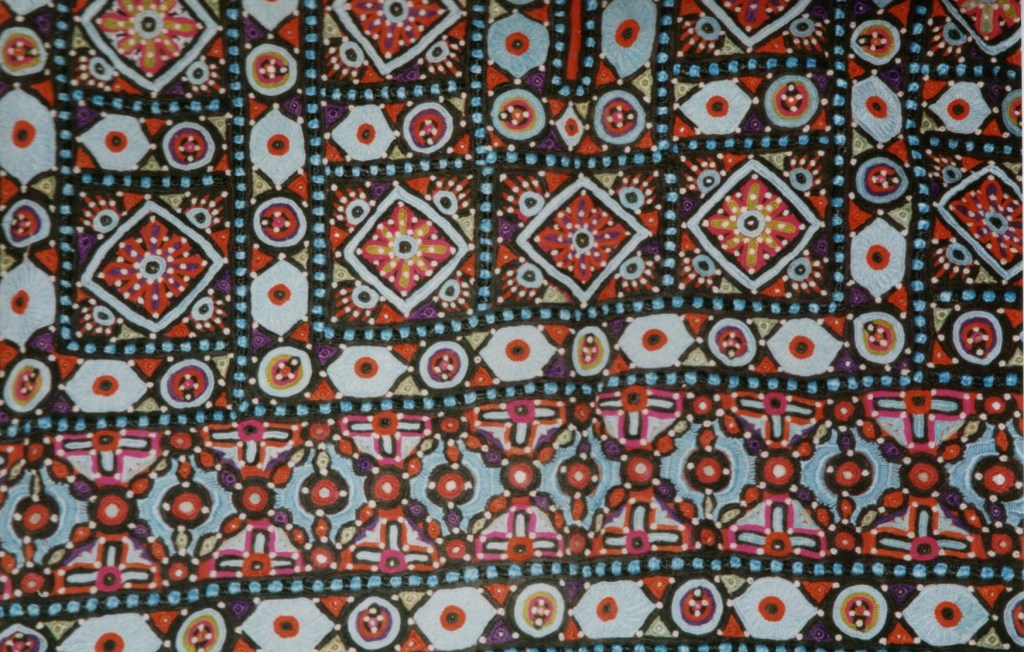
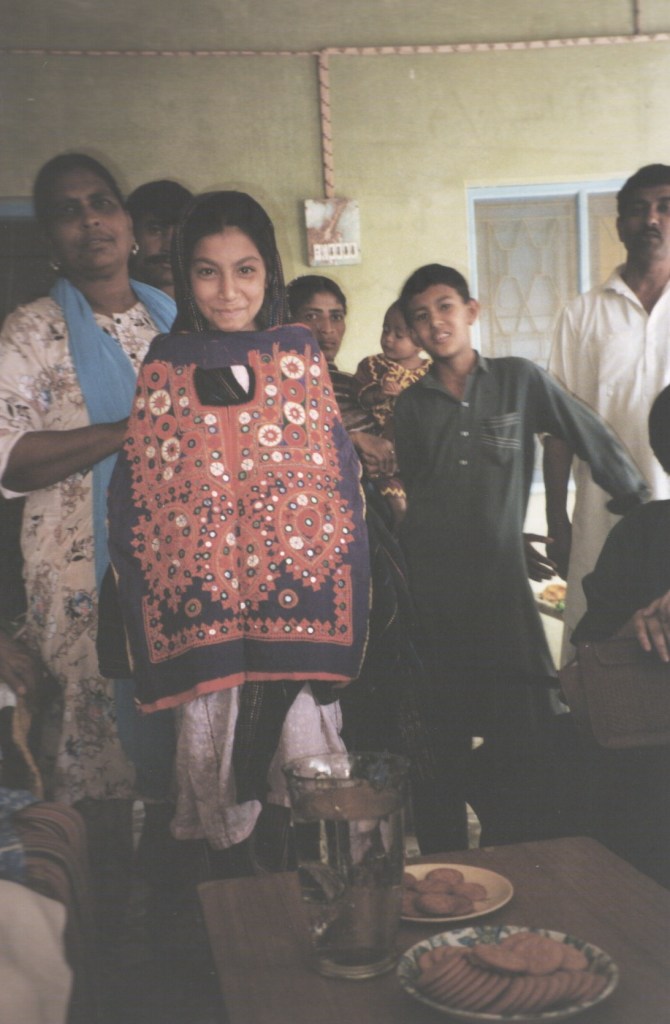
There was a fascinating day trip from Hyderabad to Thano Bula Khan, a village specialising in unique embroidery done by a Hindu sect within the Muslim Sindhi province. Bodices ‘covered overall with mostly blue/black embroidery, some mirror-work…with tinselly material incorporated.’ Sheila Paine was thrilled.
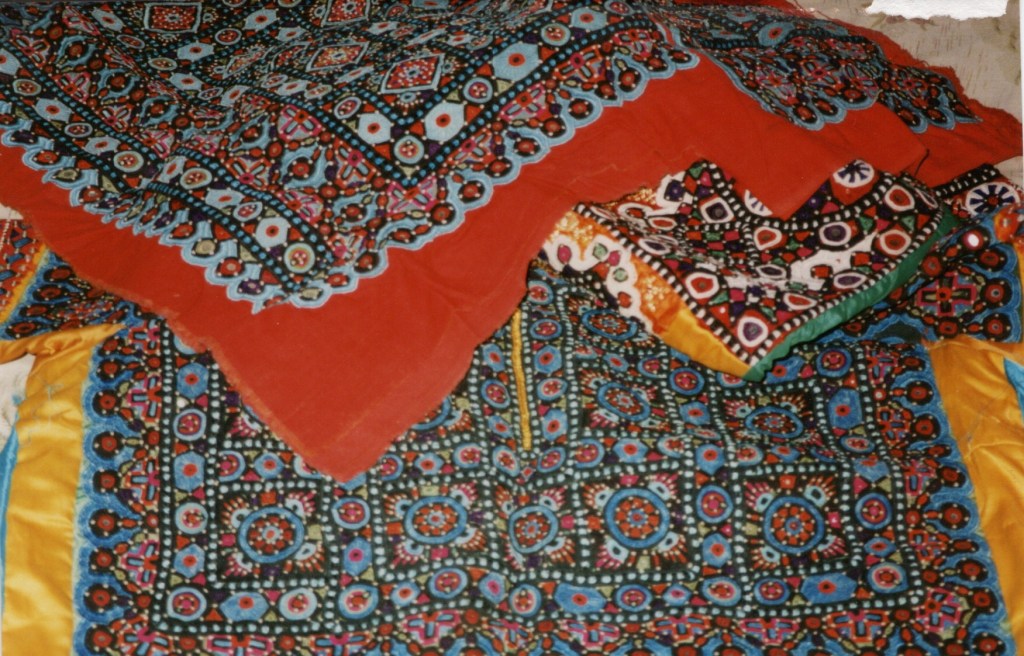
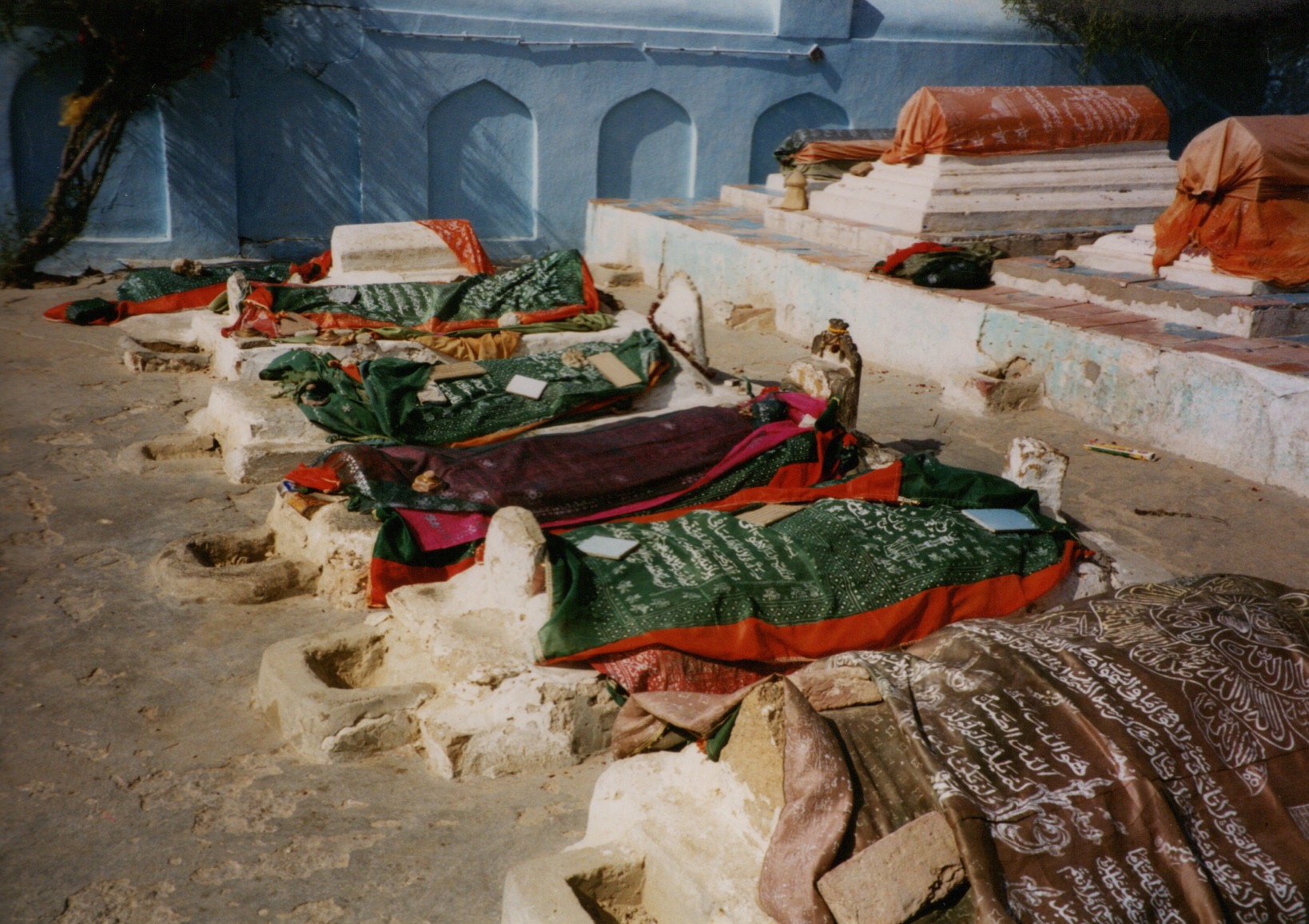
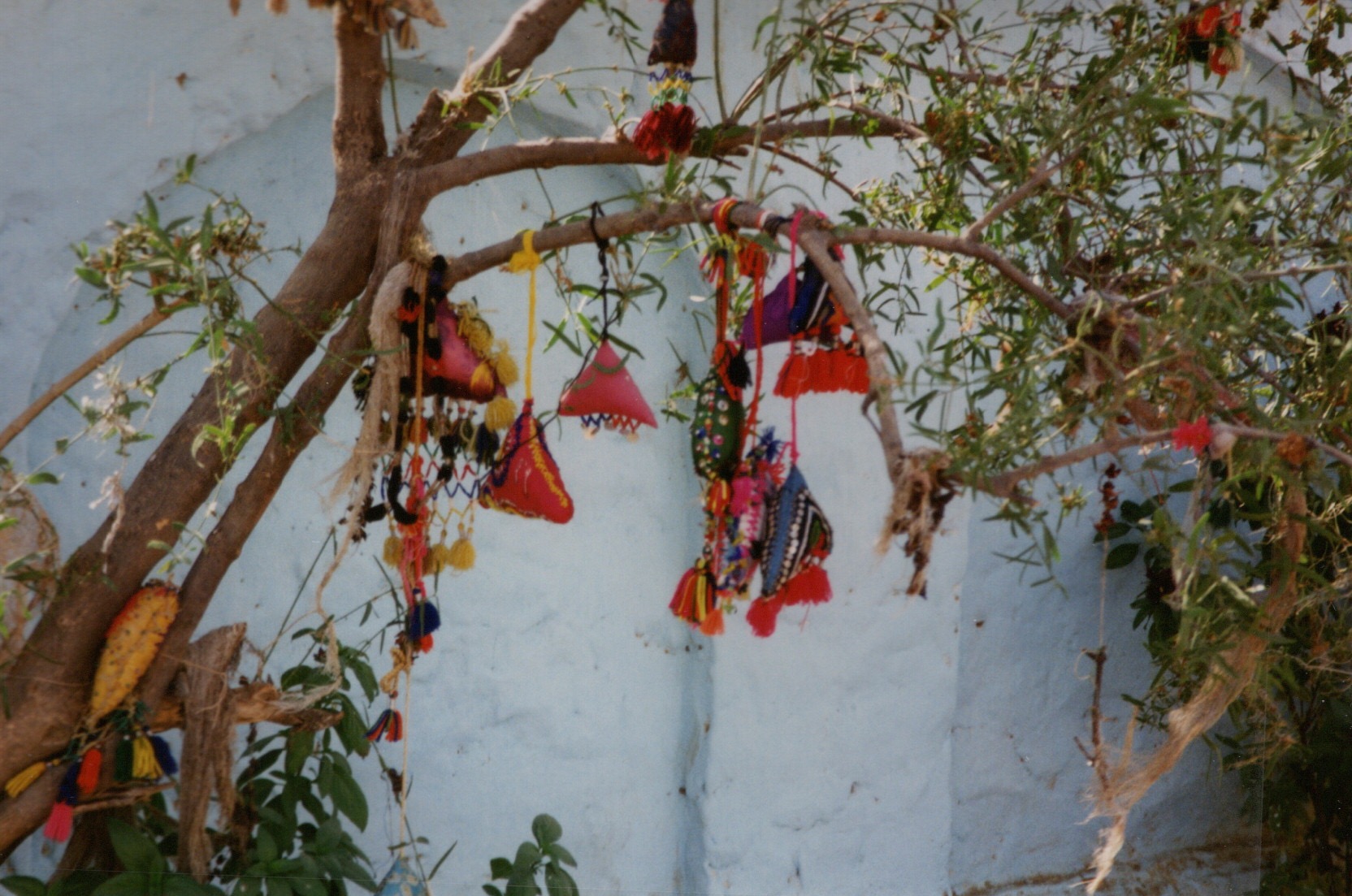
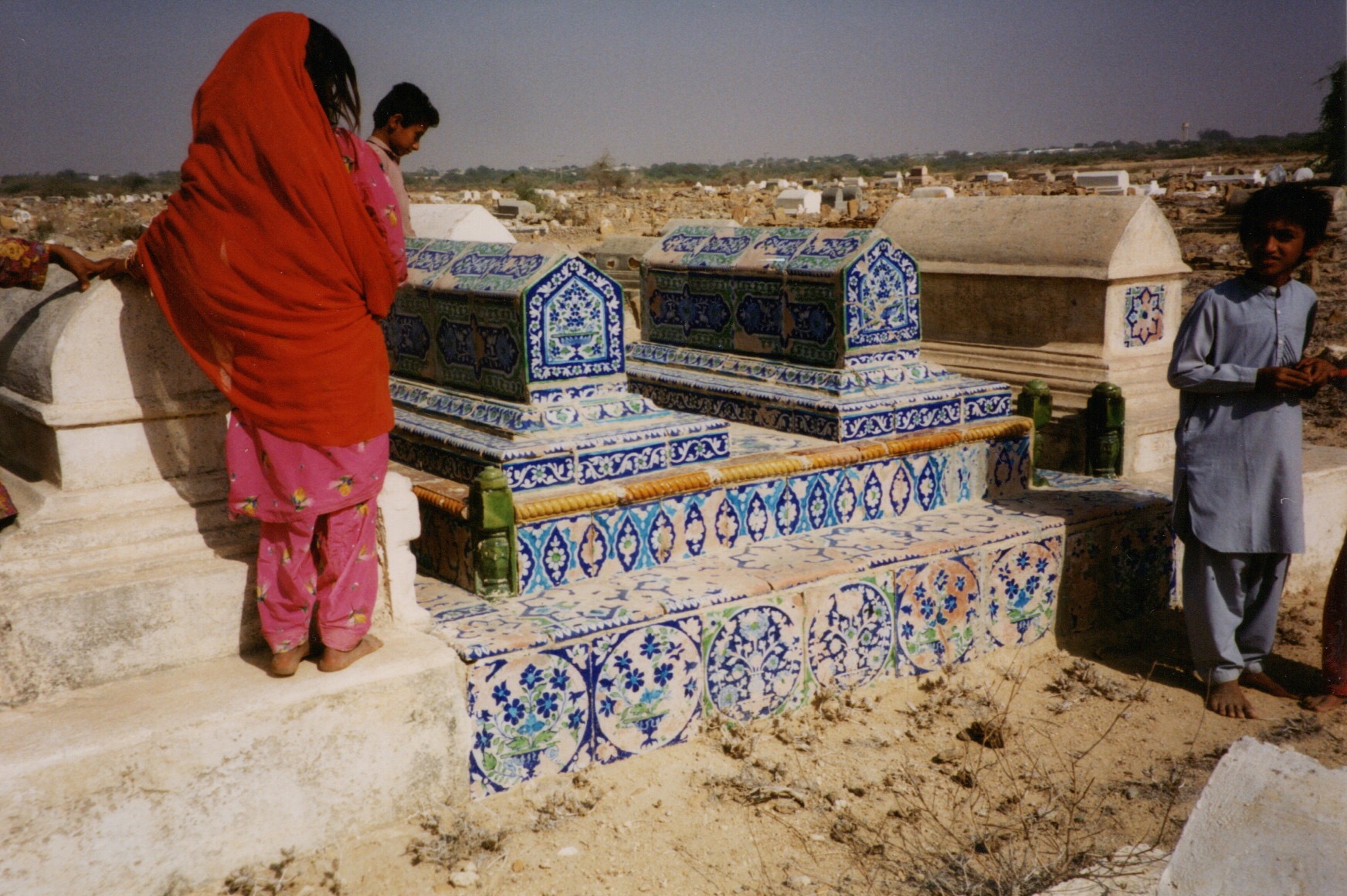
In the same village was a series of impressive graves for the heads of important families ‘men and women separate, in raised tombs, slightly stepped and covered in gauzy cloths. In the main enclosure was a a tree bearing triangular shaped amulets – tawiz – the [graves] were not old but finely carved or moulded with curious symbols…a local holy man, youngish, tall with a black beard came along and was duly photographed.

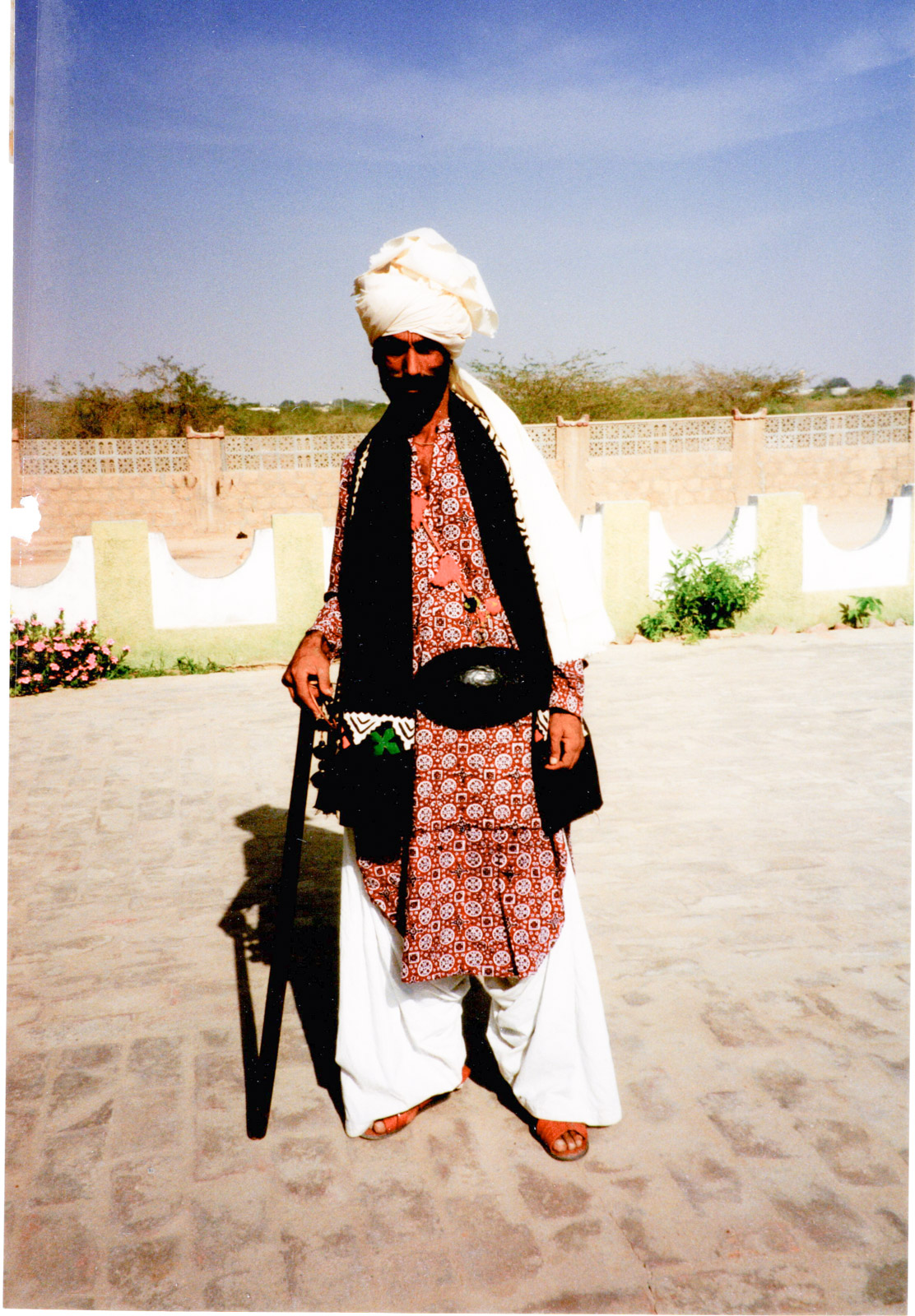
Back in Turbat they met up with all their old friends – Janmohammed whom Valeria promptly fired when he disputed his pay, much to Sheila’s annoyance as he was the only driver who spoke English; Captain Abdul Rashid (who had lost a lot of weight and had taken up running, but still drank whisky copiously), and all the old familiar families in the various villages which they duly, visited bearing gifts.
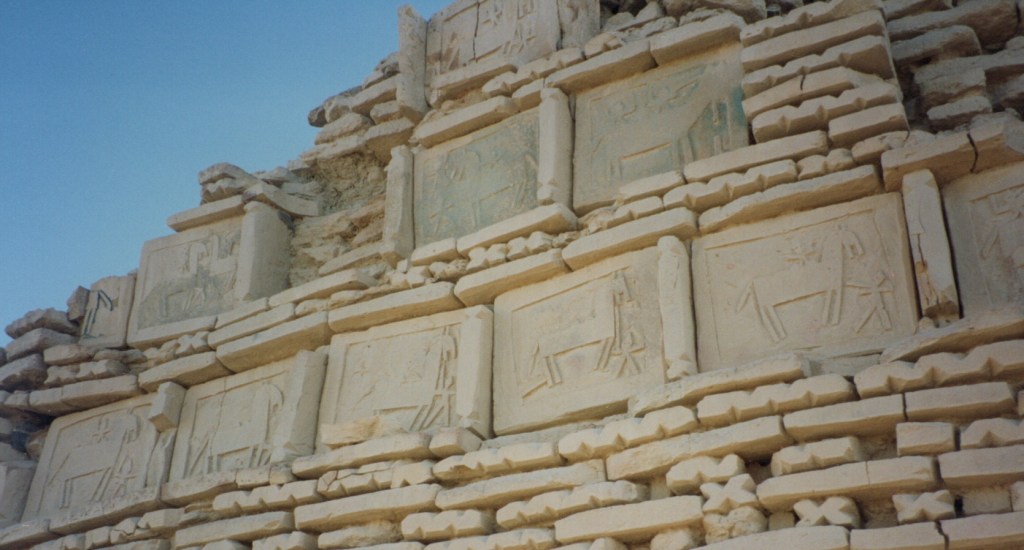
On their way to the vast and wealthy date-farming oasis of Panchgur (a new place for the team) they stoped off to see some forts which turned out to be a series of most unusual shrines, the main a one ‘square, and obviously at one time all roofed over…a massive building of layered horizontal stone surrounded by a friezes of eleven rectangular slabs with reliefs of men, camels, horses, birds and geometric designs…topped with the remains of a dome, the whole thing in rather a remarkable state.’
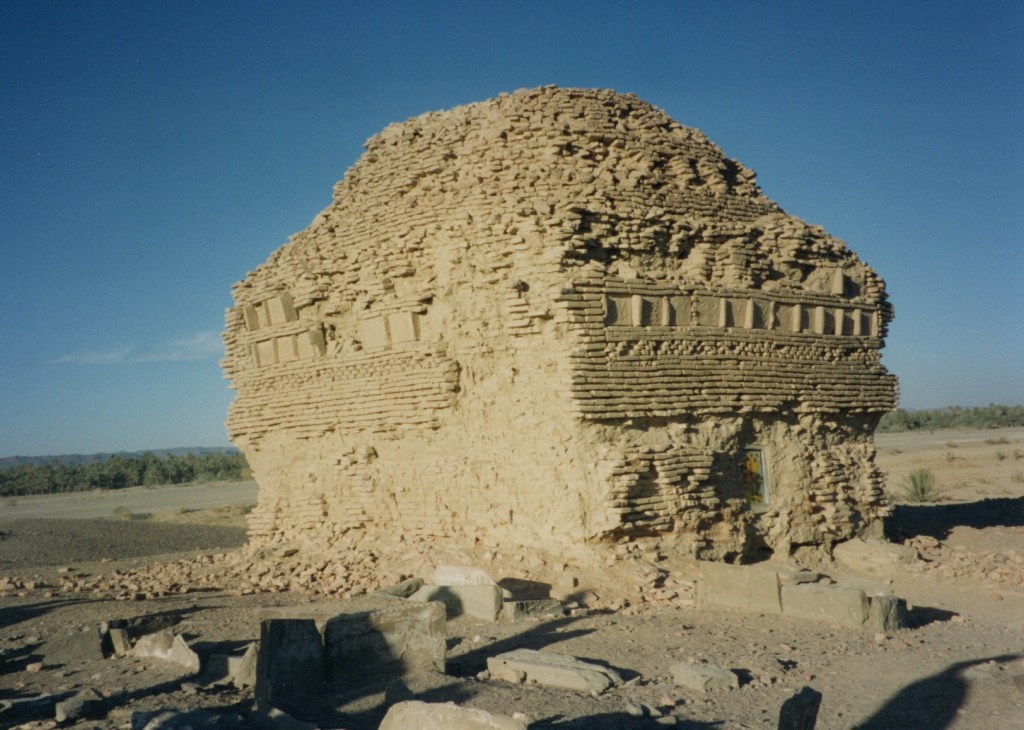

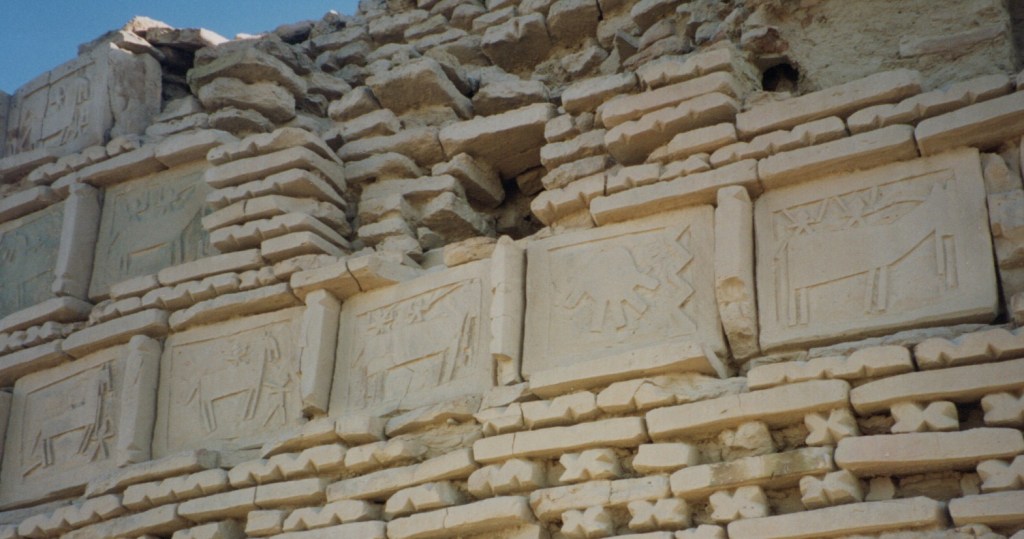
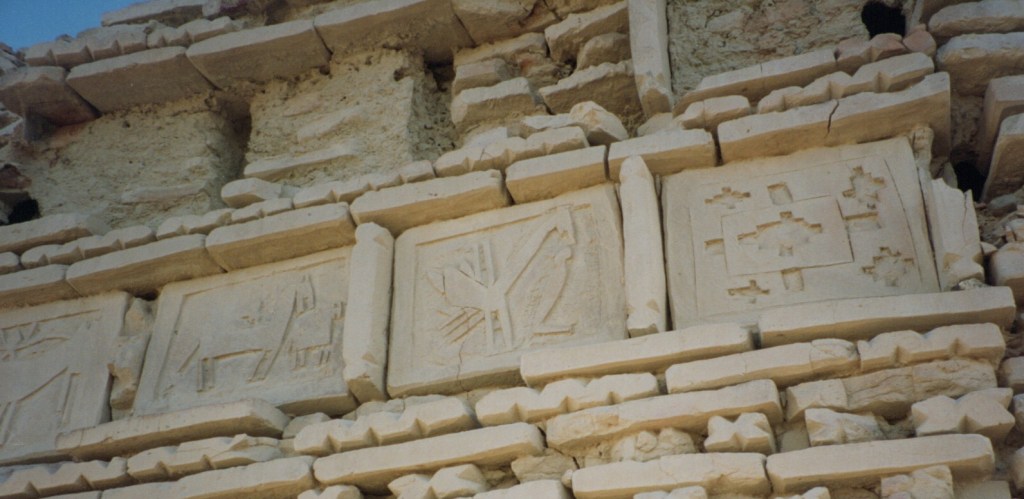
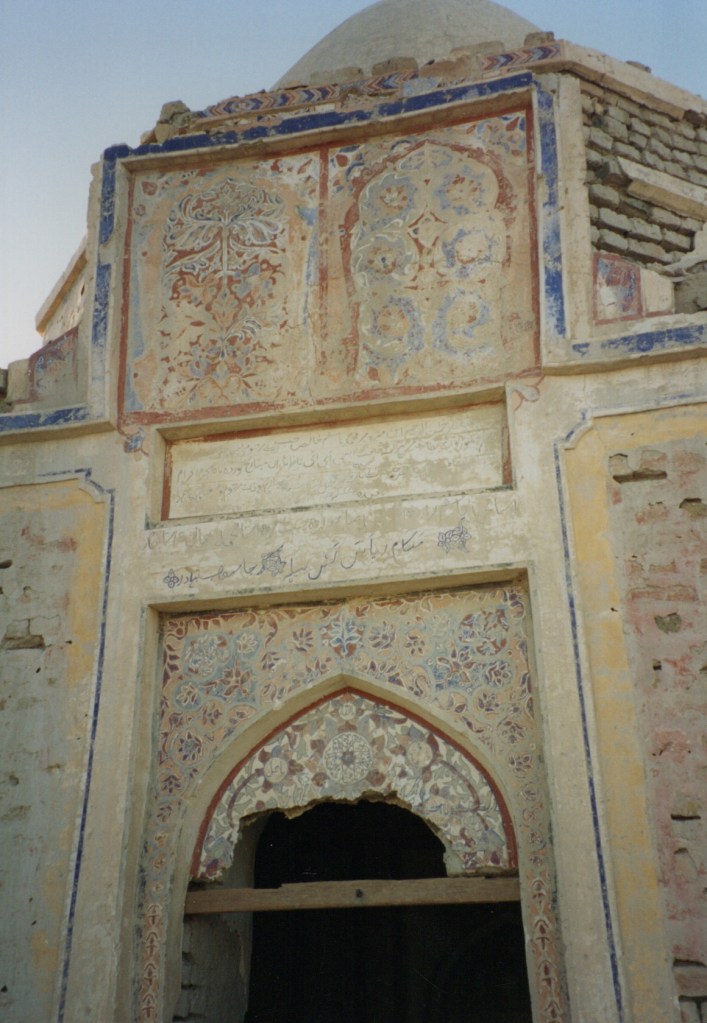
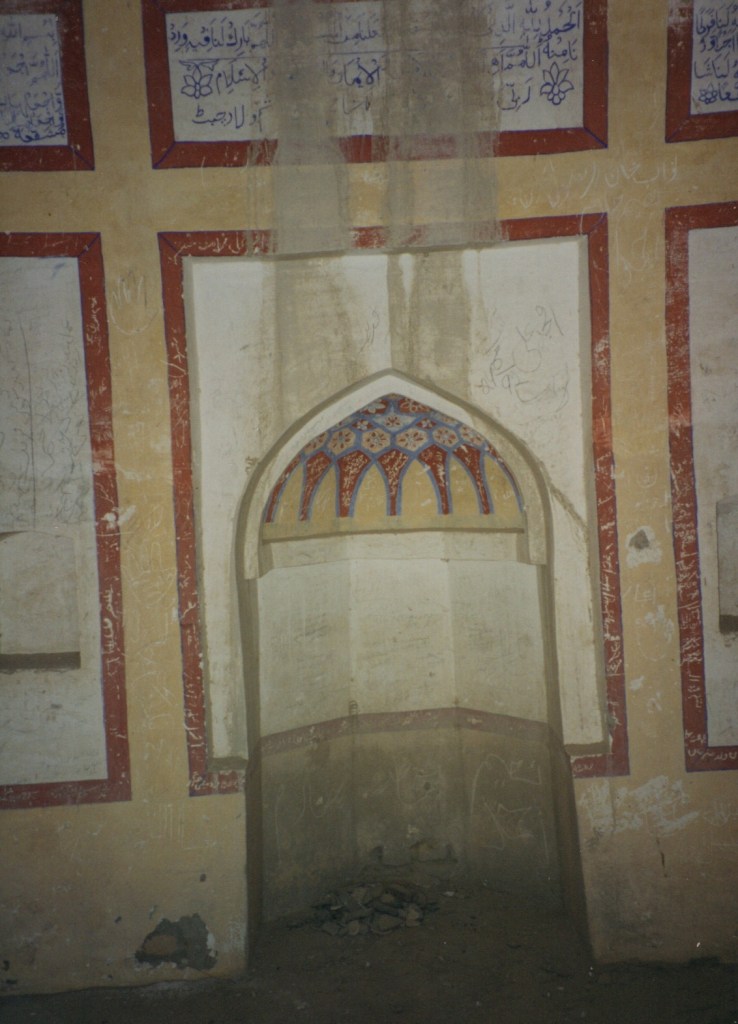
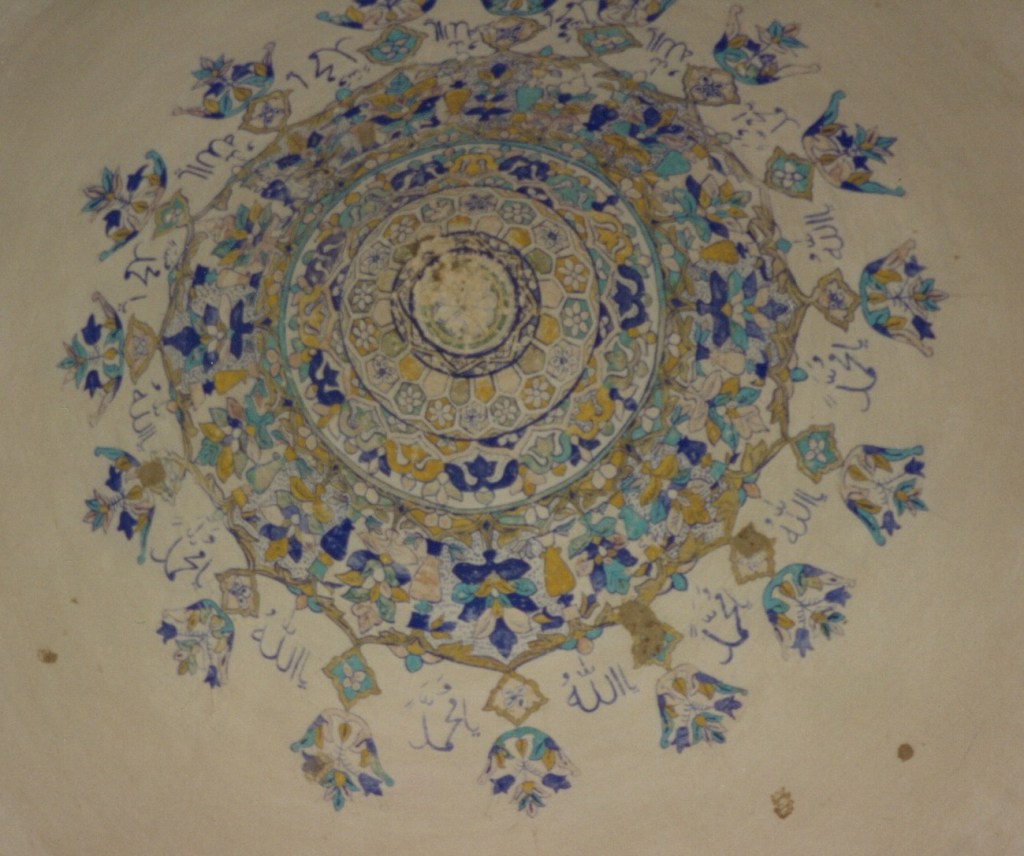
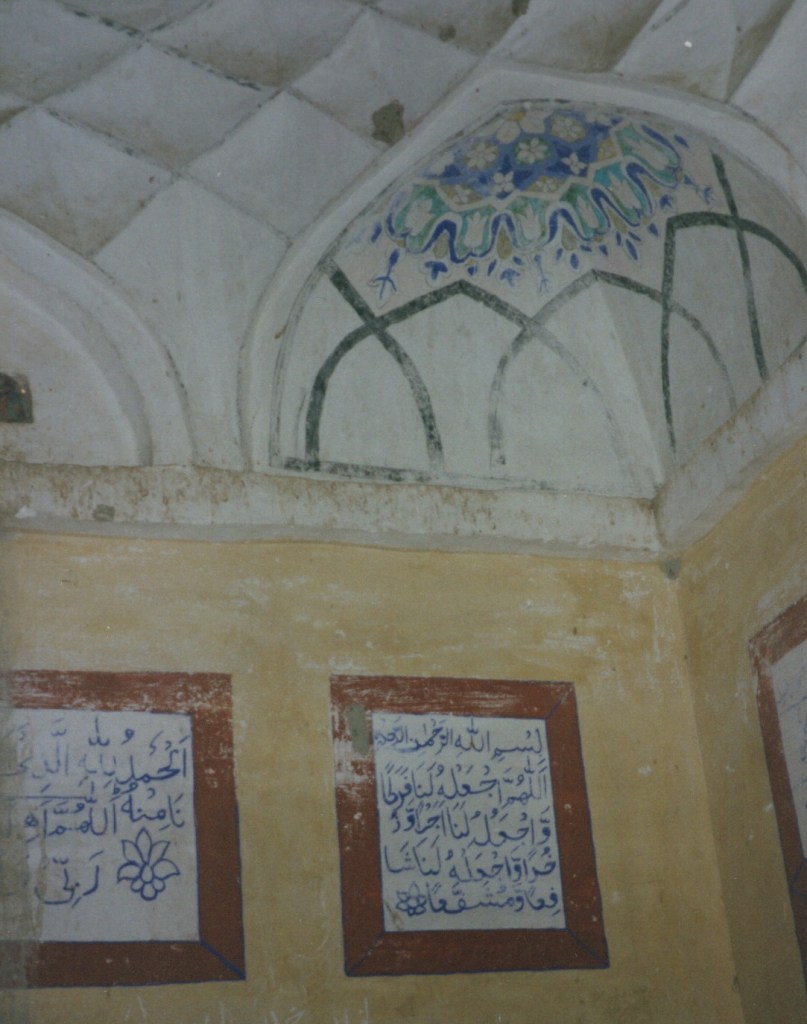
Two nearby shrines (gumbads) included an ‘elegant building, plastered white over a basic brick core, with traces of coloured painting, both inside and out, the interior particularly attractive with calligraphy, arabesques and floral decorations. The centre of the dome is in good repair.’
Christmas Day was not as lavish as in 1991, with the two Sheilas giving gifts to the Italians, who didn’t reciprocate. Their host, DrTaj Baloch, was the only person to give presents all round. Thanks to his generosity they were staying in hs guest quarters, nicknamed ‘Luxury House…lavishly furnished in the style made for the Gulf, it has fans, intercoms, phones, huge TV with dish for satellite TV, a stupendous reception area with dark red velvet cushions and bolsters, 3 bedrooms, each having enormous beds with amazing curvaceous headboards.’ At least mum was able to feel ill in air-conditioned comfort.
And that was the last time she went to Baluchistan. She was 73 and she coudn’t ‘get down to squat as my left hip joint keeps crunching in and out’ – so much so that her host managed to find her a medical loo seat in the private hospital. Everywhere they were given gifts – it was considered bad form not to accept, but luckily mum had an endless supply of Devon calendars and packets of halva whenever she went visiting – as well as photos she brought from previous trips.
‘ “We are Baluch!” is the cry from one and all, which means endless hospitality’ and great kindness. Sheila loved the Baluchi people, and they her – it was only her colleagues who made life difficult.
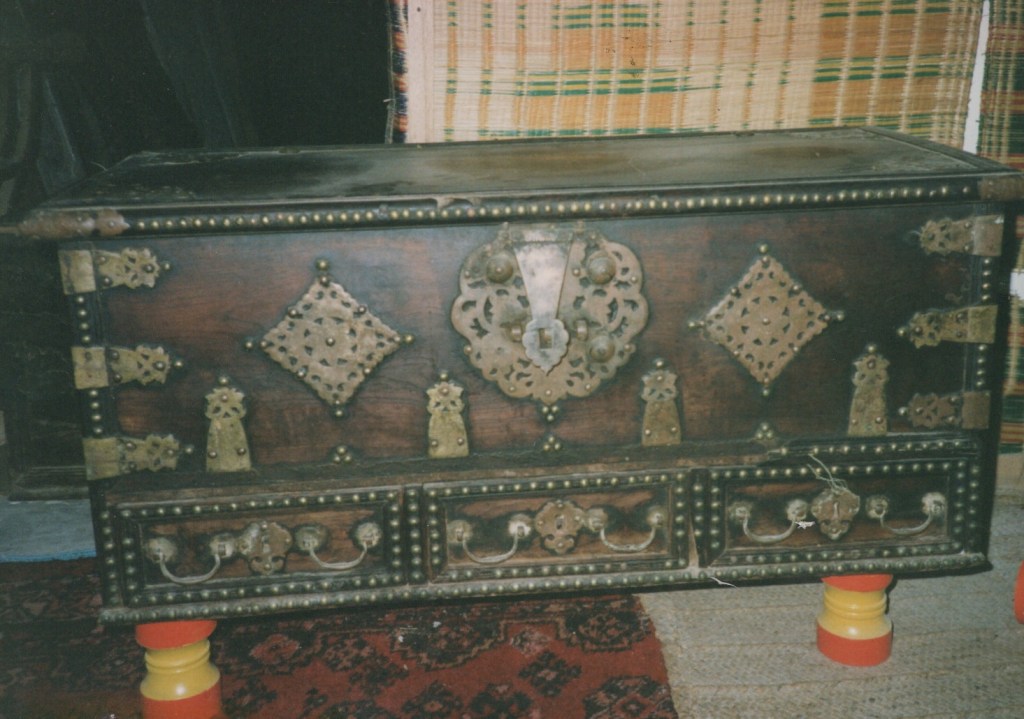
Her mother lived to be 109, and all her other female relatives lived to be much older than mum’s paltry 89, and I often wonder whether all the stresses of her travels and expeditions shortened her life – not to mention the final publication of her book, The Arab Chest. She always said it would kill her and, indeed, she died not long after its publication.
 Travels with my mother