
They moved to Kilwa after their leave in early 1957 – the year of my birth. Dad was again District Commissioner and they were to be some of the happiest days of my mother’s life as it was here she became involved in archaeology through Neville Chittick (and, later, with him!), from the British Institute who was excavating the local Swahili civilisations in Kilwa Kisiwani.
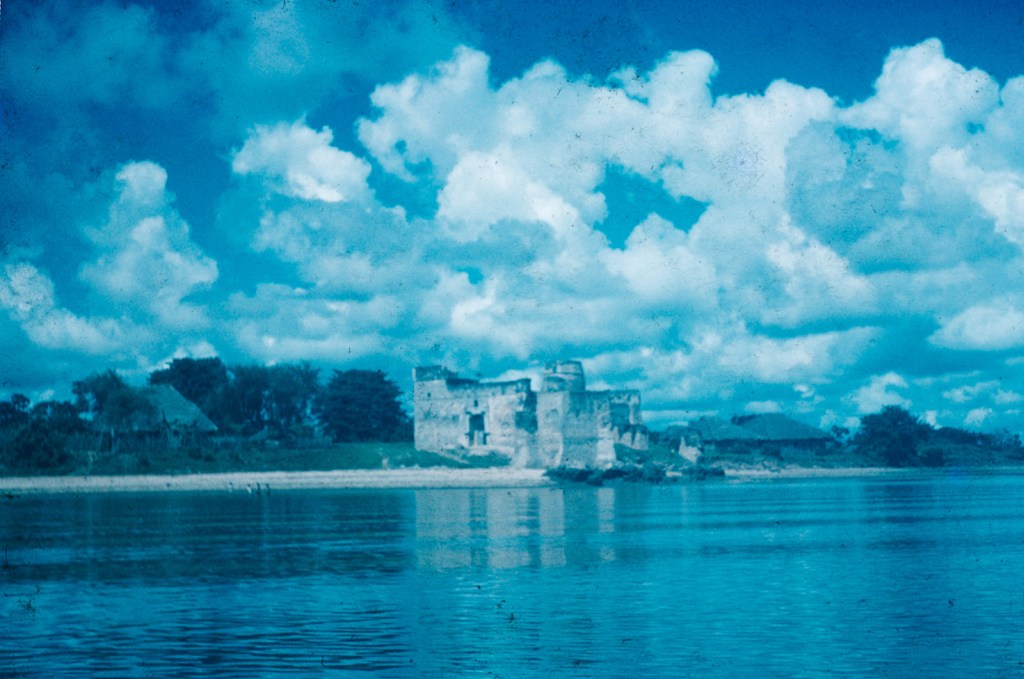

The Boma was in Kilwa Masoko, which ‘has little to commend it except the view and the coolness’ and the old town – where the Boma used to be – was in Kilwa Kivinje, which ‘we have taken a great fancy to’.


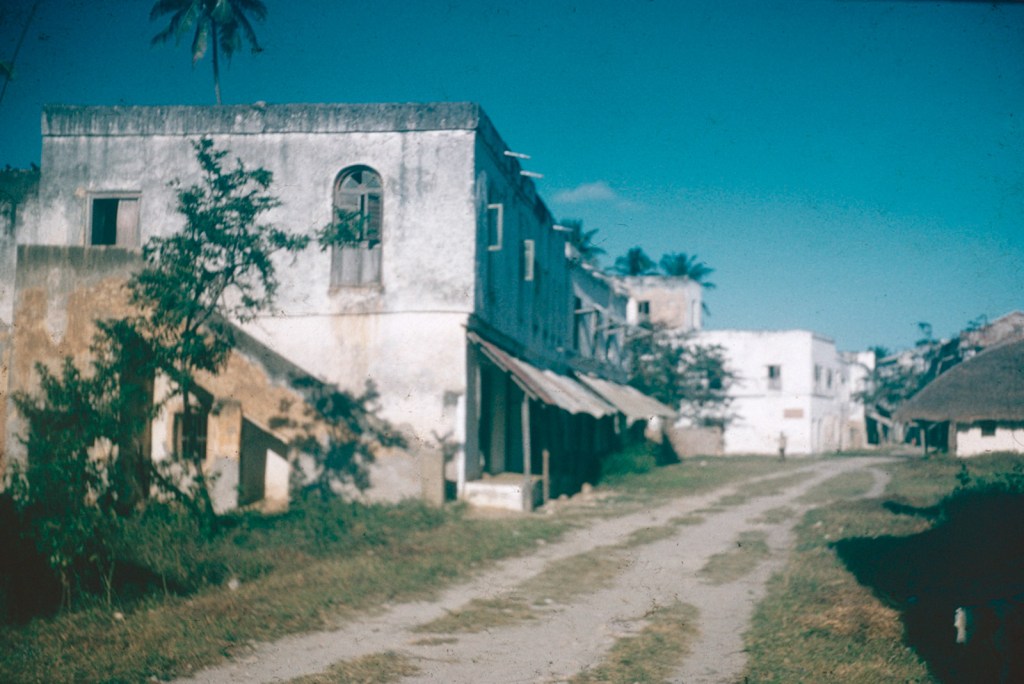
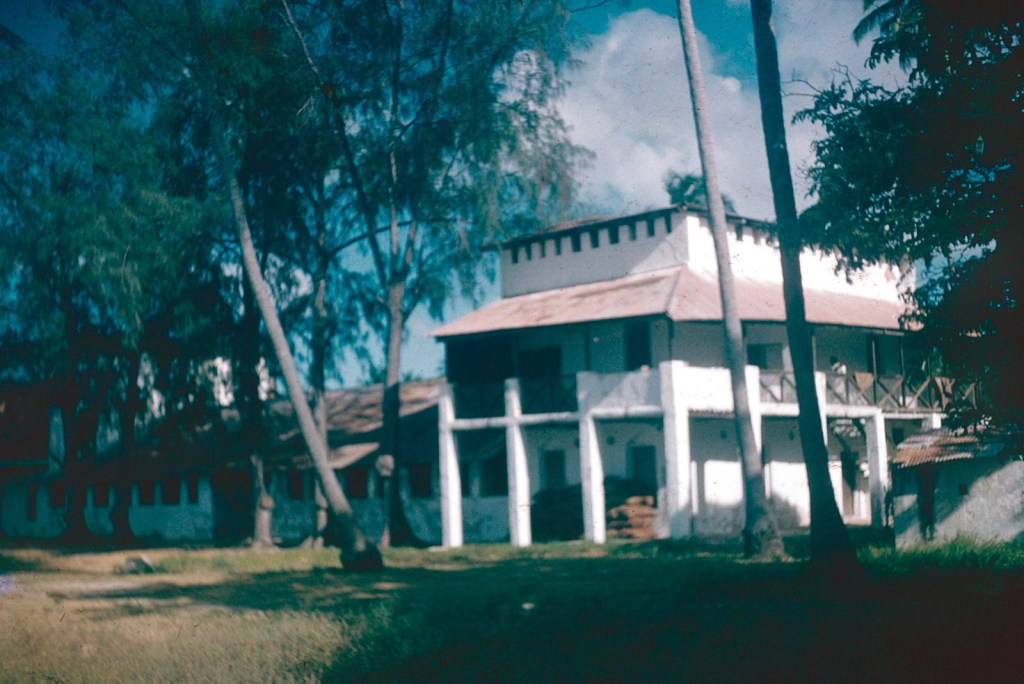
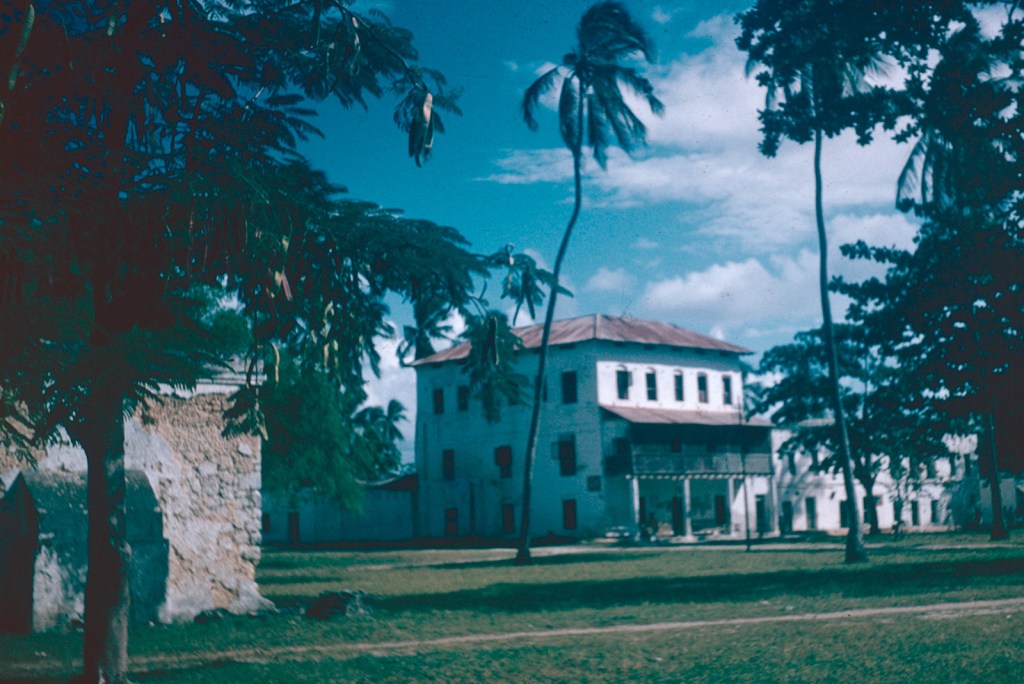
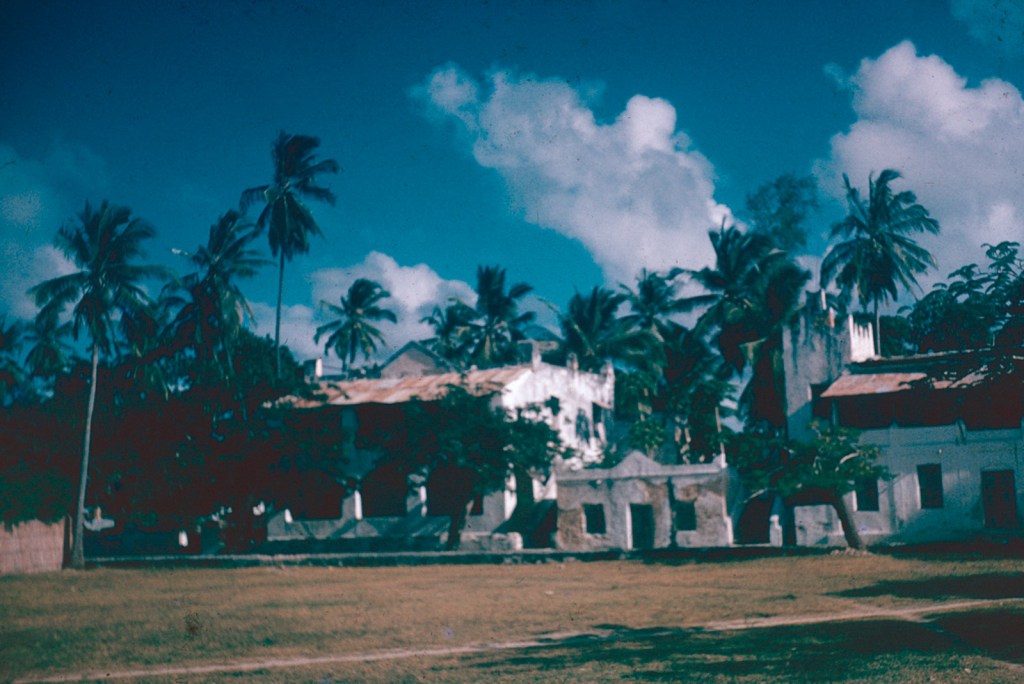
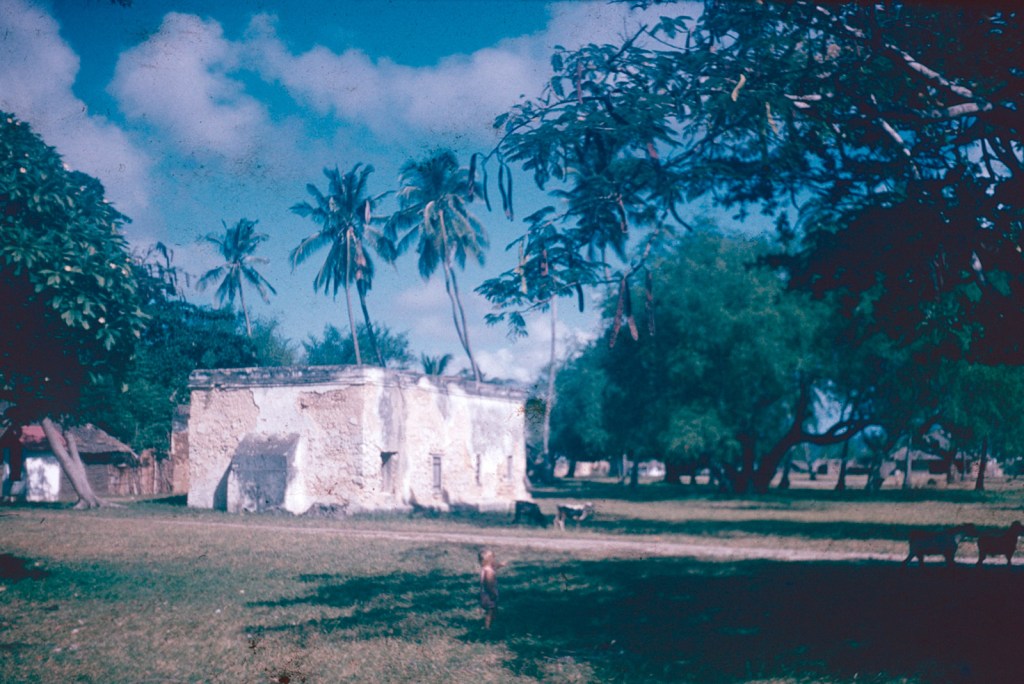
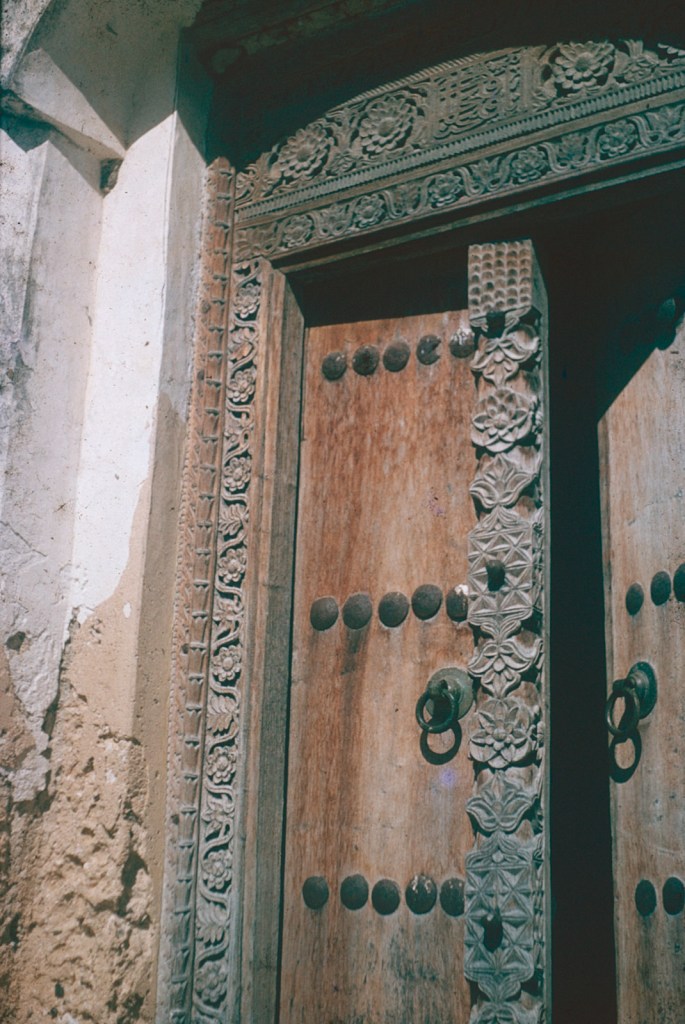
Our house is on a slight bluff overlooking the bay…very much like Mikindani. The bathing is superb. House itself quite large and unorthodox for government; none of my curtains fit…no servants of our own…Eustace [the cook] arrives tomorrow on our boat…no meat, no fresh vegetables – nothing but fish twice a day helped out with coconuts, limes, mangoes and milk. The local shops are rather restricted, but one can get the usual necessities of flour, sugar, rice etc. We hope to get meat from the SS Mombasa…and sometimes by air from Dar…The other Europeans are few [10 including wives and Plymouth Brethren missionaries]…so I don’t think we will have a very exciting social life but never mind. There is so much to see and do here one just doesn’t know where to begin… We find it very hot as does Ajax… the District Officer drove us over to Kivinje…delightful old walled town – slowly decaying – like Zanzibar must have been 100 years ago. There are lots of old carved Arab doorways and a wonderful huge mosque, the best we’ve seen in E Africa.

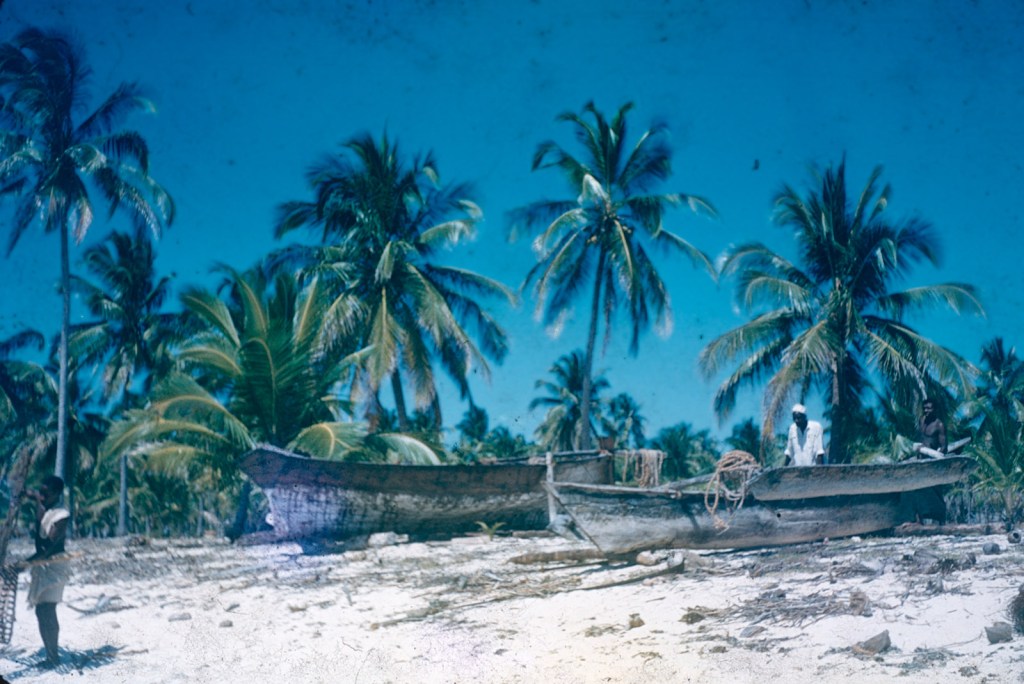
They bought a boat while they were in Kilwa and used it to go on various expeditions including to the nearby ancient Swahili settlement of Songo Mnara – ‘quite a paradise but Tom found the people very grasping’ – inhabited between the 14 and 15th century, when Swahili cultural influence and trading was at its height.
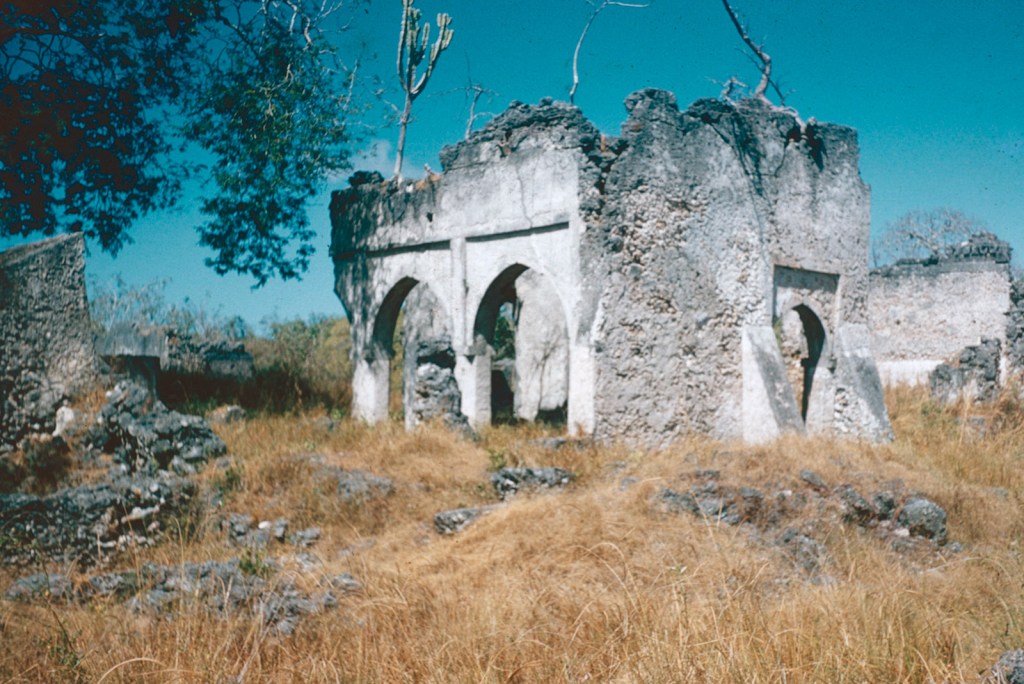
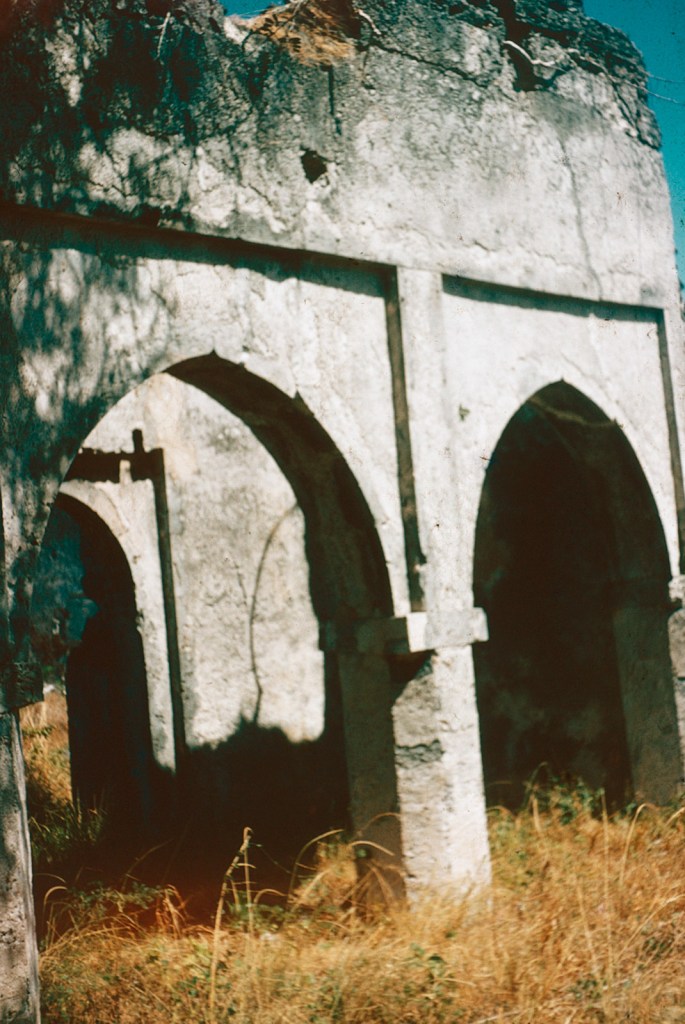
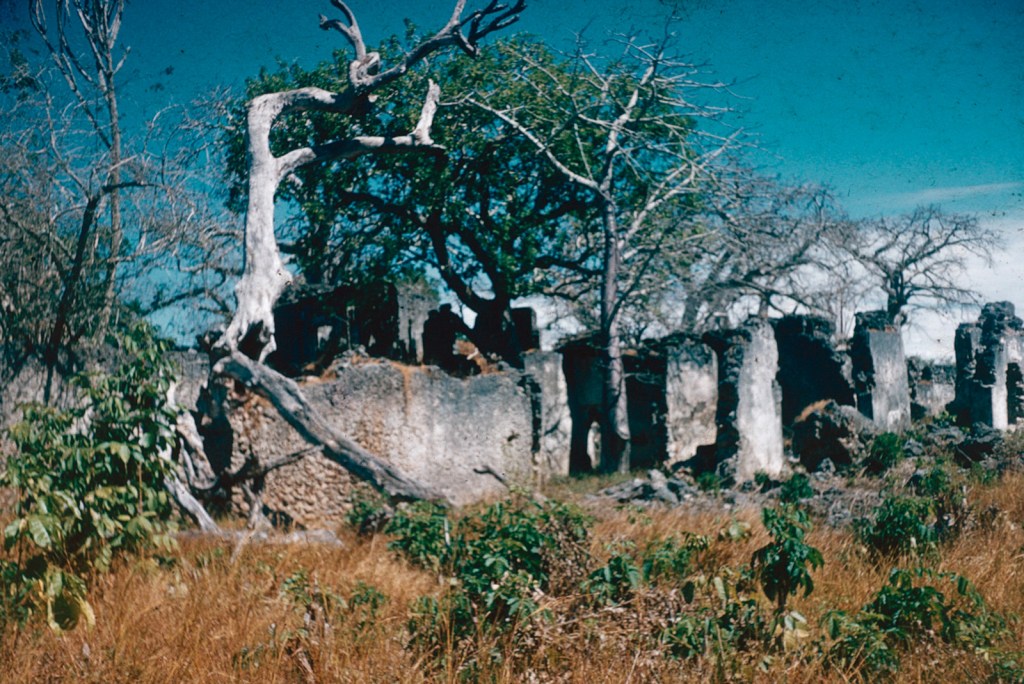
The ancient ruins at Kisiwani and Mnara
Kilwa Kisiwani and Songo Mnara were Swahili trading cities and their prosperity was based on control of Indian Ocean trade with Arabia, India and China, particularly between the 13th and 16th centuries, when gold and ivory from the hinterland was traded for silver, carnelians, perfumes, Persian faience and Chinese porcelain, which could still be found on the beach in the 1950s and 60s.
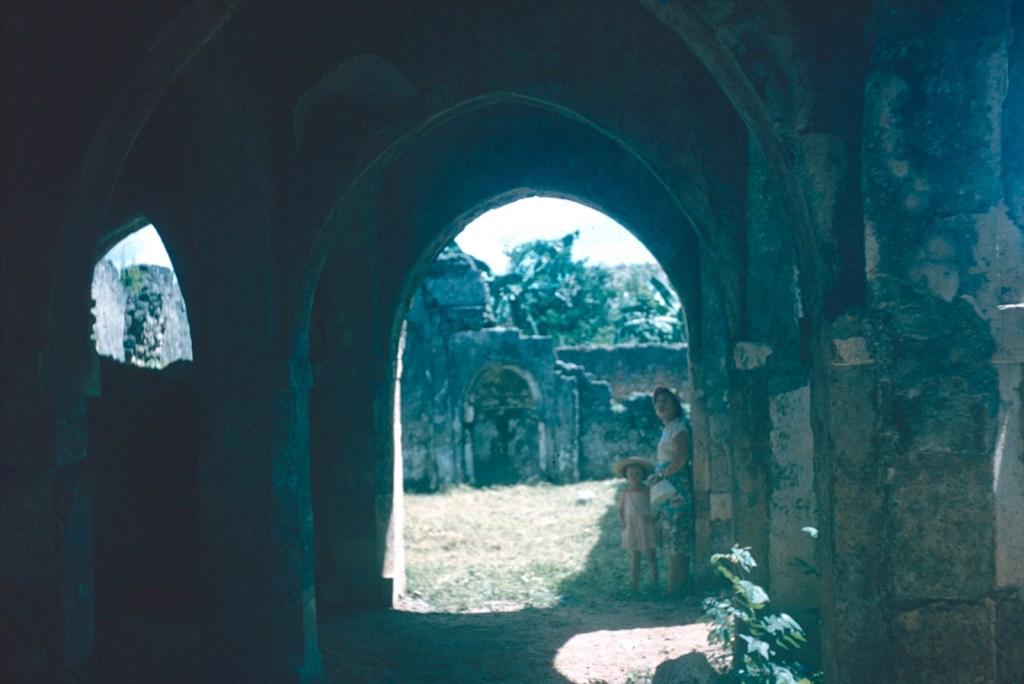
In August 1957 Mum mentions Neville for the first time, ‘an unexpected visitor in the form of the govt archaeologist. We were very pleased to see him as we had been wanting an expert down here for ages to look at the ruins and give advice about them. Also we hope they will organise a dig here later on’.
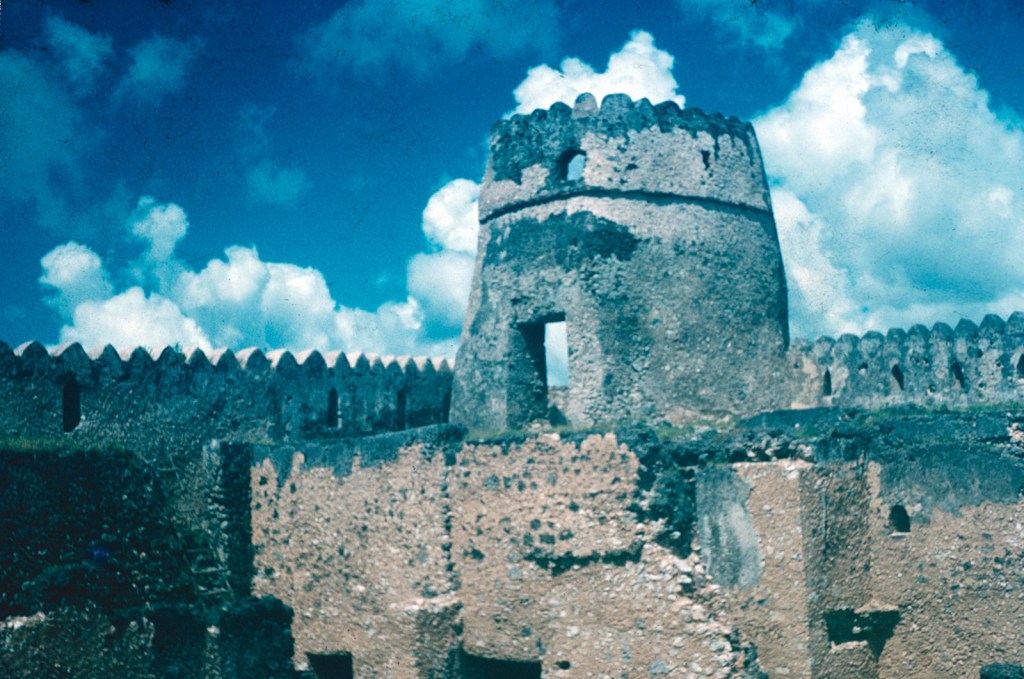
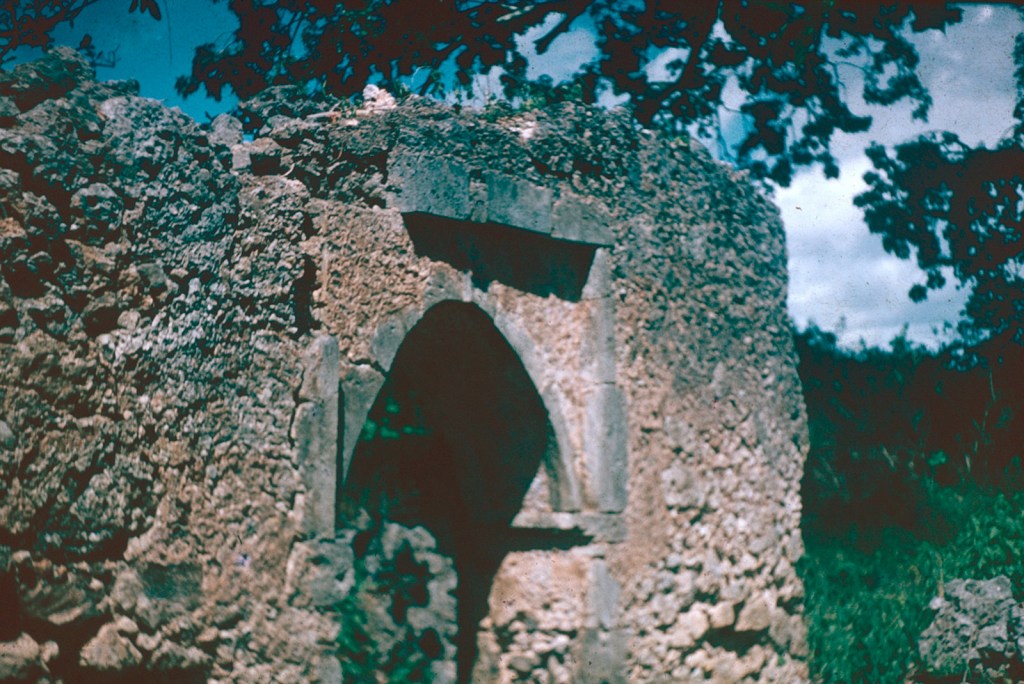
In March he visited again.
Afternoon off on Saturday and went to Kivinje with Neville Chittick, the Antiquities Officer, and George the DO, to look specifically at mosques. We went into five and he seemed very impressed with them…he was attacked by some very fierce hornets and stung in the arm…
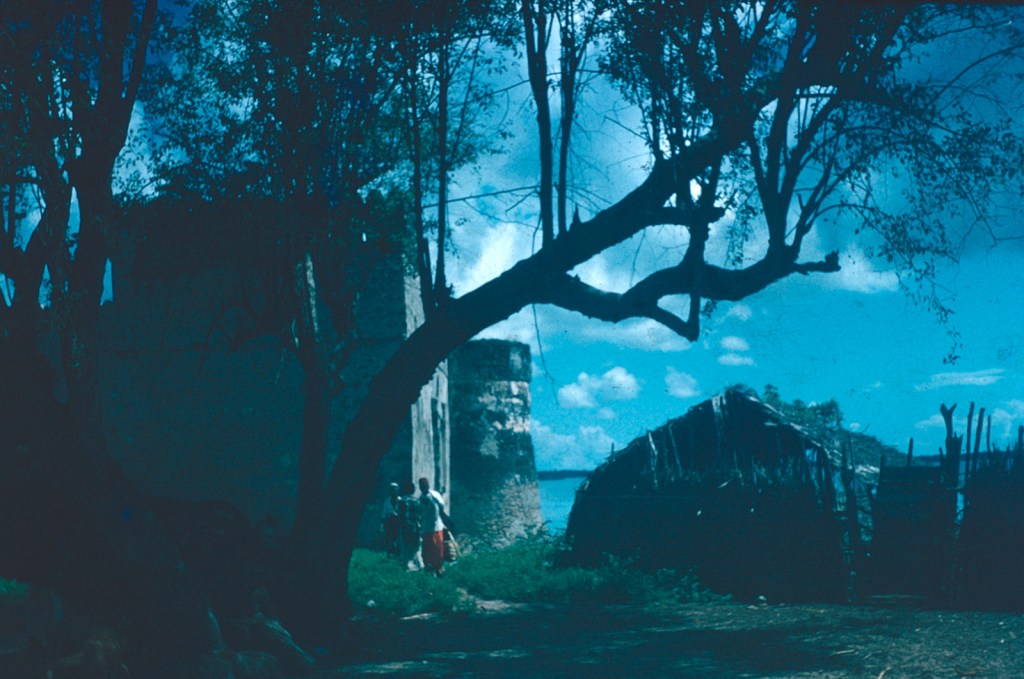
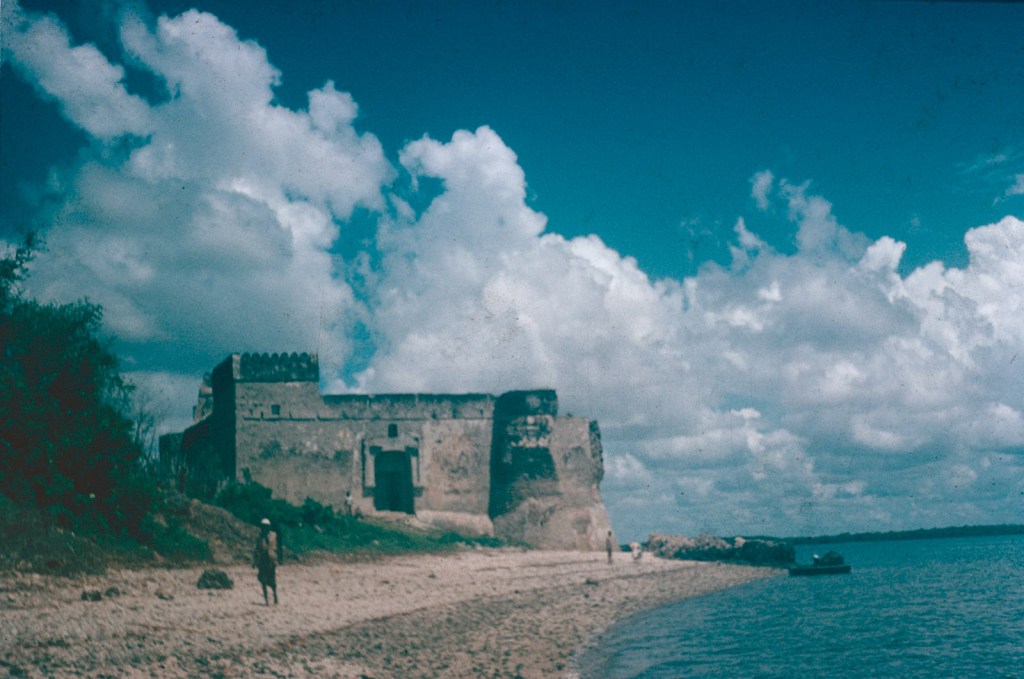
On Sunday we went over to Kisiwani to see what Neville Chittick had been up to. We took the baby [me – see below!], and the cook plus his wife to guard her. Neville has been clearing and repairing the old ‘Arab’ fort…he even found a cannon and cannon ball…the boat broke down on the way back...
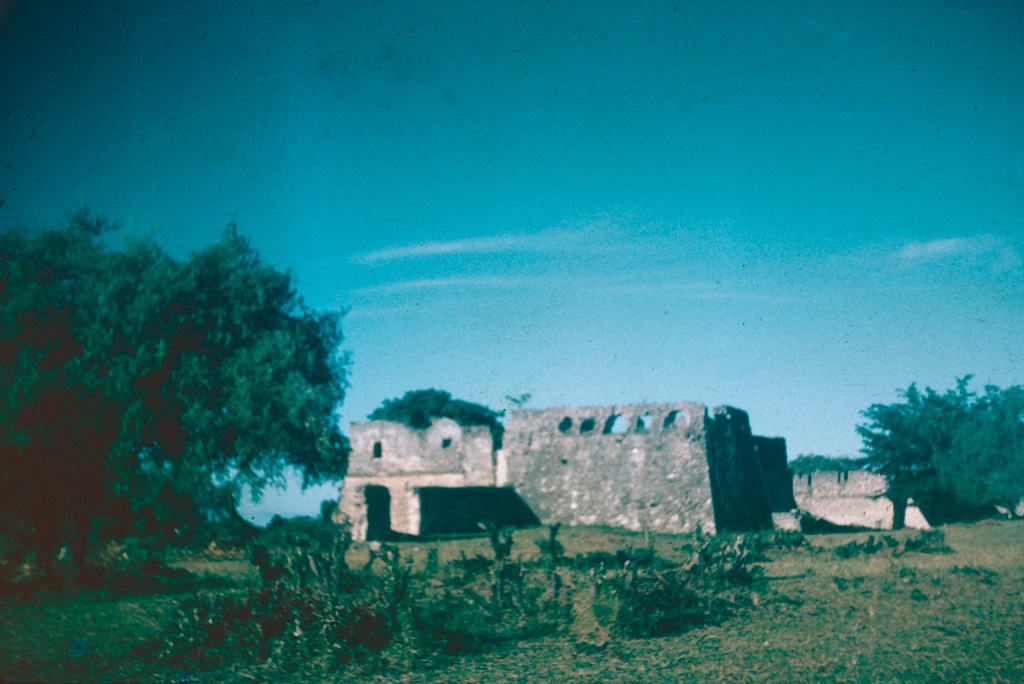
The subsequent excavations at Kilwa lasted many years (1960s-70s) and are documented in the recently digitised British Institute of Archaeology monographs edited by Neville, Kilwa: an Islamic trading city on the East African Coast (1974, 2 vols). The result is a unique record of the site of Kilwa Kisiwani and the excavations that remain among the most important and thorough conducted on the Swahili coast. They are described by UNESCO as follows:
The remains of Kilwa Kisiwani cover much of the island with many parts of the city still unexcavated. The substantial standing ruins, built of coral and lime mortar, include the Great Mosque constructed in the 11th century and considerably enlarged in the 13th century, and roofed entirely with domes and vaults, some decorated with embedded Chinese porcelain; the palace Husuni Kubwa built between c1310 and 1333 with its large octagonal bathing pool; Husuni Ndogo, numerous mosques, the Gereza (prison) constructed on the ruins of the Portuguese fort and an entire urban complex with houses, public squares, burial grounds, etc.
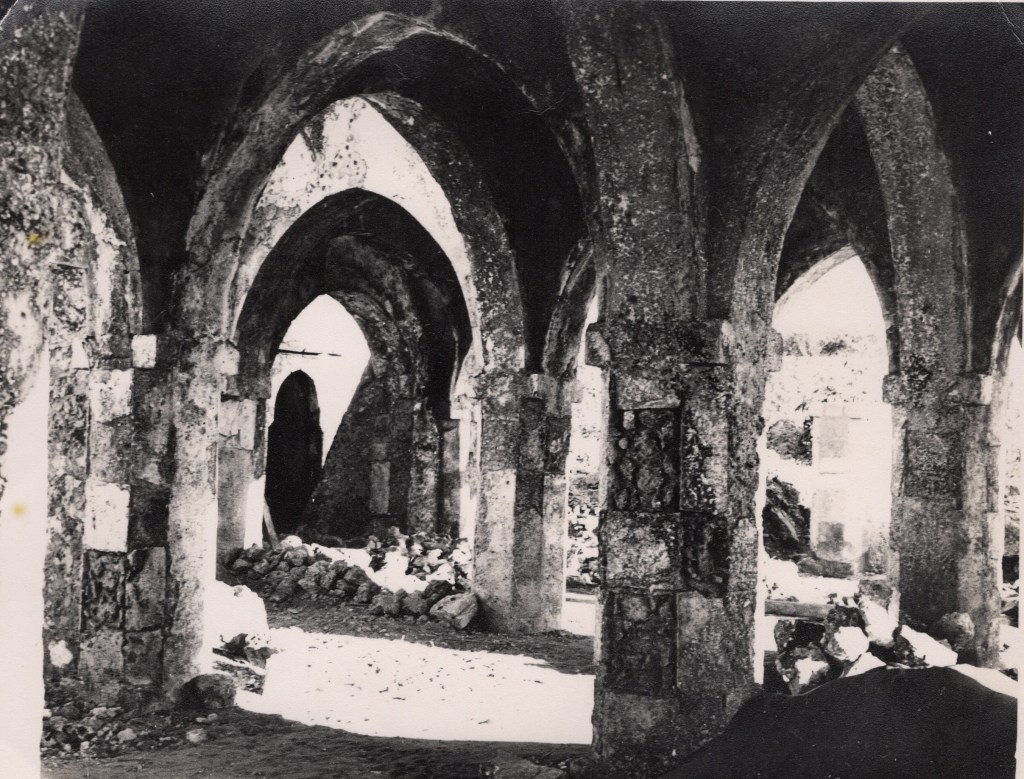
The ruins of Songo Mnara, at the northern end of the island, consist of the remains of five mosques, a palace complex, and some thirty-three domestic dwellings constructed of coral stones and wood within enclosing walls.
The islands of Kilwa Kisiwani and Songo Mnara bear exceptional testimony to the expansion of Swahili coastal culture, the lslamisation of East Africa and the extraordinarily extensive and prosperous Indian Ocean trade from the medieval period up to the modern era.
Here is the wikipedia link https://en.wikipedia.org/wiki/Kilwa_Kisiwani
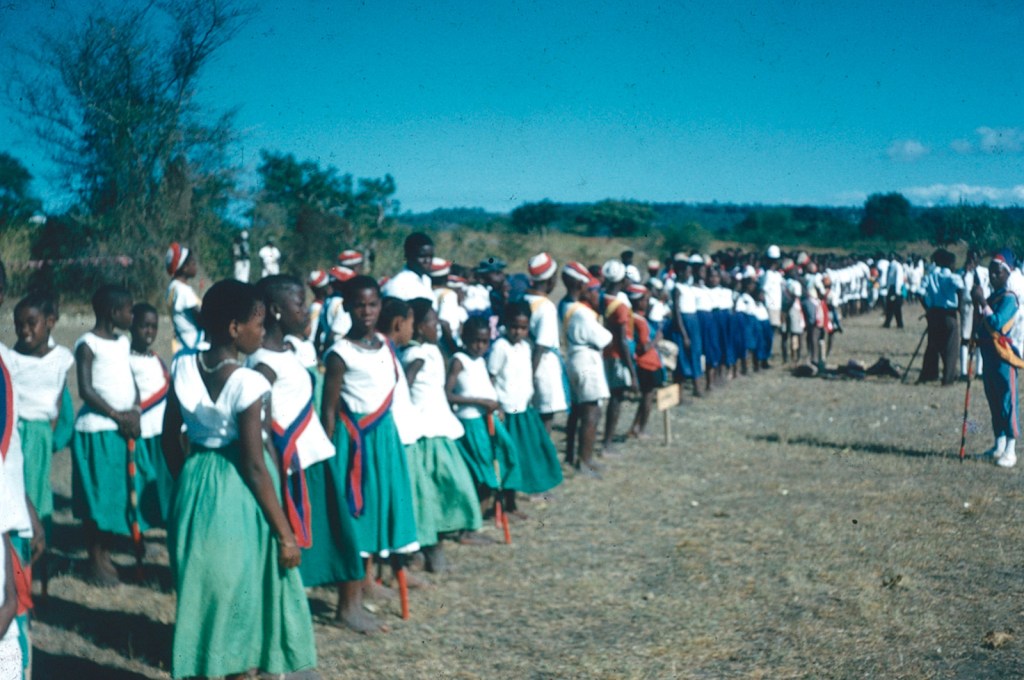
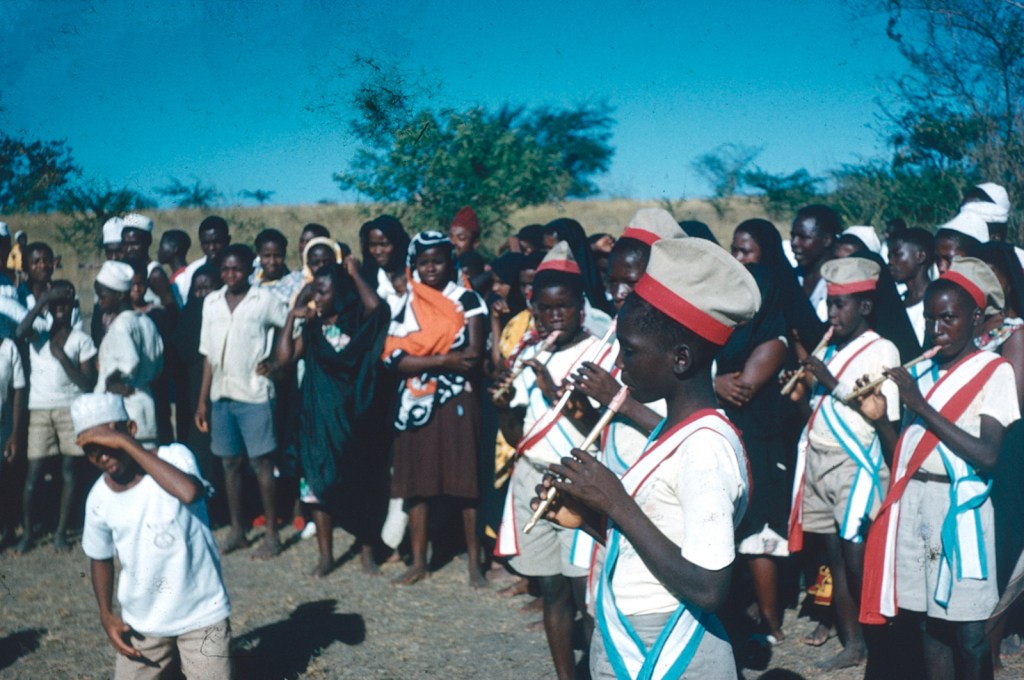
Empire Day and School Sports Day 1959
There was a combined Queens Birthday Parade and Empire Day School sports…’we have bought the most wonderful prizes…Tom will blossom into uniform and I into a hat and gloves . I draw the line at stockings…I am so looking forward to it’

Ionides
Ionides was a legendary snake expert, who they got to know well. He came to East Arica between the wars and became a poacher, then hunter and, finally, manager of the Selous National Park (after 1933 he never poached again), until ill health forced him to retire. He was known as Iodine to his friends, was ‘camping in Masoko …as English as you make them but looks Greek owing to entirely Greek ancestry… searching for sea-snakes…he is absolutely charming, unworldly ( he has no watch nor fountain pen; cannot drive a car) erudite (can talk on any subject from opera to ancient /roman history with great authority) and of great personal charm. I went with him to watch snake catching yesterday but unfortunately he was not successful …Enjoyed watching him handle his three captured snakes… It is rather sad, although only 57 Mr Ionides has thrombosis and now can’t go on long expeditions, hunting and seeking game.’
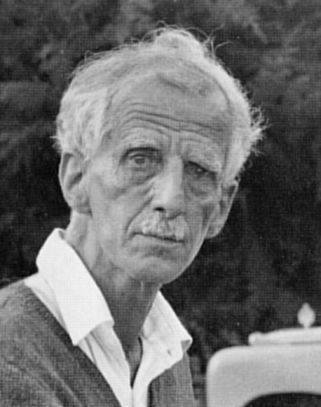
Leslie Latham Moore, the self-proclaimed Sultan of M’Simbati [see section on Mtwara page], wrote about Ionides to Mum in 1957:
About Ion, yes I know Ionides very well. Call him ‘Nut Brown’ one day and see what he does. I first met him in the KAR in Russia. He’s the world’s greatest game poacher has been run out two pumps ahead of the police from the Congo, Portuguese Africa, Angola and most other countries in Africa. He is the best ranger there is as he knows all the poaching tricks. He was in charge of Liwale for a long time if the n—– did not do as he told them he just burned the village down, quite simple. If we had more blokes like him about, this country would not be in the bloody awful state is in now. He has been bushwhack for years now, carrying snakes about in his shirt, calls them by name Fatima, Asha, etc.
Ask him if he remembers shooting an elephant just outside Arusha without a license, then when they caught up with him, he wrote out a cheque and application and shoved it under the DC‘s door on Saturday afternoon having dated it the day before. Yes old Nut Brown is full of good tricks. Give him my love.
Strangely his great (?) nephew Alex ended up as our next-door neighbour in Belsize Park; as did the great-niece of the government scientist on the Groundnut Scheme, Hugh Bunting. There must be something in the air!
Installation of HH Aga Khan, the 49th Imam
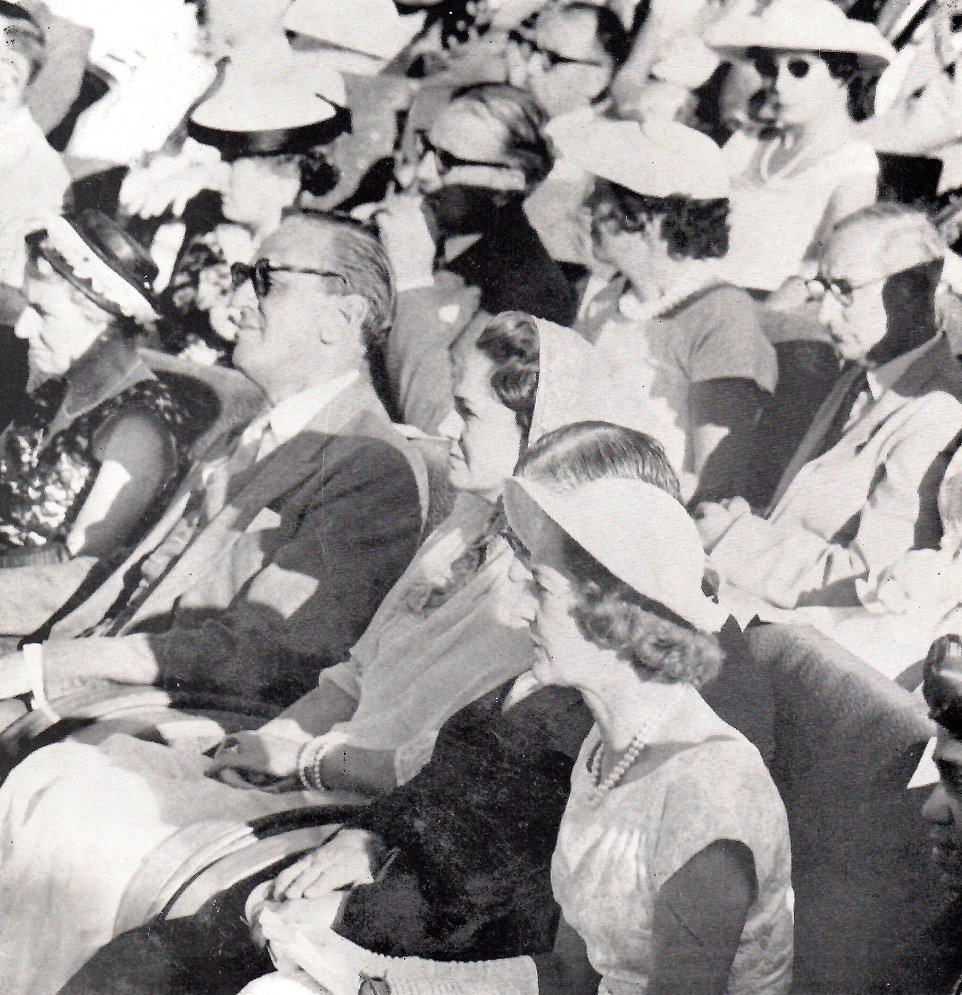
On October 19, 1957, while Mum was in Dar awaiting my birth, the Ismailis celebrated the installation of the (former) new Aga Khan Prince Karim (who later became my boss in 2007, when I was his Media Director). It was a star-studded affair, with the Aga Khan’s’ father, Prince Aly Khan, famous for marrying Rita Hayworth and passed over in the succession due to his playboy lifestyle; his then wife Princess Joan, mother of HH (Yarde-Buller, Viscountess Camrose), and all the local dignitaries: Mata Salamat (Begum Aga Khan, HH’s Grandmother French-born Yvonne Blanche Labrousse); Julius Nyerere of Tanzania (then President of TANU); Governor and Lady Twining; Mr. Alan Lennox-Boyd, the Colonial Secretary (now Lord Boyd); Prince Seyyid Abdulla, representing his father, the Sultan of Zanzibar: Sir Bruce and Lady Hutt, Mayor of Dar-es-Salaam, the Liwali, Councillors and many other prominent people.
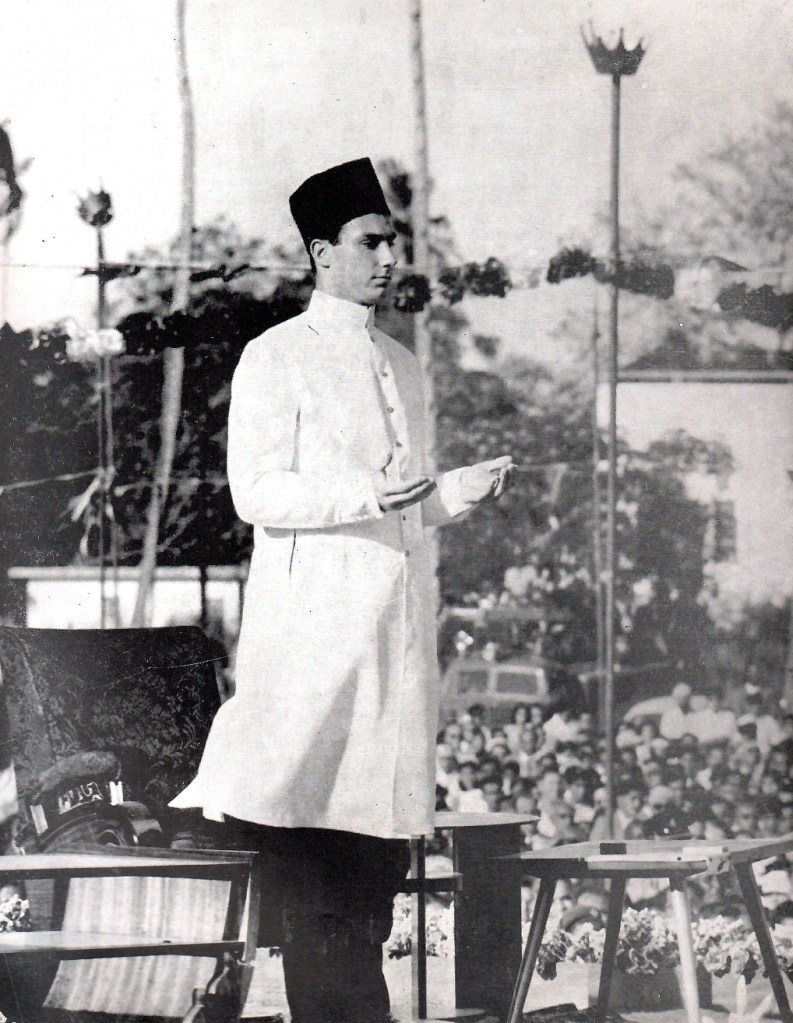
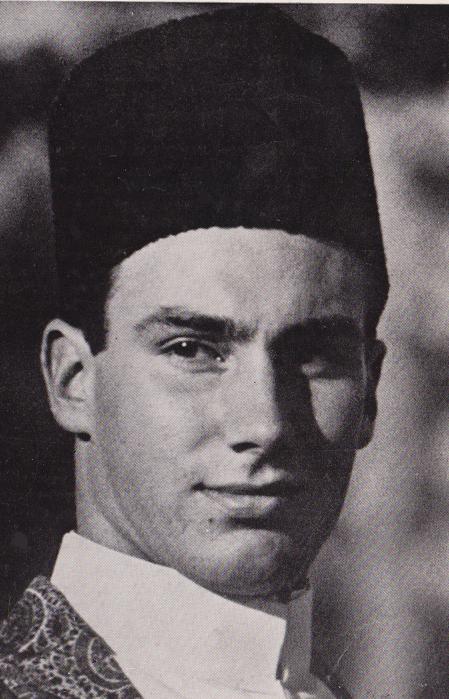
Clad in a white high-necked tunic, black trousers and astrakhan cap, Prince Karim, the 49th Imam mounted the dais upon which the 48th Imam, Aga Khan III, was weighed in diamonds in 1946
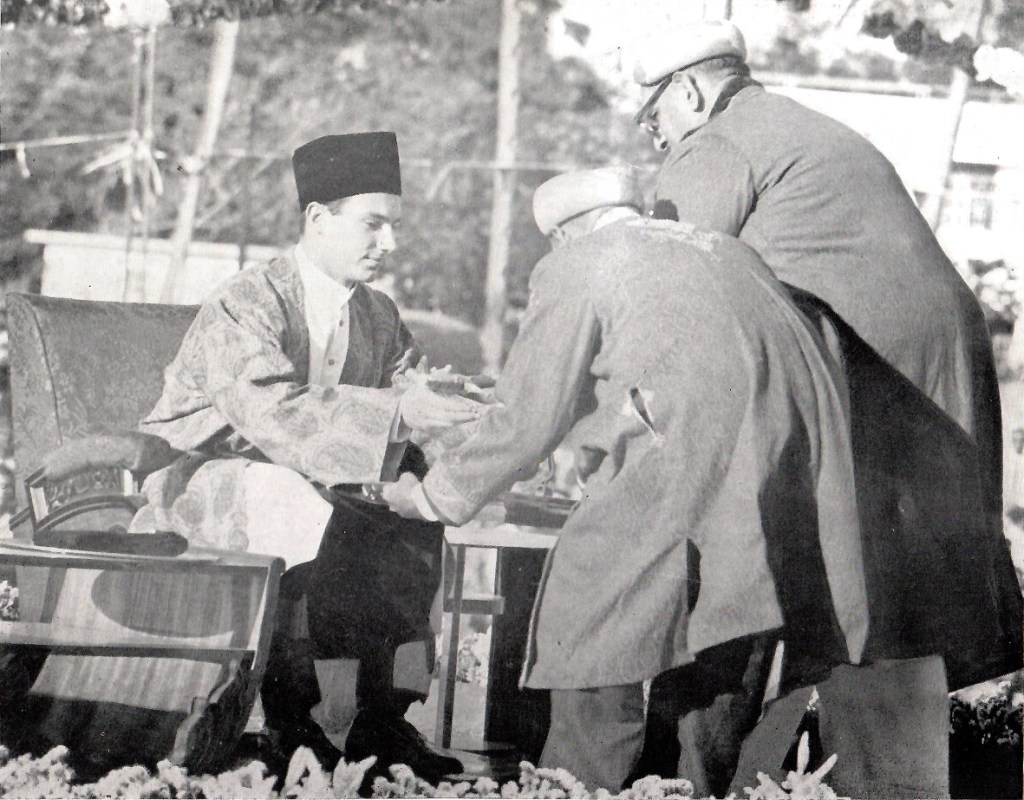
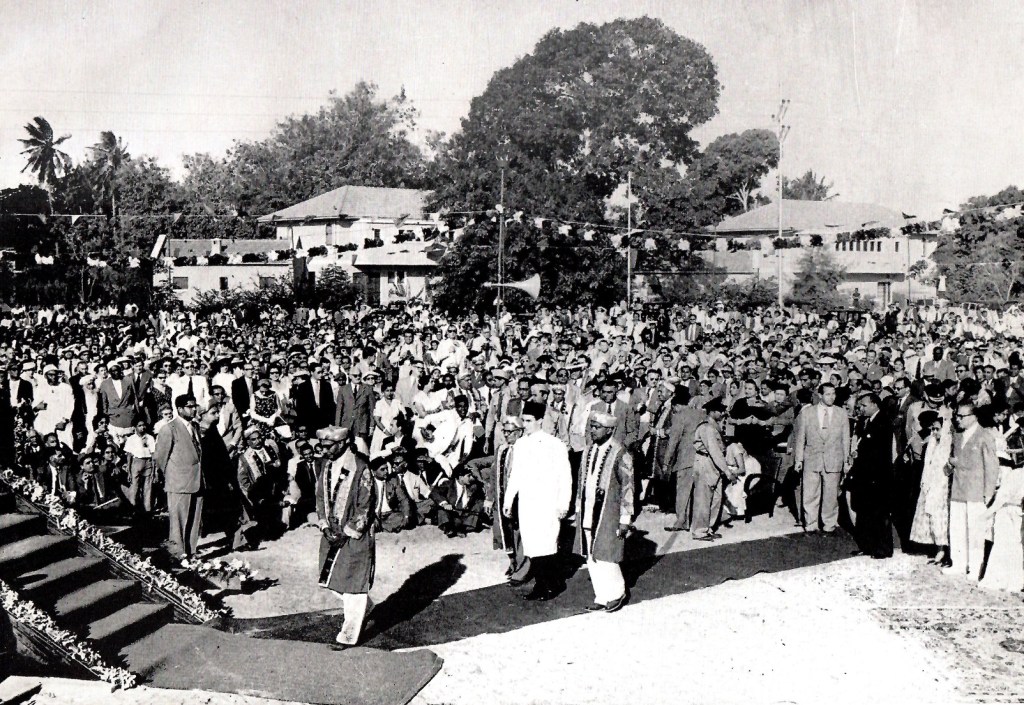
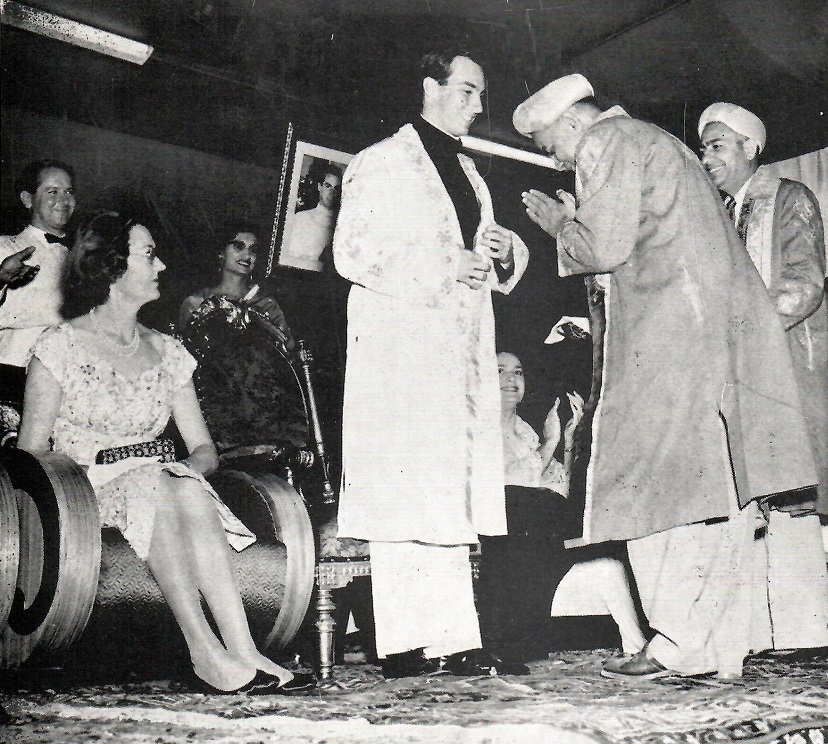
Mum’s hosts the Ramsays ‘set off in good time, and managed to get excellent places in the front row, from which they saw everything perfectly – not only the ceremonial but HE and his party and all the local dignitaries as well…’ Mum in the end decided not to go as she was afraid, being 9 months pregnant, it would be badly organised and she might not get a seat.
My arrival & Christening
I was born in Ocean Road Hospital, Dar es Salaam on 3 November 1957. Named Victoria to celebrate my longed-for arrival after 11 years of marriage. ‘We are thrilled with our daughter and you will be delighted to know she arrived safe and sound. 7 lbs 7oz.’
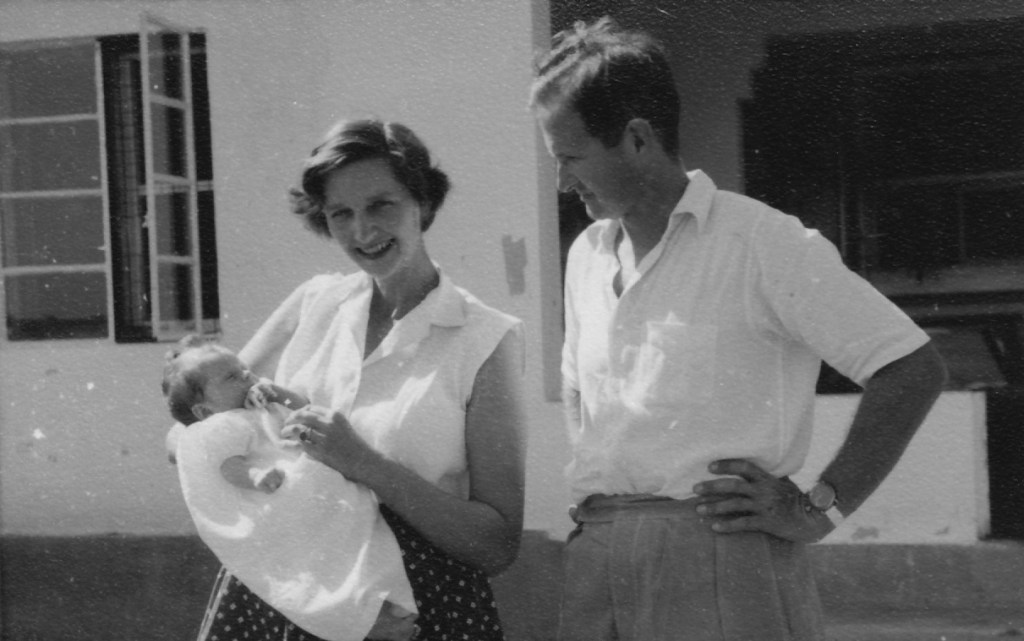
The Governor General and his wife, Lord and Lady Twining presided at my christening..
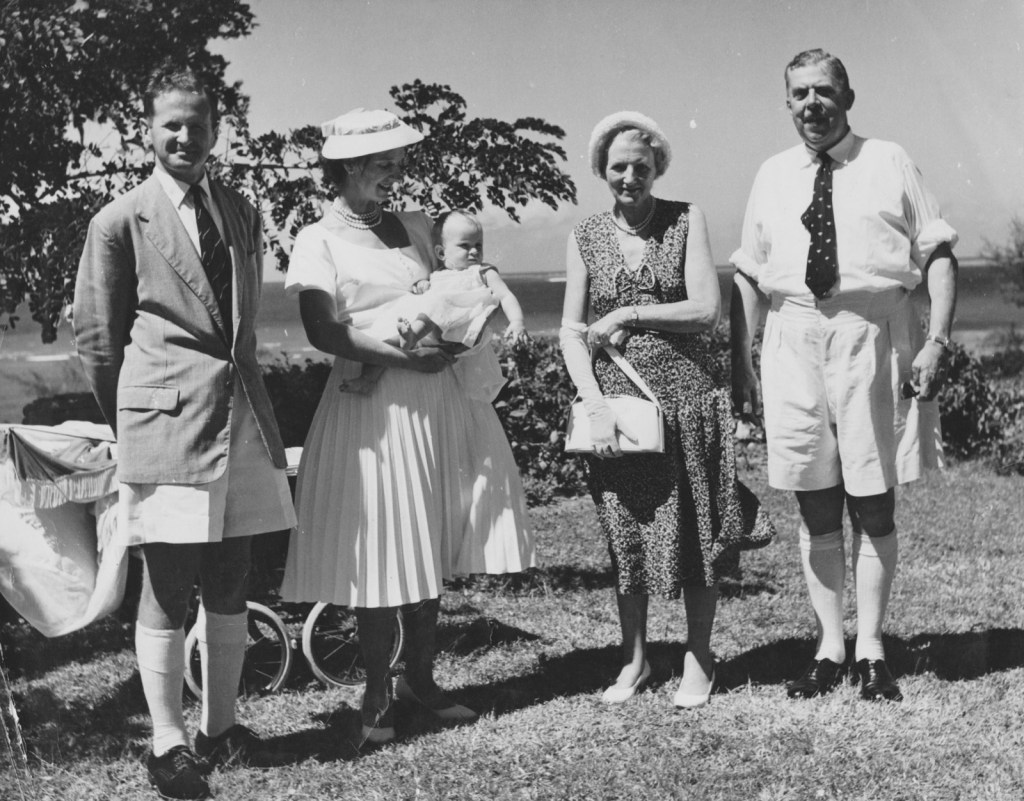
The baptism was at 3.30 and Victoria smartly gowned in cream silk was wheeled over in the pram by Rashidi [the dhobi] whilst we went by car! A nice South African girl was proxy godmother, and Ted the proxy godfather. We all clustered round the font …the baby slept peacefully until she was splashed with water…when she awoke with a start but still didn’t cry so I suppose the devil is still in her…we were most interracial with Europeans, a Seychellois family, and Indian, a Goan, a half-caste and lots of Africans, some of whom were Moslems. Victoria had several presents, including a very very old Chinese bowl, a relic of old Kilwa. Alas in the middle of it all I had to hurriedly dump the baby into the willing arms of a missionary and rush away to be sick. We had had lobster for lunch….after I’d had some milk of magnesia I felt much better and was eventually prevailed upon to go to a large Ngoma [dance] held in the market in honour of the baby (Tom had been prevailed upon too, to finance tea and buns and transport). It was a most lively event and went on noisily until 1.30 am
VIP visitors
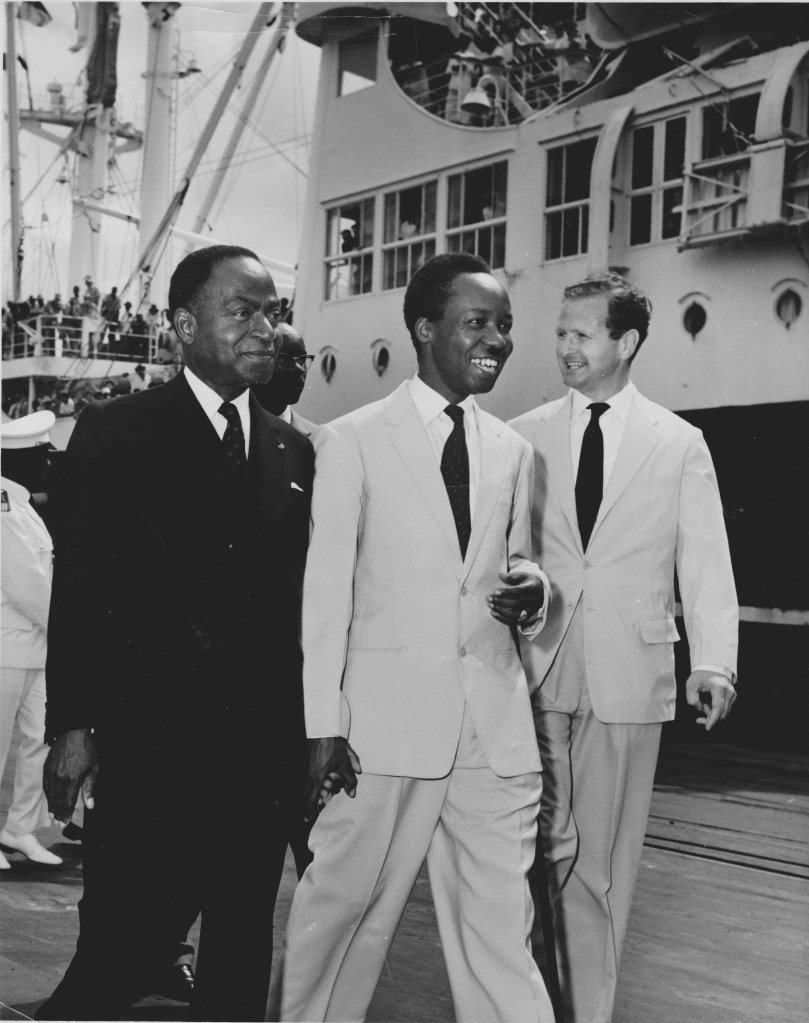
In addition to the Governor General and Provincial Commissioner, and all the endless rounds of entertaining Mum had to do, they had some unusual visitors including the future President of Tanzania … ‘expecting Julius Nyerere to dinner, leader of TANU [Tanganyika Africa National Union]…he is the future premier of the country and they say he is a very moderate and pleasant man. We may also be having Evelyn Waugh, the novelist to stay next month. He is doing a round tour of Africa and a big safari in T. Should be interesting though a little terrifying as he is so clever – and cynical’.
She writes to her mother on 4th and 25 February 1959, recounting both visits:
We have had two momentous events this week, the first being the visit of Julius Nyerere, the future Prime Minister of Tanganyika and leader of TANU, and the local South province TANU member African and the TANU-supported Indian candidate… election starts on Monday. We had this party to dinner and in the end sat down as nine… Julius is the most moderate intelligent person, most interesting to talk to and a pleasant character. He is quiet and not a bit flamboyant. The provincial TANU leader is a frightful fellow absolutely anti-European – churlish, rude and extremely unpleasant, absolutely no sense of humour and tries to be awkward all the time; the Indian is a sitter-on-the-fence talks about getting rid of the foreigner and ‘we Tanganyikans’ when he is a foreigner himself, but of course it pays to follow this line. They held political meetings around the district and left by plane after five days.
She wasn’t shy of expressing her opinion!
Evelyn Waugh arrived on the plane on Monday and is staying till tomorrow. He is 56, portly, pink and Churchillian most affable and pleasant. He is a man or few words but does talk gravely when manners demand. He’s not at all boorish as I’ve been told, rather gourmet who doesn’t eat much, but he will take second helpings of things if he likes anything (gratifying for the harassed Kilwa cook) and he doesn’t drink much. He tells me he has six children, three of each, one of whom was badly injured in Cyprus when an automatic gun he was in charge of jammed and he got six bullets in his chest. He’s been in hospital for nine months Waugh’s trip has been sponsored by the Union Castle Line and he is to write a book on East Africa at the end of it. Tom took him to Kisiwani yesterday and I drove him over to Kivinje today where we spent the morning walking round.

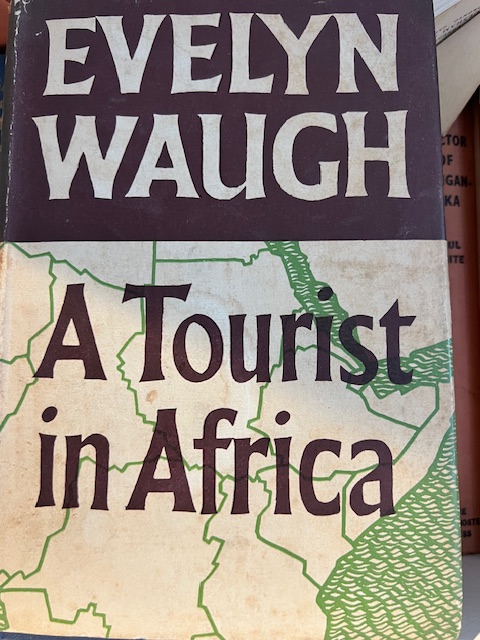
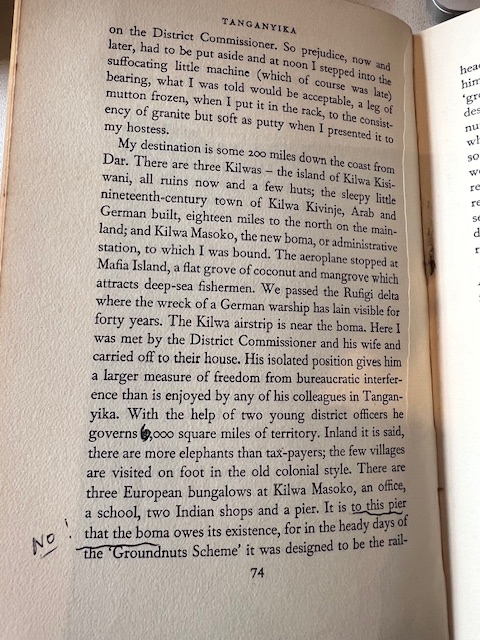
The book was published as A Tourist in Africa, and here is the excerpt from it about my parents.
Here I was met by the District Commissioner and his wife. His isolated position gives him a larger measure of freedom from bureaucratic interference than is enjoyed by many of his colleagues in Tanganyika. With the help of two young district officers he governs 5000 [corrected by Tom to 6,000 in his copy of the book] miles of territory. Inland it is said, there are more elephants than tax-payers; the few villages are visited on foot in the old colonial style … The DC himself is one of the few benefits of that [Groundnut] scheme; the ‘groundnutters’ have a low reputation, largely I gather deserved, but there was among them an appreciable number of zealous and efficient officers … the first to realise that the scheme was fatuous; some returned to England, others, of whom my host was one, remained in Tanganyika to do valuable work in other services. His wife and he are an exhilarating couple, both devoted to their large and lonely territory, without any regrets for the social amenities of the towns.
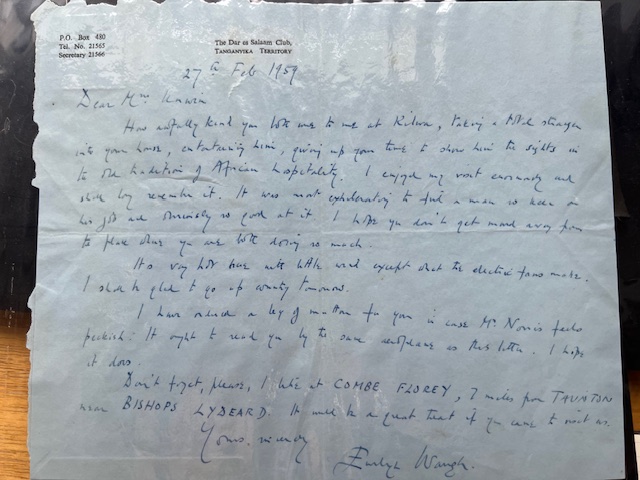
Waugh also sent my mother a charming thank you letter, saying,‘I enjoyed my visit enormously and shall long remember it. It was most exhilarating to find a man so keen on his job and so good at it. I hope you don’t get moved away from the place where you are both doing so much.’
They left Kilwa for yet another home leave at the end of 1959, returning to live in Dar es Salaam in 1960.
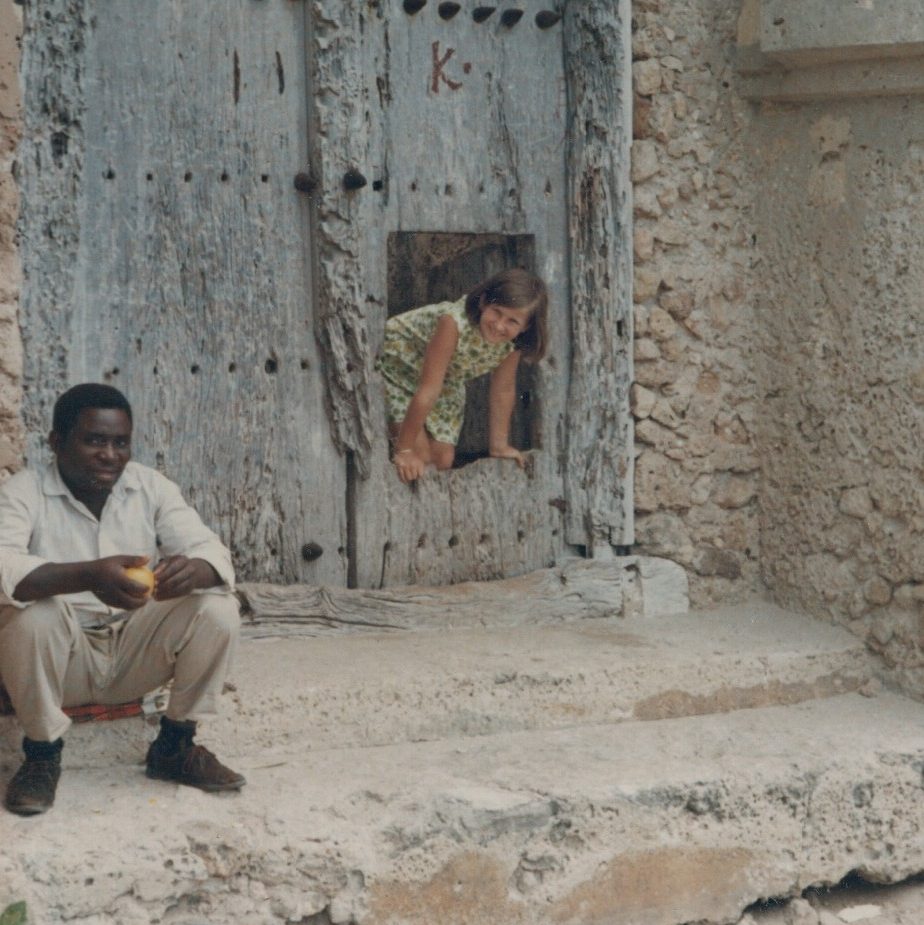
I only visited Kilwa once after my early years (which of course I don’t remember anything about it). Mum and I traveled down by plane with two of her girlfriends to check out the Fort, the great mosque and the ruins. Here I am exploring!
 Travels with my mother