
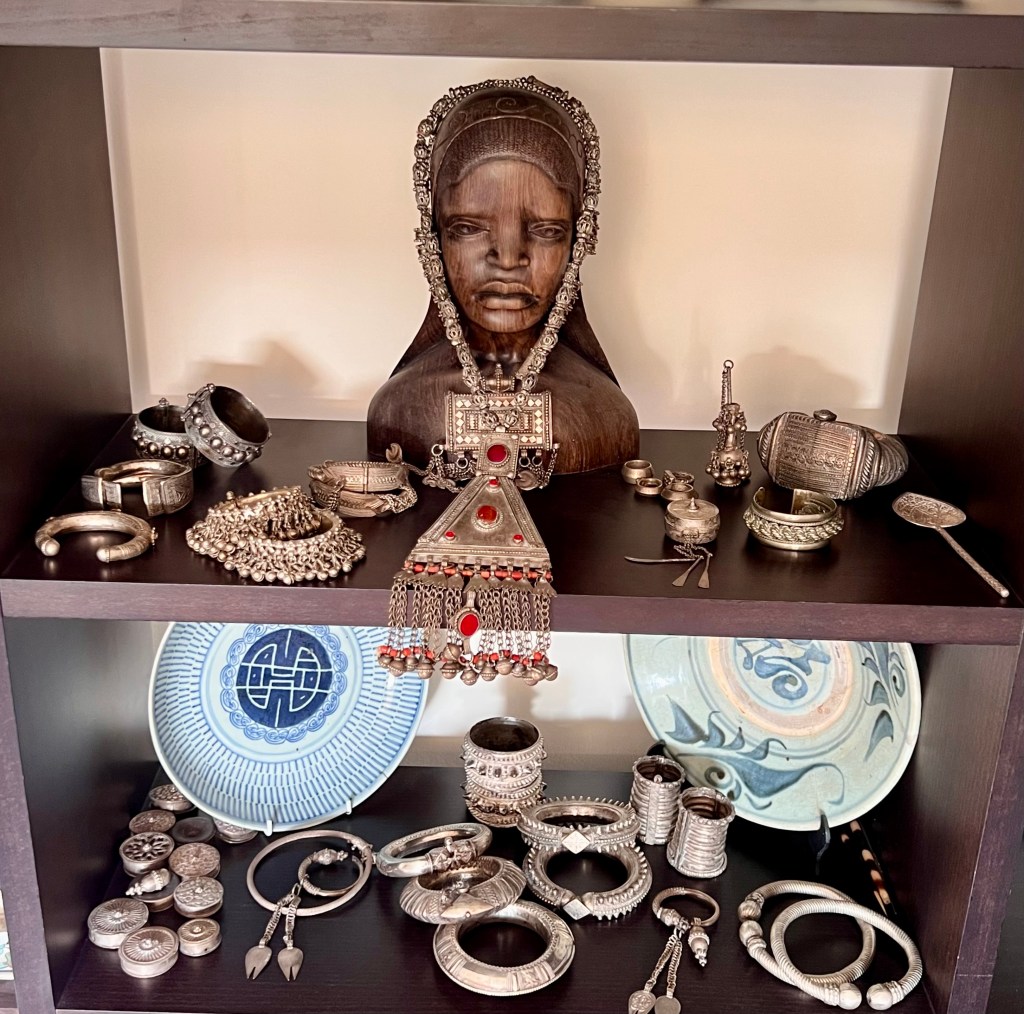
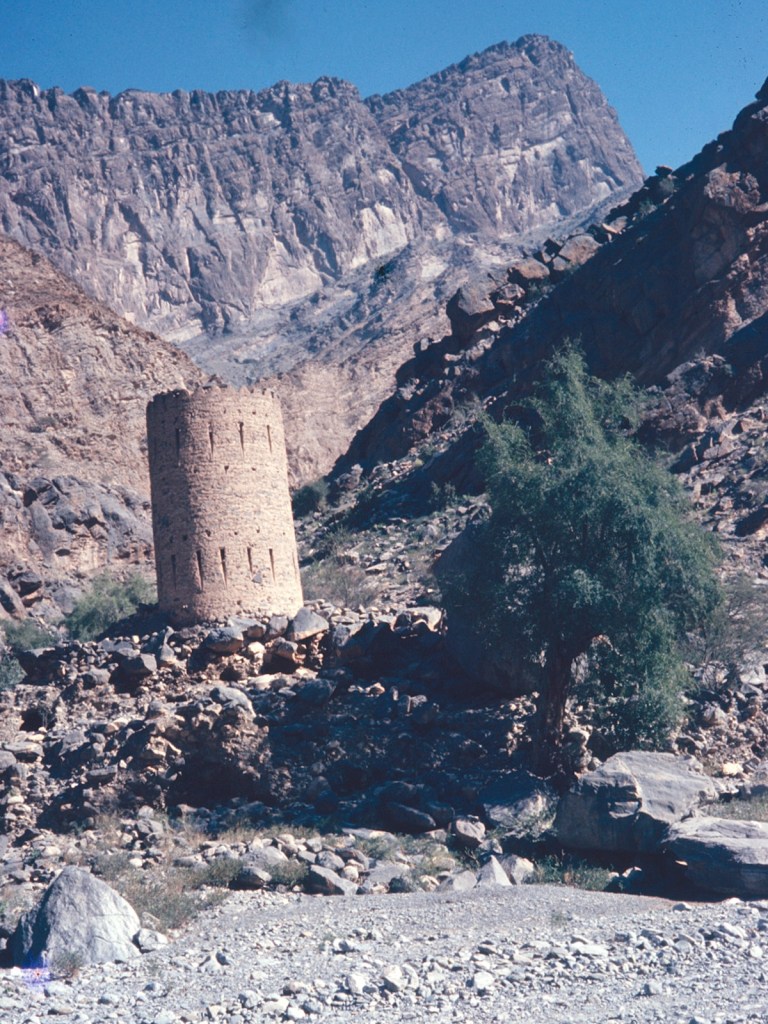
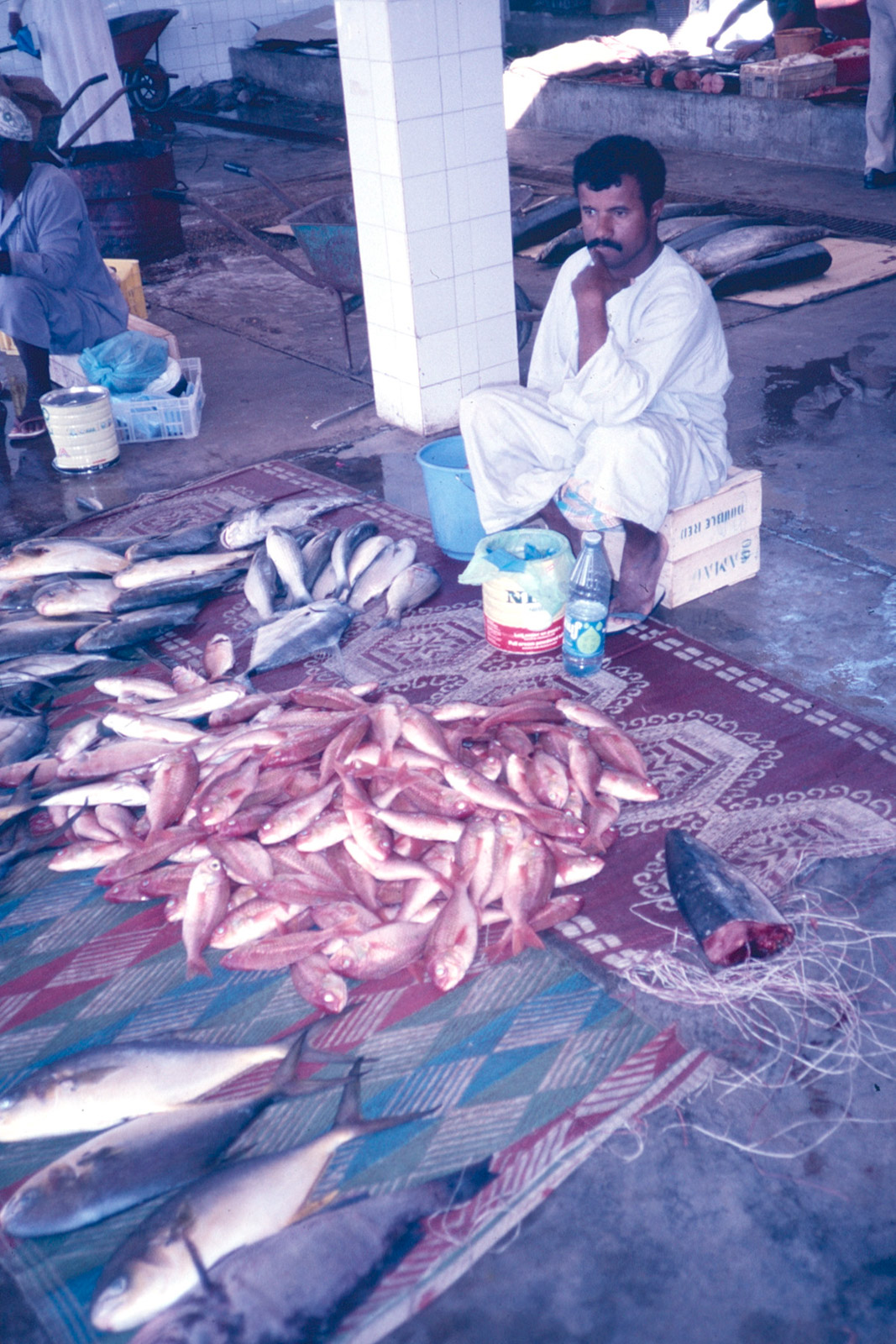
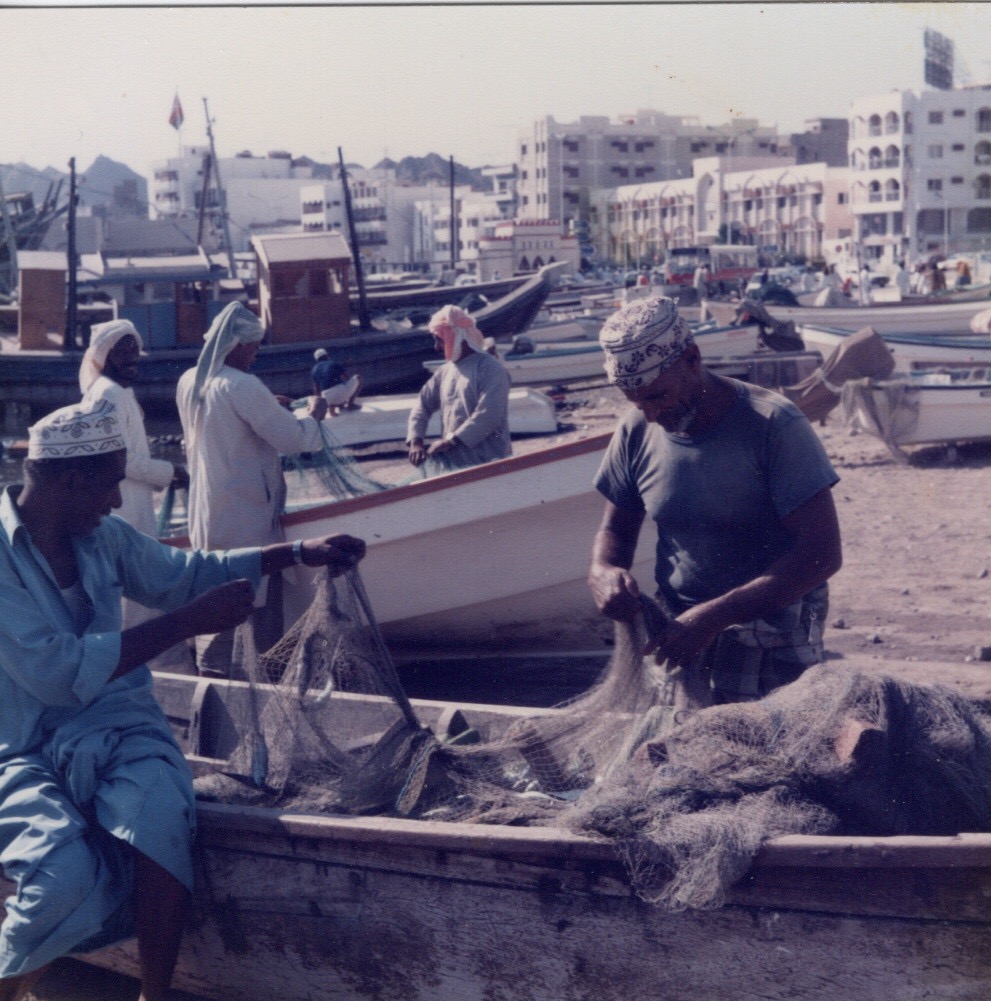
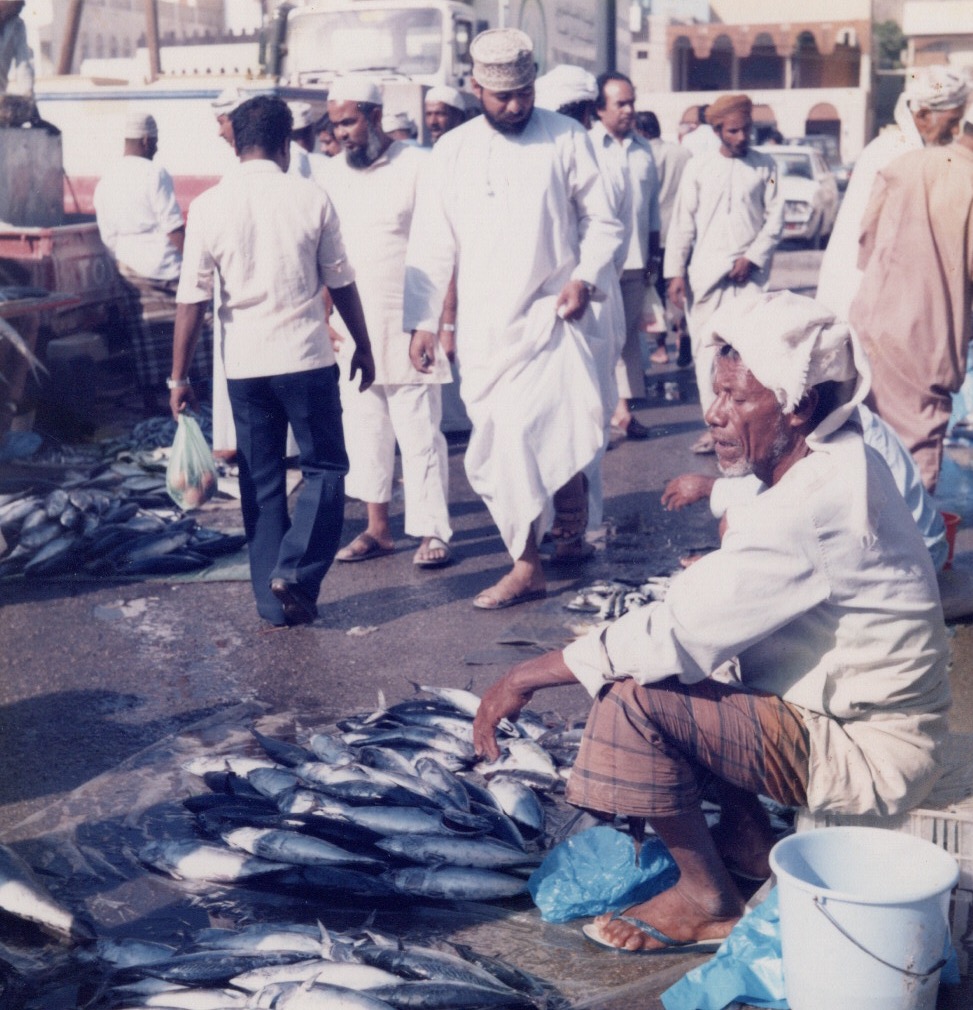
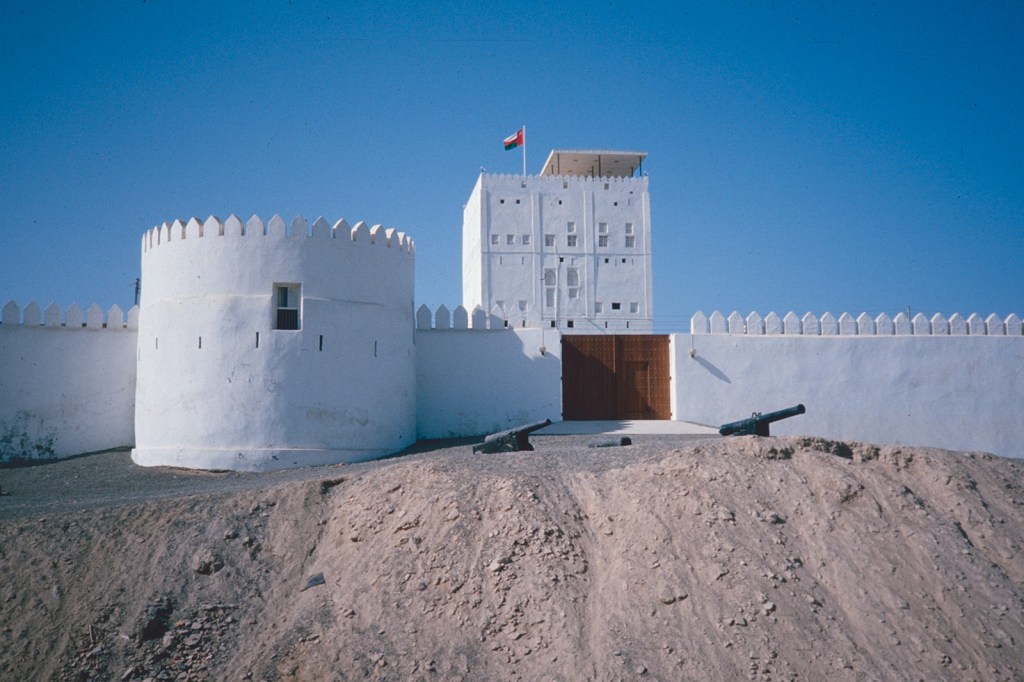
Sheila visited Oman a couple times as she had friends there – in 1977 and in 1986, where she wrote some vignettes of her experiences. I guess she felt she had done the travelogue before – when she visited Nizwa, Salallah and the forts in the surrounding desert; perhaps the diaries have simply been lost. The photographs haven’t however, and I have included some here from 1977. She had a great affinity with Oman because of its Zanzibar connection, and she had collected some very fine Omani jewellery during these visits, and in Zanzibar, which I have on display.
She had good contacts in Muscat as well, partly due to her friendship with Zanzibari Mohammed Matar. Zanzibar had been the capital of the Omani Sultanate until the revolution of 1964; those who were lucky enough to escape fled back to Muscat and even today many Omanis speak Swahili, as I discovered when I visited. So it is unsurprising that her first vignette describes…
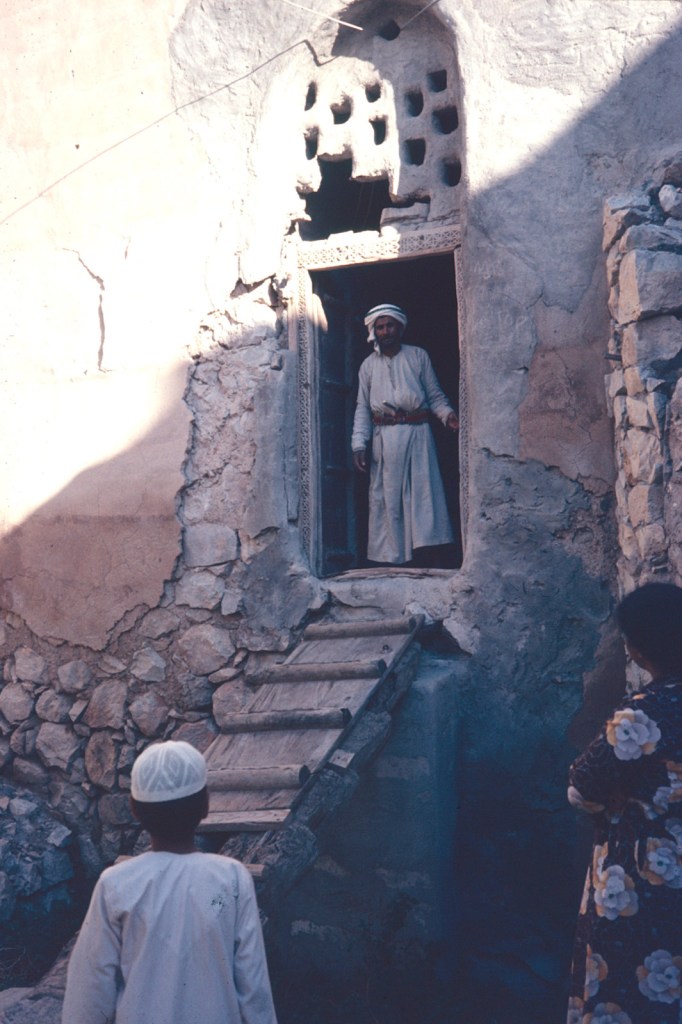
Tea with a Prince
This was no less than Seyidd Bargash, a descendent of one of the Sultans of Zanzibar of the same name (1870-1888) ‘a dark-skinned young man of around 30, affable and friendly, with a beard, wearing a white khanzu and embroidered cap. He had nine children ‘”not bad for 10 years of marriage” he said. I felt rather sorry for his wife, but I suppose she had plenty of help and no money problems.’

She was on a mission to seek out chests and her friend, also a former Zanzibar Wali and now the Minister for the Interior, Sheikh Hammed al-Harthy, had arranged this visit.
The main room had ‘cream carpeting, wall-to-wall, with Pakistani rugs and carpets, green beaded curtains, with an enormous crystal chandelier, the Omani crest of crossed swords and a dagger being incorporated into the central ring. The furniture was quite unbelievable, heavy golden frames with pastel-coloured flowers and leaves on the corners and legs, upholstered with many cushions, and a large low central table, marble and glass with a gilded frame.’
She was shown room after room, in two separate residences, of ‘vitrines containing silver and weapons, bangles, anklets, necklaces, lots of locks, daggers, bowls and plates, sandals from Lamu, Africa and Oman… and other rooms with further displays of Chinese jars and bowls…there were also fine carpets on the walls, and 19th century engravings – the whole scene was of sumptuous opulence.’ There were also many many chests, but they had all been doctored to improve their looks!
Quite an invitation!
A morning with a playboy
Mahomed was the son of a Sheikh, who has a farm, a house in England and racehorse, but is always broke. ‘As for Mahomed, he likes all things non-traditional, very fast cars, which have to have a telephone to contact his friends en route to anywhere, travelling to Europe and Asia and is often in London, Paris, Germany, Scandinavia, Italy, Bangkok and the Philippines. He likes clubs and casinos, although he never has any spare cash.’
Despite having a flash BMW, it had an oil leak so the trip to interview a former dhow captain had to be undertaken in a friend’s car – also a BMW. The friend came too. Mohamed was to interpret.
As she rather suspected Mohamed was not the ‘slightest bit interested’ in the reason for the visit, and it was only with great difficulty she managed to get him to ask the list of questions she had prepared. The captain had been at sea for 27 years ‘he operated from Al Khadra to Kuwait in the NW to the Rufiji, Kilwa [in Tanzania], and beyond to the south’. At last coffee, pomegranates and water melon, dates ‘sweet and sticky’ were handed out, much to Mohamed’s relief.
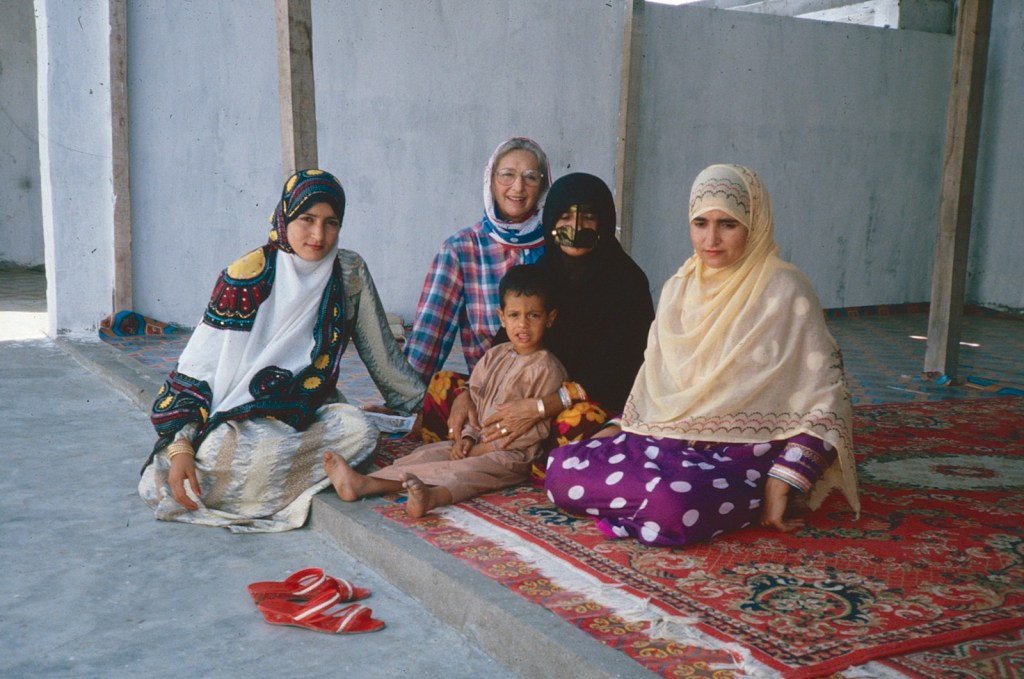
Before they left, Sheila visited the old mother who she had met 10 days earlier, and gave her a bottle of scent; in return she was give a pair of khangas from East Africa!
Sur
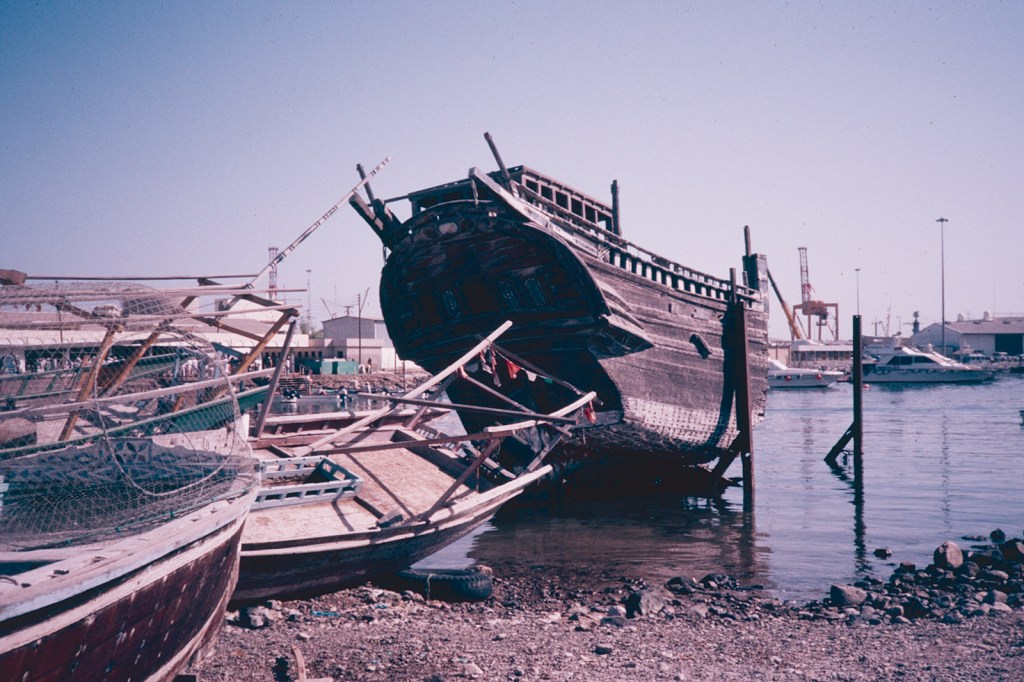
On this trip she made two visits to Sur, famous for its dhow building.
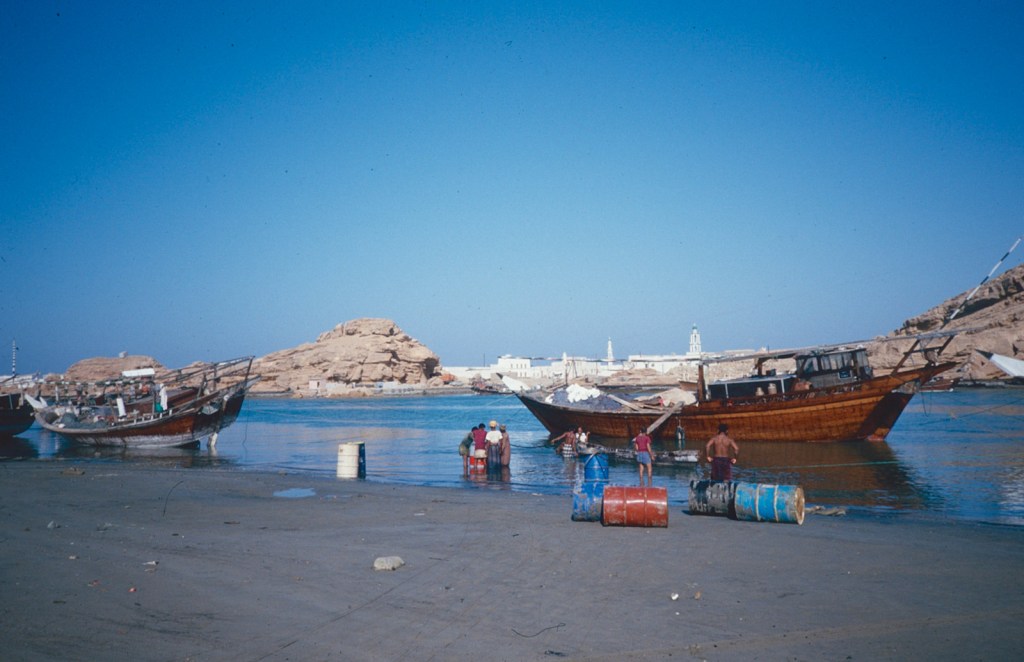
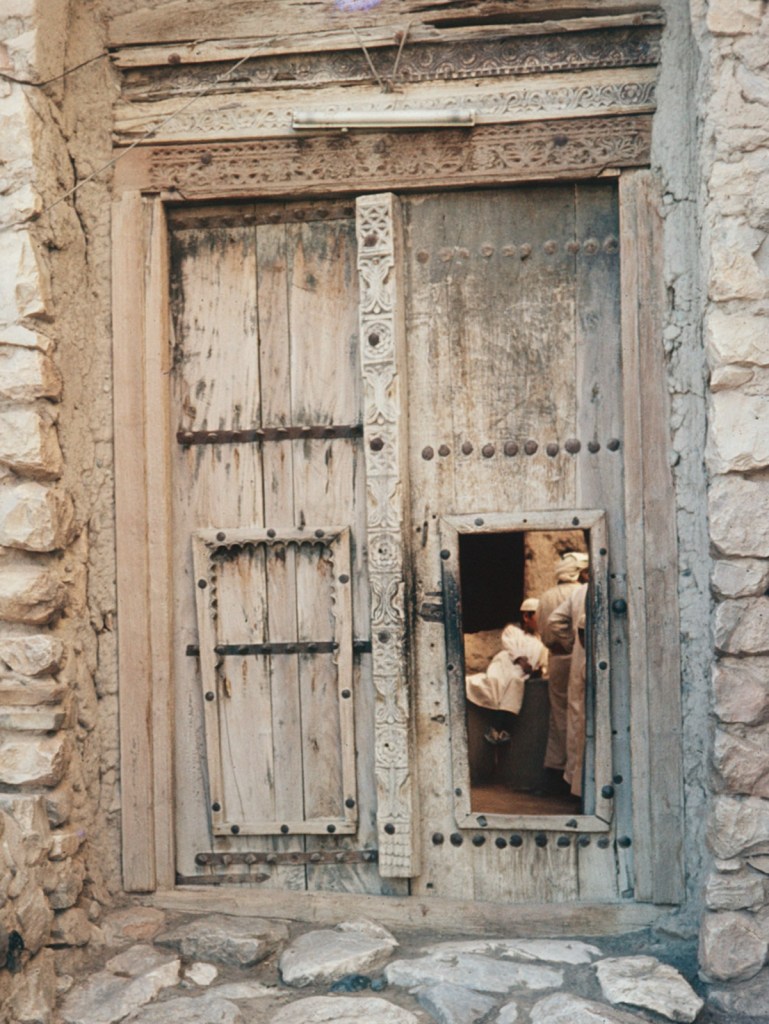
It is a straggly sort of place – very sandy and dusty and this is not helped by roadworks and the construction of a new corniche. Many of the old houses are being knocked down, or even falling down, as the former owners move to more prestigious, more ugly, concrete block buildings…but there were still some doors; there are also a number of new doors, ornately carved and very often painted a gingery brown.
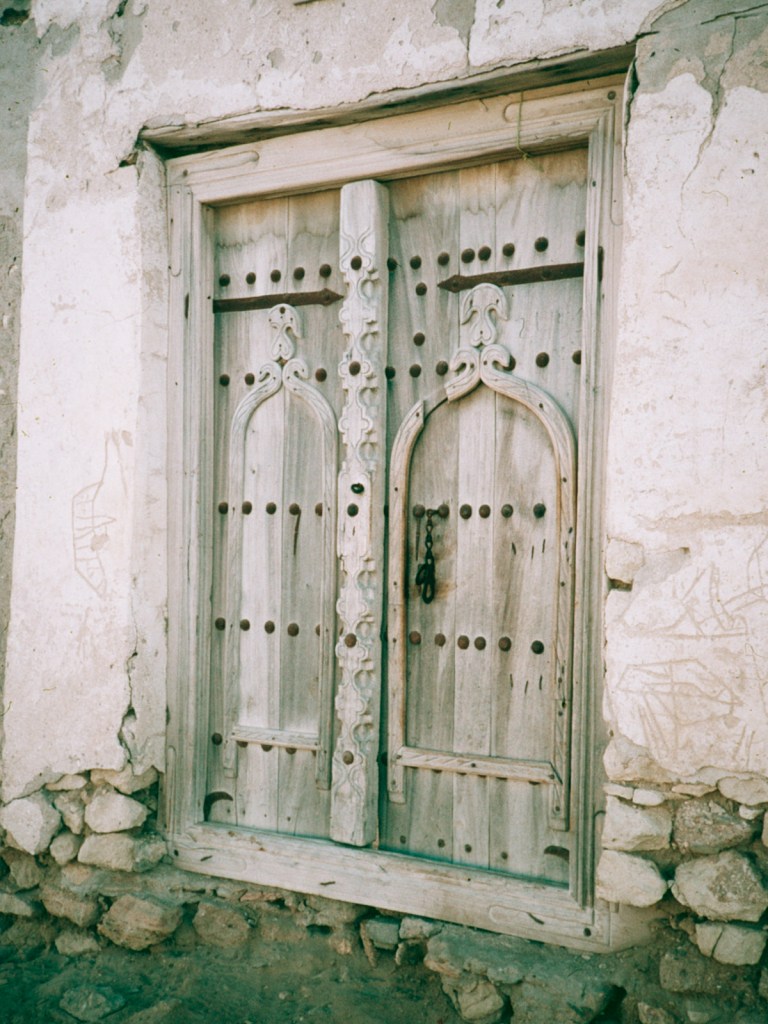
She found four old chests under some rubble inside one such tumble-down house.

Shops seem to cover everything – many many tailoring establishments, video rentals, laundries, restaurants. All kinds of electrical equipment is available. The suq is a depressing collection of stalls and shacks in the centre of a square.
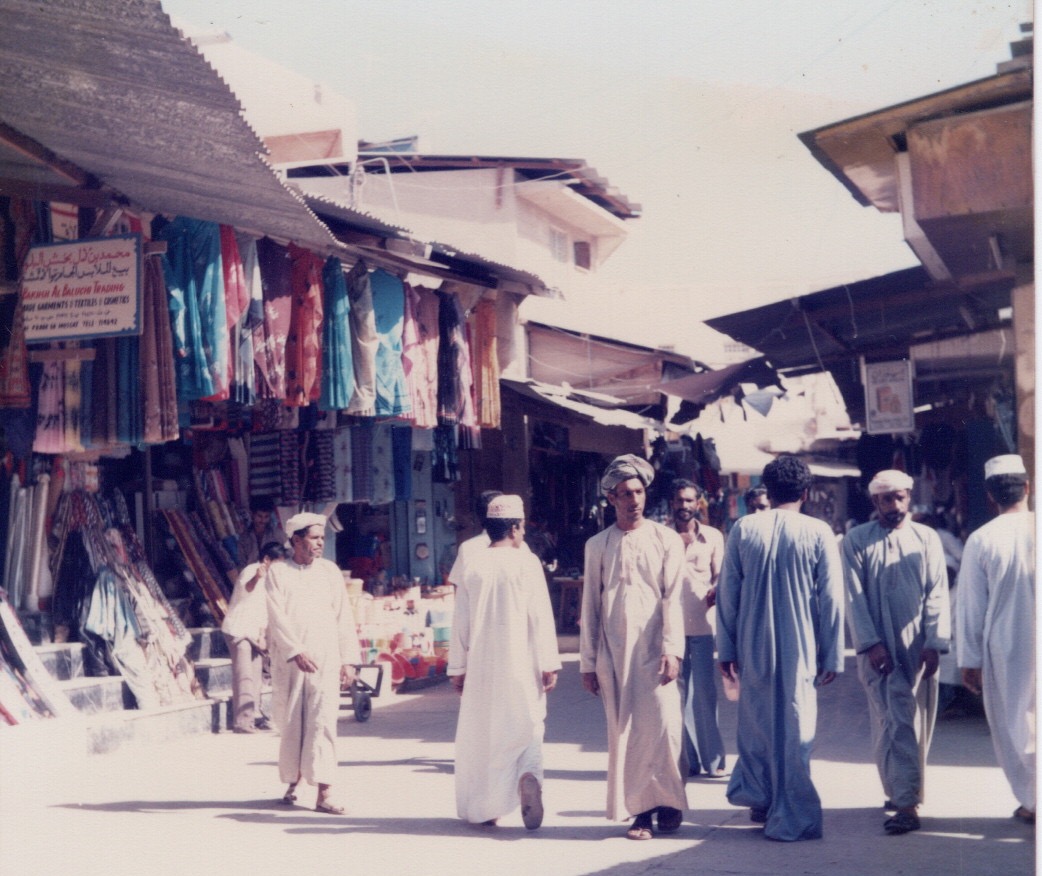
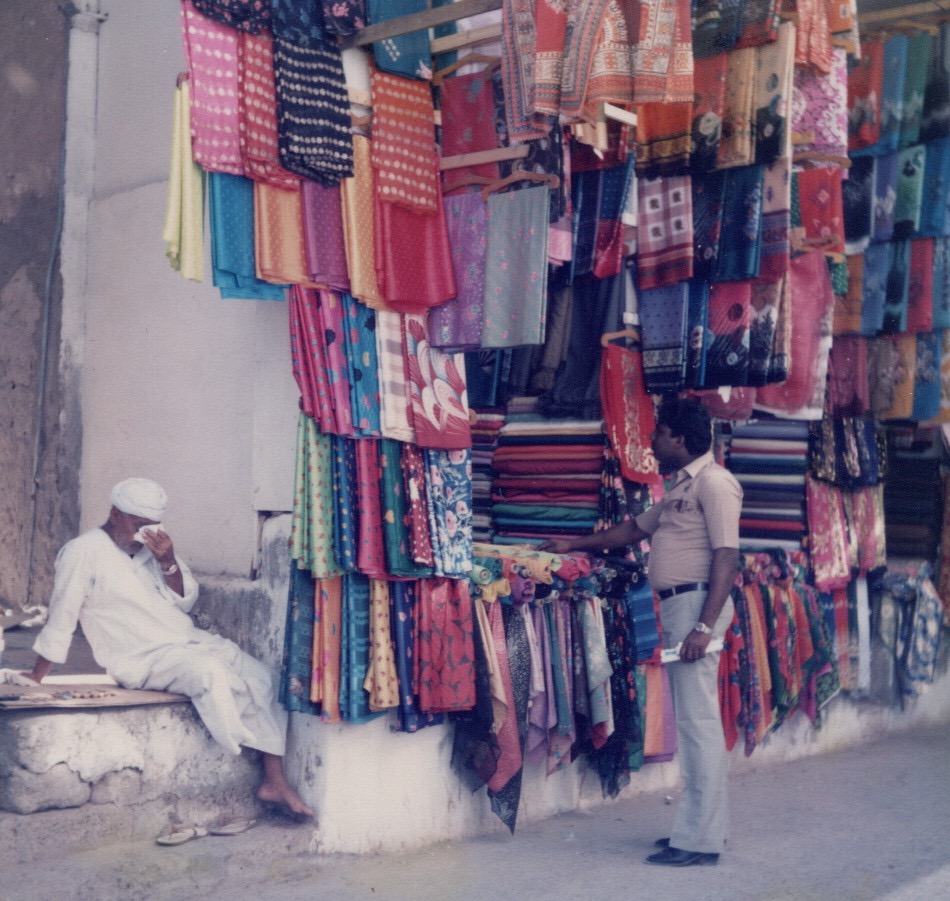
While wandering around she was accosted by a ‘cunning looking chap’ who used to work in the New Africa hotel in Dar! He was to come back and haunt her on her second trip, delaying her departure on a wild goose chase and then demanding a huge tip.
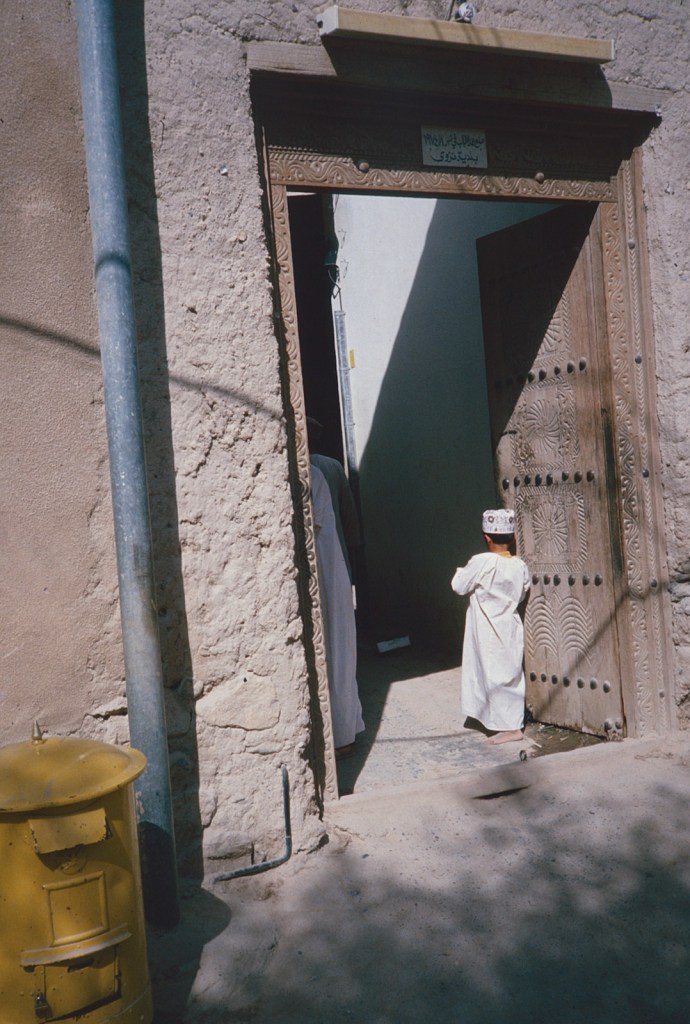
On the first trip she had an introduction to the Wali (a friend of her Muscat Minister) who had been instructed to show her possible places which had chests, which he delegated to a minion – but again no great luck.
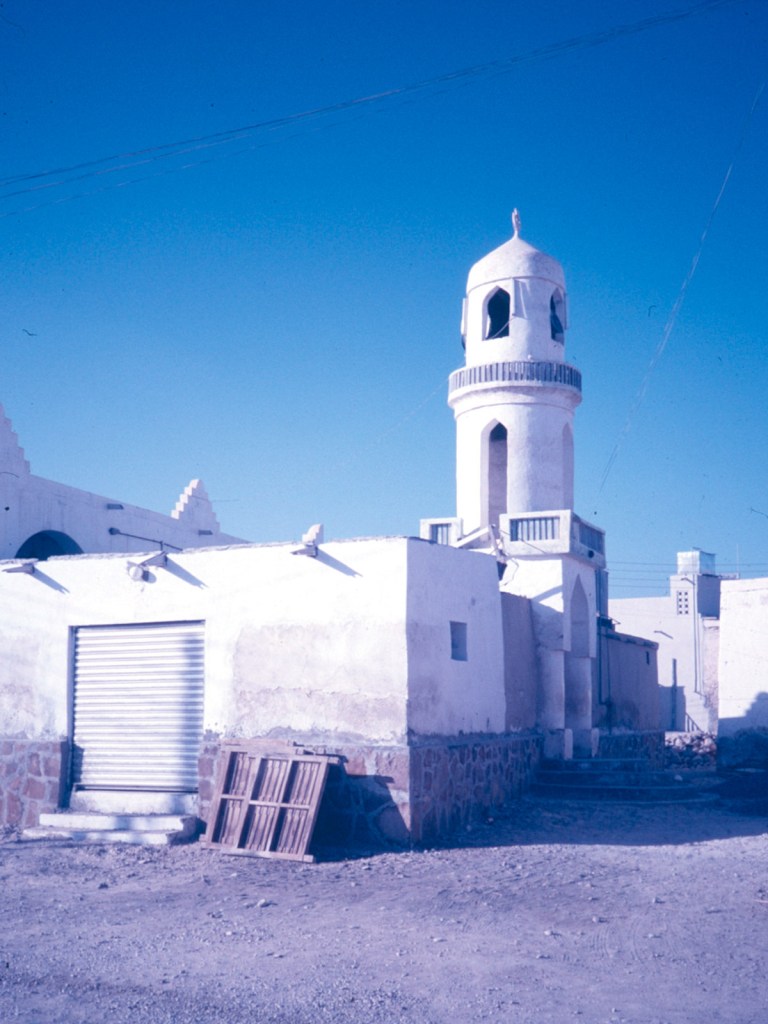
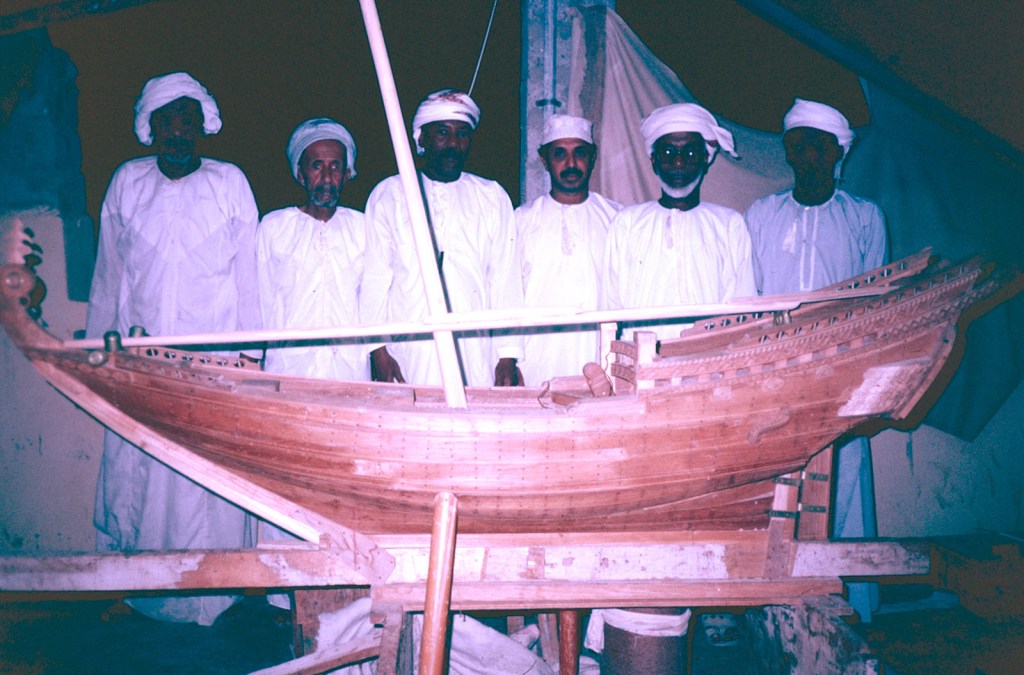
Second time lucky – she had been introduced to Nasser, the Post Master, who had been brought up in Mombasa and spoke good English and Swahili. His mission was to find carpenters for her, who might still be making chests. After visiting one old man, she was taken to the house of a ship’s carpenter where he was discovered with a collection of other elderly gents in his majlis but ‘everyone was very kind and welcoming and most of them knew Swahili. The owner of the house, a short bearded old chap, wanted to show me a dhow he was carving and so we all trooped up to his workshop on the roof to admire his particularly beautiful Ghanjah. I photographed them all with their permissions and descended again into the majlis where we ate dates and fruit and drank coffee.’
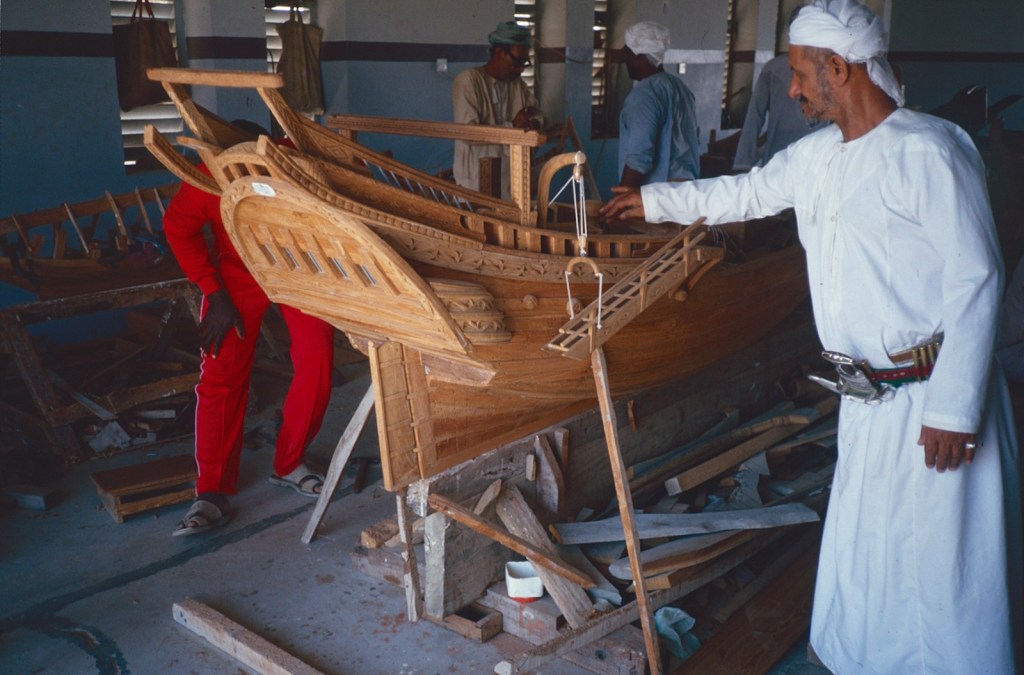
She was inspired to go to the port and visit the dhow-building area the next morning. These are mostly built by Indians – imported labour – as is the custom in Oman. She watched the activities of people on the boats – loading, unloading, repairing.
Ibra
On the way back from Sur, she stopped off at Ibra to visit an abandoned mansion, with remains of bowls set in the vaulted ceiling – and here they found another old chest, abandoned.

As luck would have it, a few muttered words of Swahili resulted in a most amusing visit to the home of an old couple who were thrilled with their catch. As coffee was being served, their son appeared and asked if they would like to see his horse. This turned out to be a very spirited mare ‘clearly full of life and none too friendly…a bridle was slipped over her head and the mother, very bravely I thought, held her…the son then took over and led her into the open. He leapt on her back, which excited her, but he was in control.. Apparently there are a few horses around and they are raced in pairs on Fridays on special occasions.’
From there they were led to another house ‘the mother having got us, was anxious to show us off…suddenly there was a commotion and clatter and the vet son came pounding in on a donkey, up the first step, after which the poor animal couldn’t keep its feet on the slippery concrete and she and the rider rolled over together, legs flying. Screams of laughter from everyone especially from the old [toothless ] granny who thought it was the best joke ever…the donkey trotted off outside once she had regained her feet.’
A pleasant place, Old Ibra. I’d like to have stayed longer.
 Travels with my mother