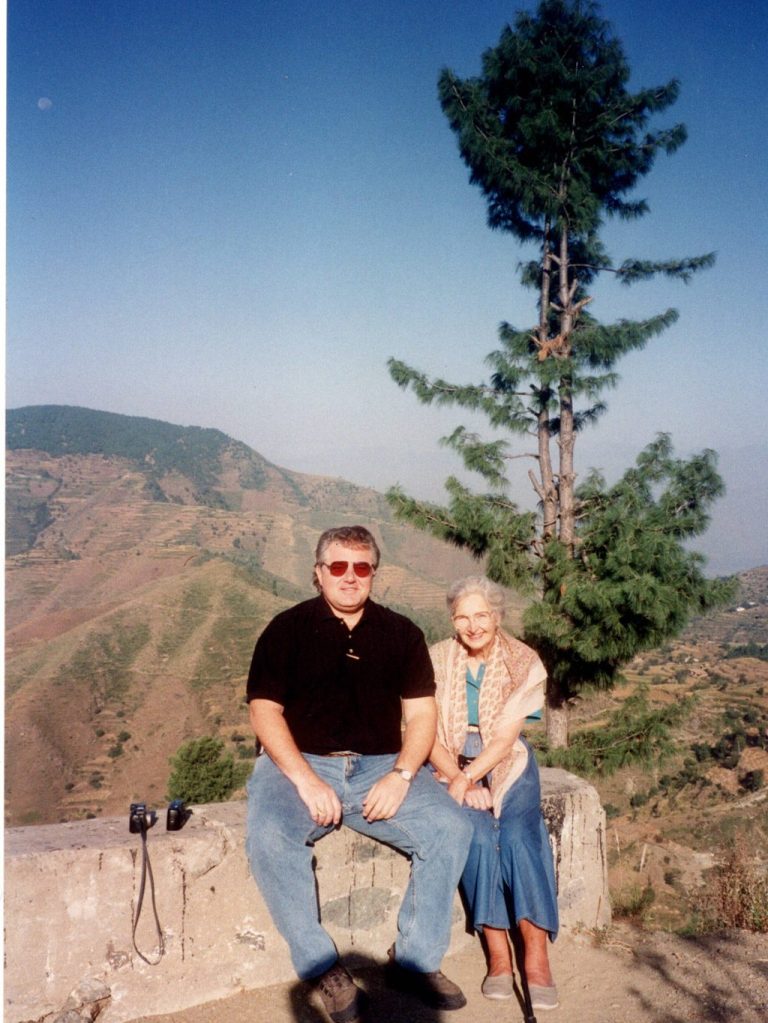
In September 1996, aged 76, Sheila set off on her last big adventure. Using an inheritance from Neville, she booked herself on an upmarket trip with Steppes East to visit Central Asia. It was led by Sir John Ure ‘an ex diplomat who has travelled with Fitzroy Maclean…remote.. not very friendly or welcoming’ . He was to prove a most unsuitable choice of expedition leader.
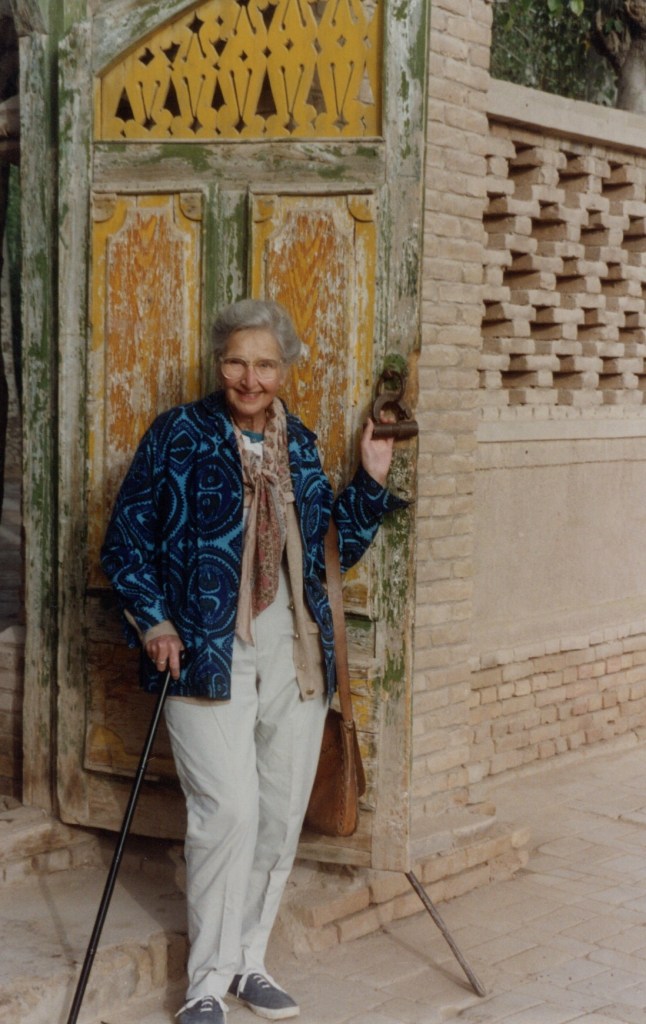
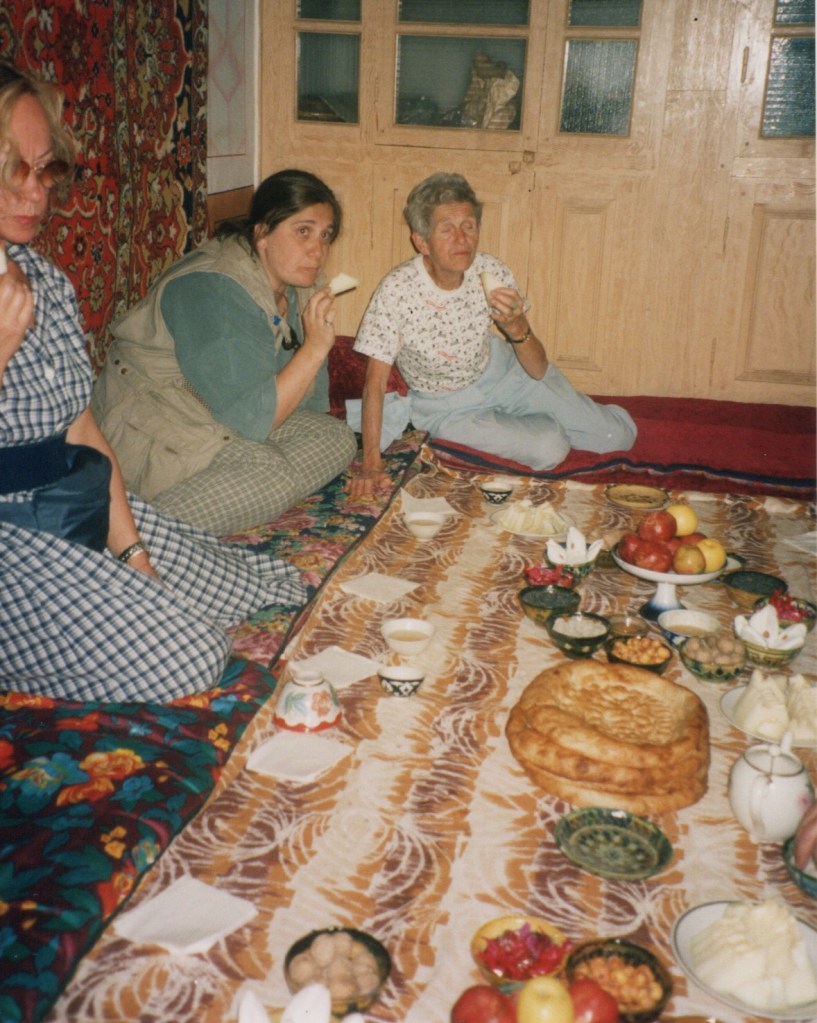
Her diaries describe her travelling companions at length, mostly elderly and mostly women, though there were a couple of men including Dennis, pictured above, from Canada. characterised by ‘kindness and humorous remarks’.
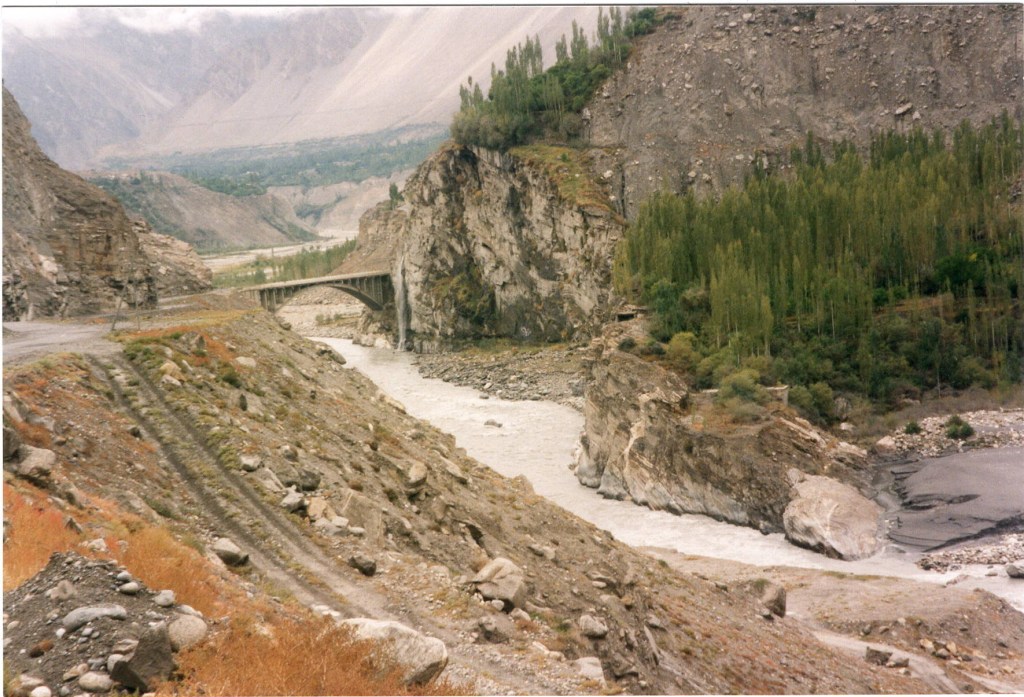
They set off from Islamabad with the intention of visiting the Khyber Pass, but were thwarted because of the war. Nevertheless they saw the ‘high colourful lorries and buses choc-a-bloc with passengers and luggage heading for Afghanistan’.
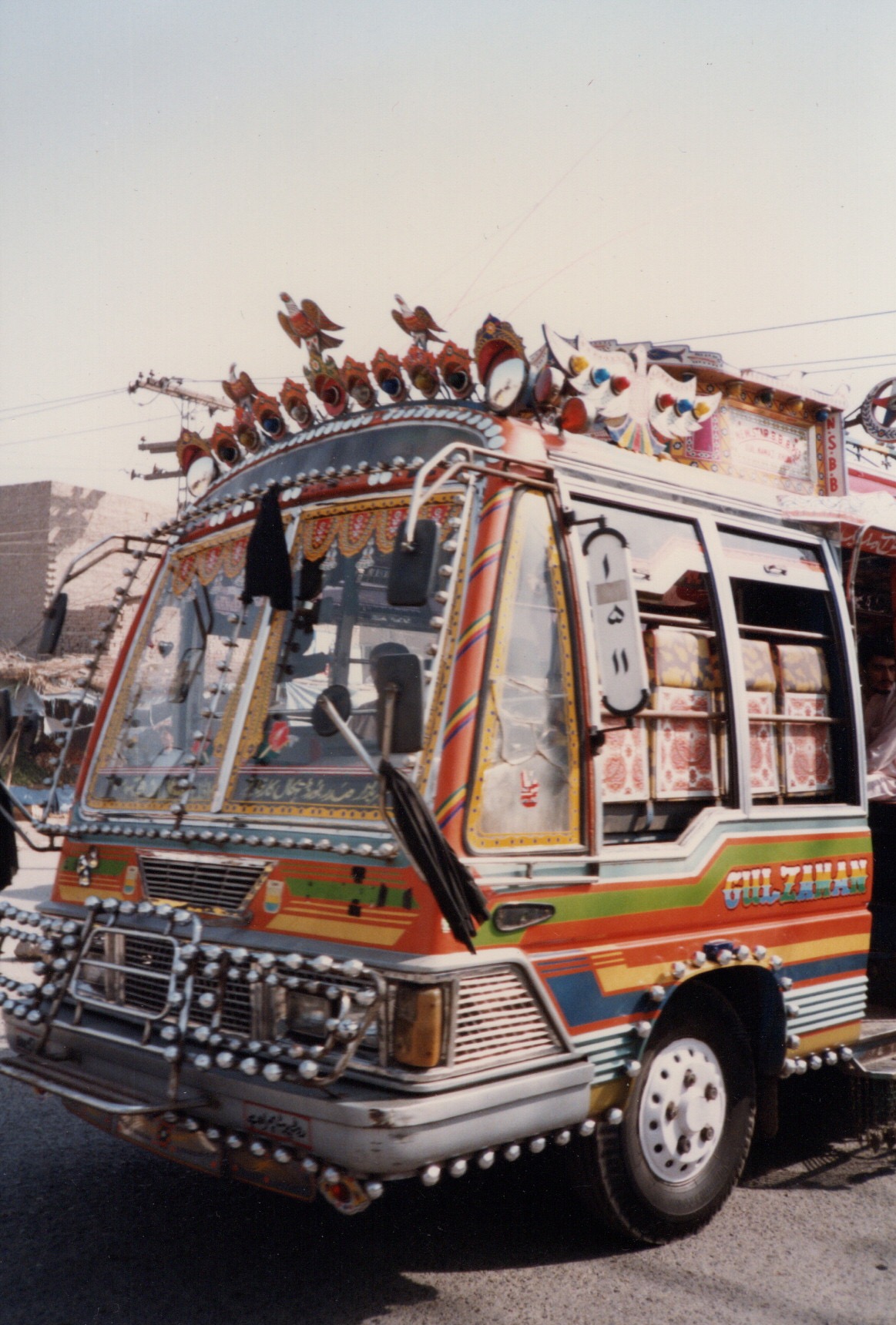
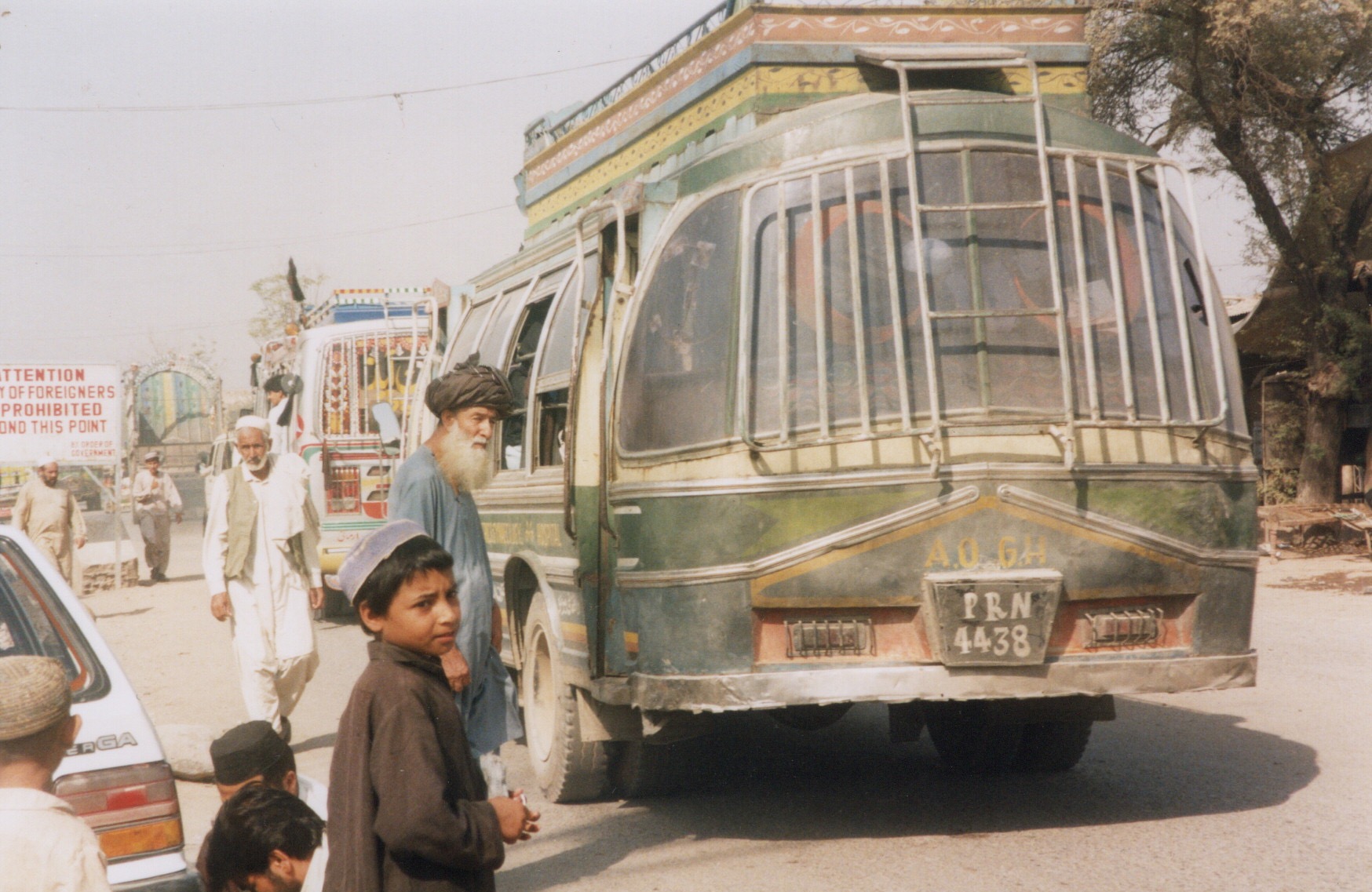
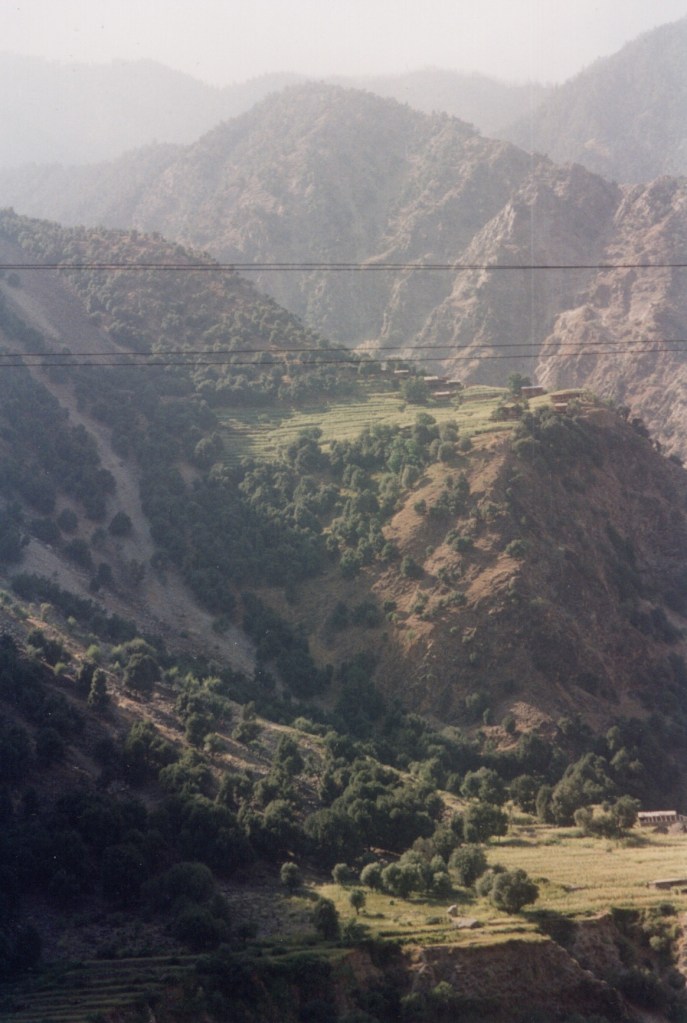
From there to the Swat Valley via ‘cultivations of rice and maize with many fruit trees – apples, pears, persimmons – the road gradually crept and twisted into the valley of the Indus River’
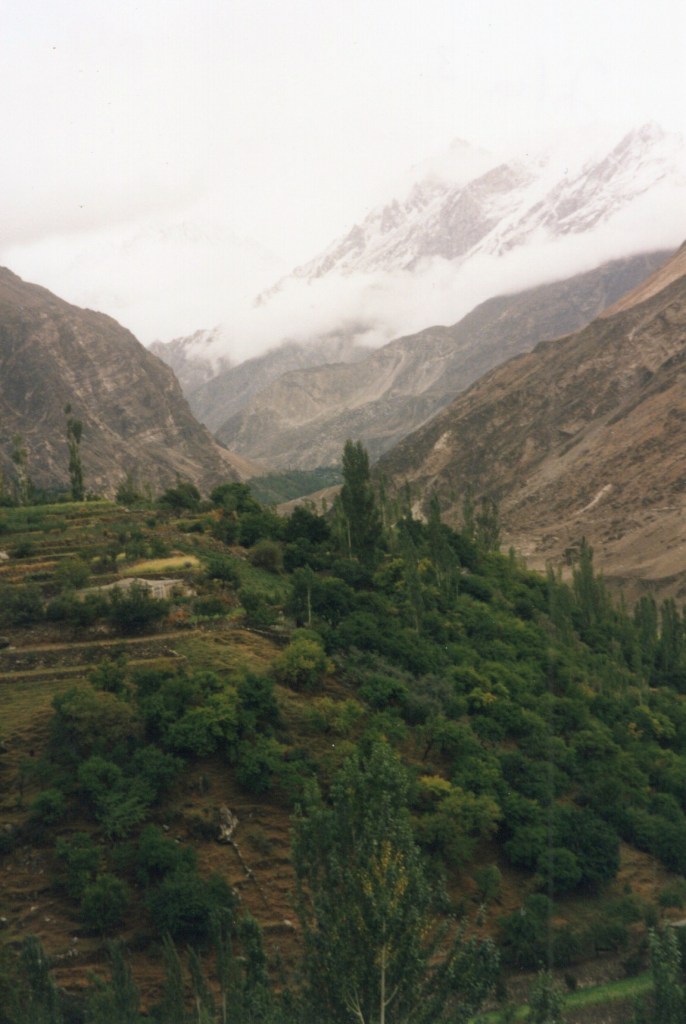
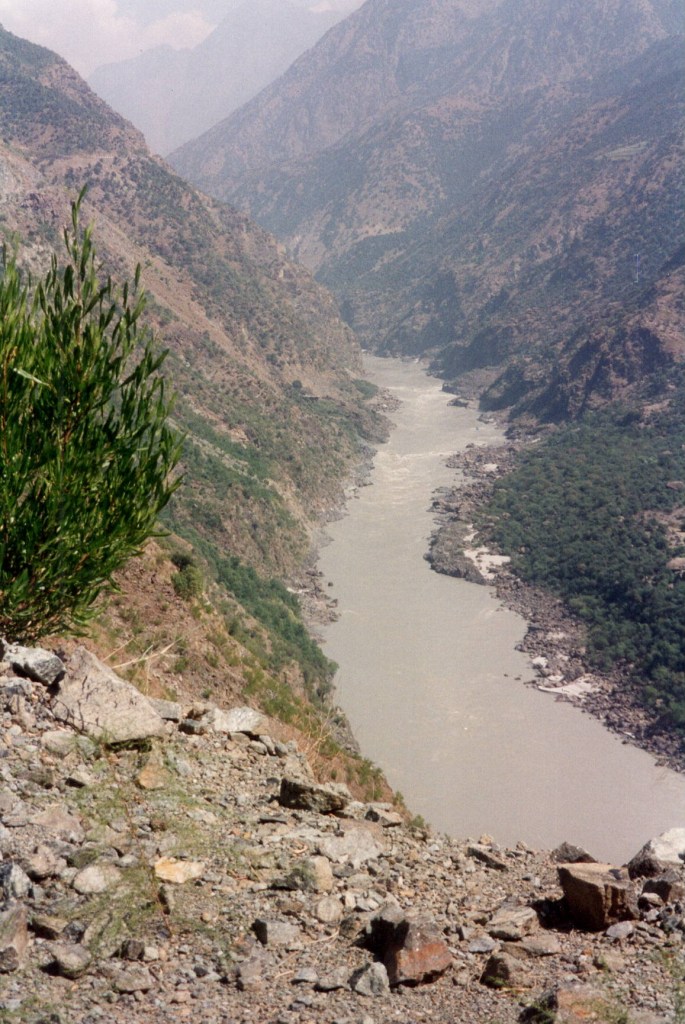
until they reached the Serena Hotel in the palace of the late Wali of Swat, with its ‘beautifully clipped lawns and hedges and immaculately clean and polished rooms’. (below the gardens).
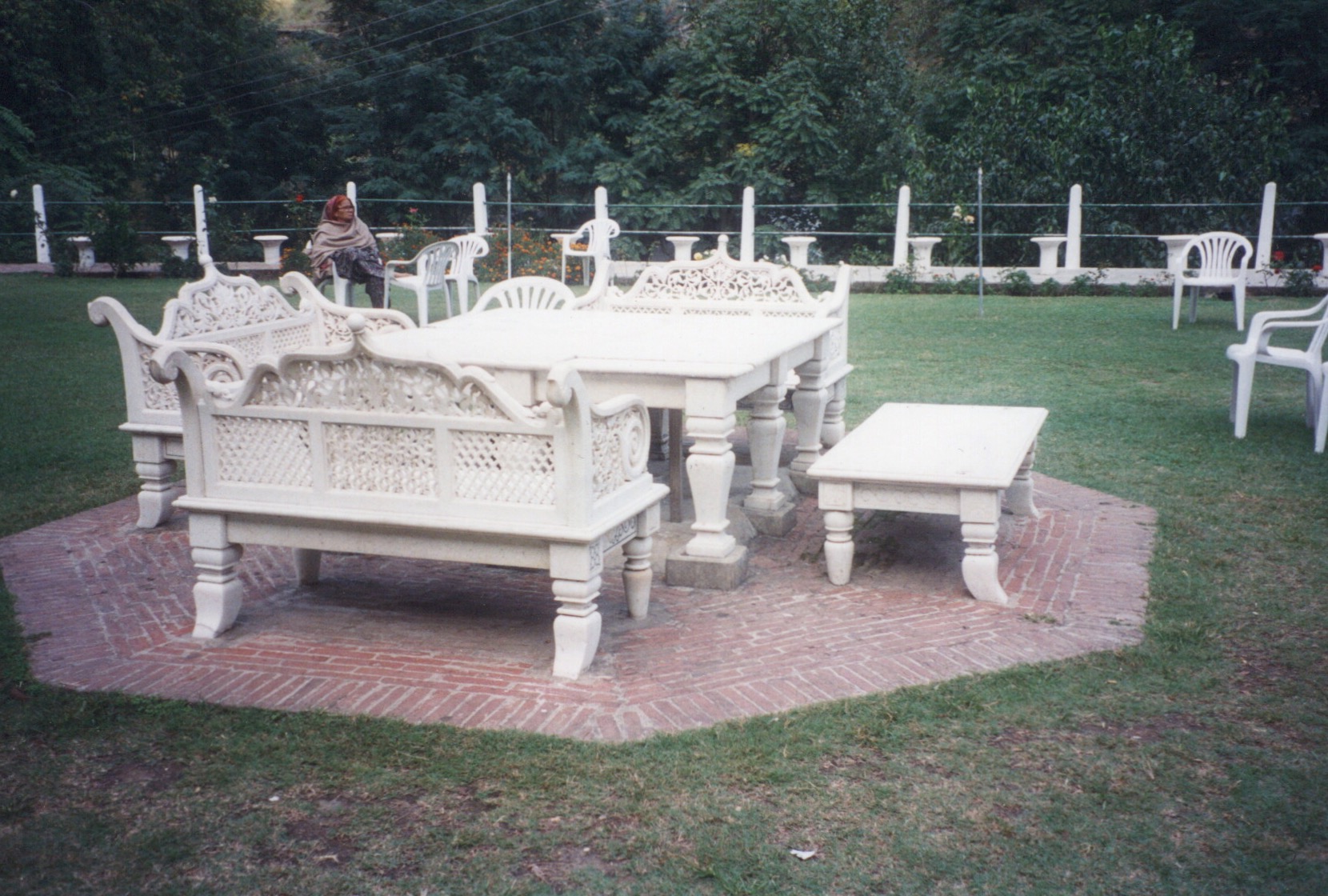
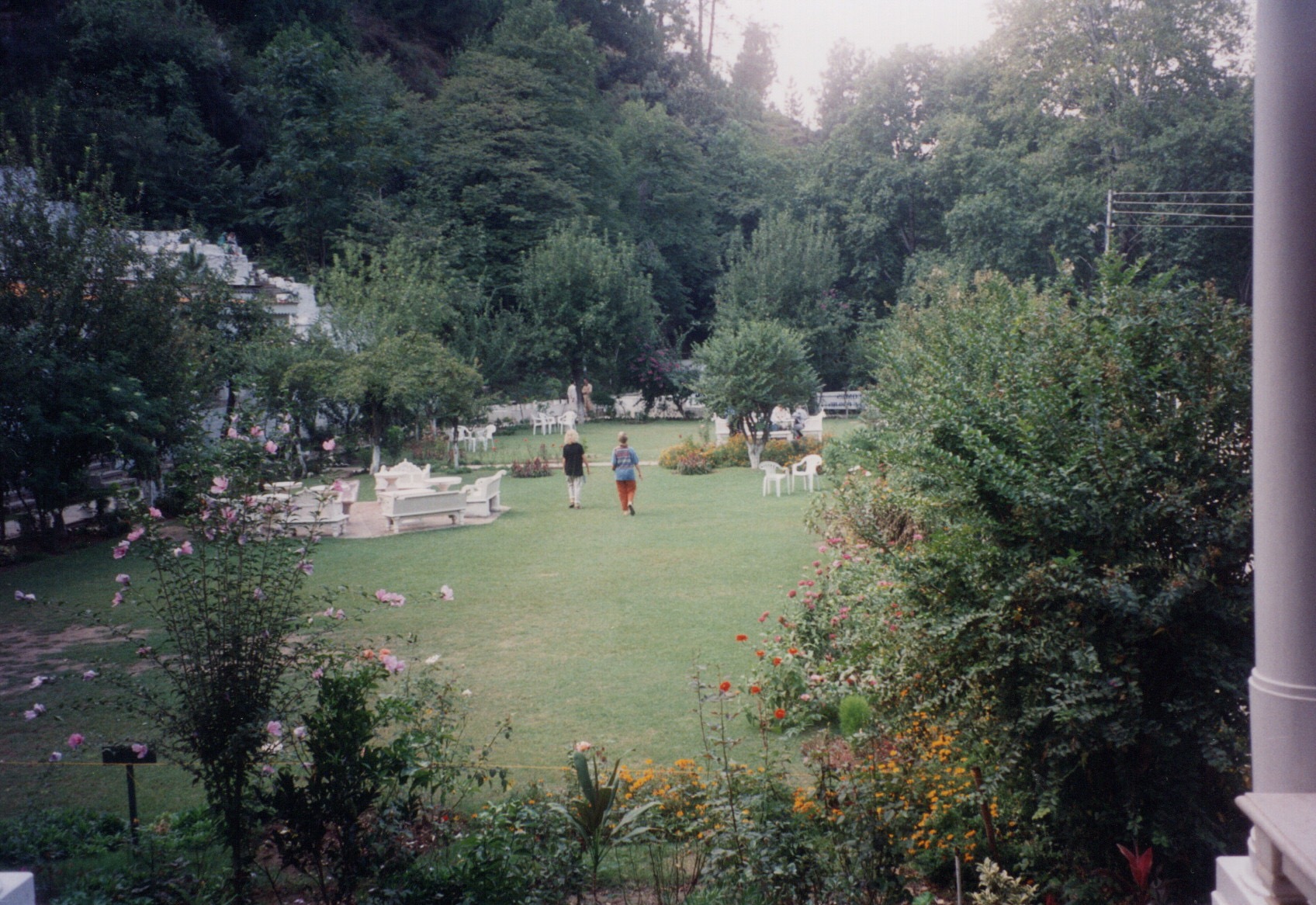
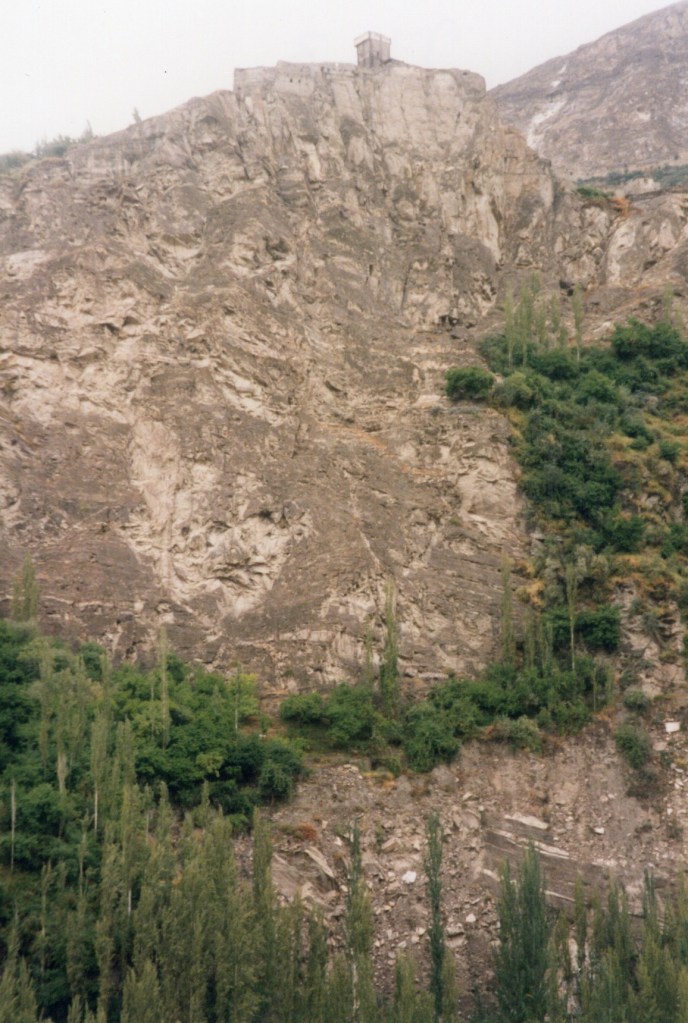
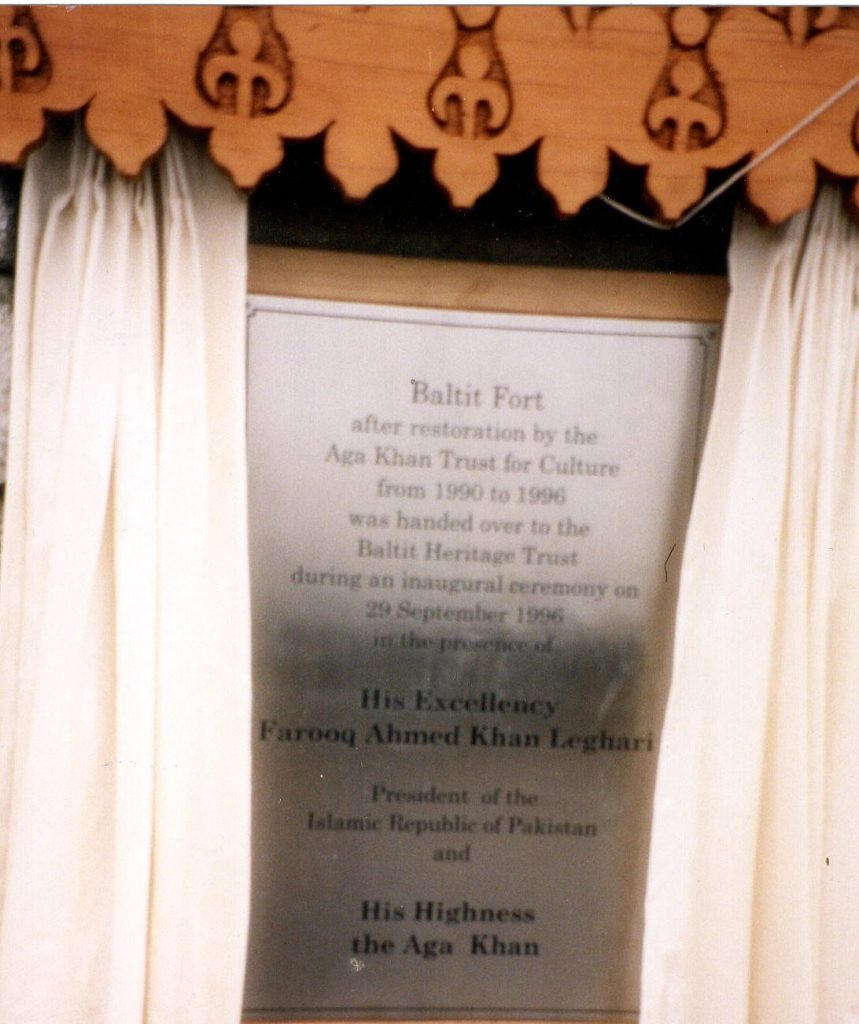
Then on to GIlgit where they joined the Karakoram Highway, a long 14 hours journey. Unluckily for them the Aga Khan was making a visit so the Serena was out of bounds, as was the Baltit Fort in Hunza the next day, which had just been opened by HH – probably the reason for his visit as he would have funded the renovations – this area has a large Ismaili population. Everything was closed as a consequence and it was also raining, so it was a disappointment.
On to Sust – it was still raining – on the border with China ‘ a straggly main street, ‘with untidy little shops selling basics such as biscuits and local domestic requirements’. It was chilly and she had three blankets on the bed!
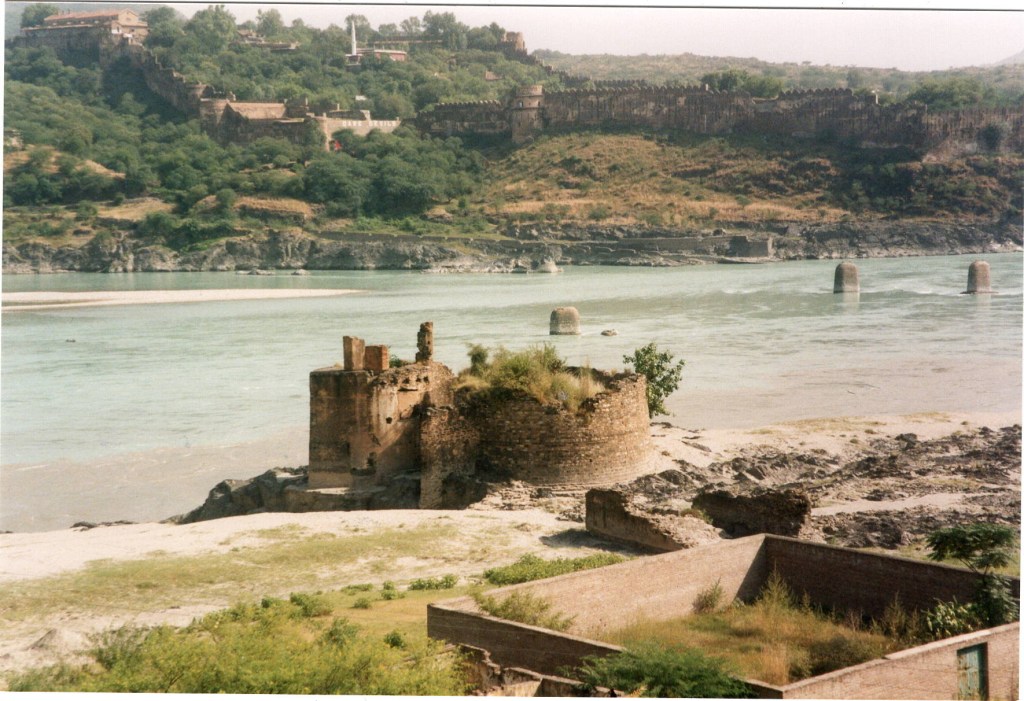
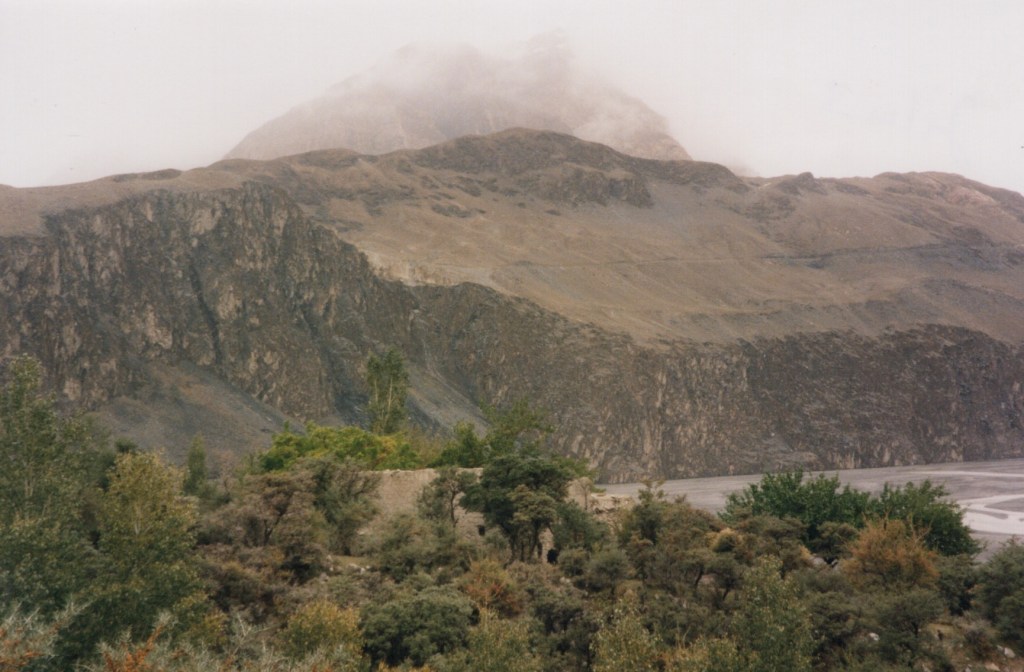
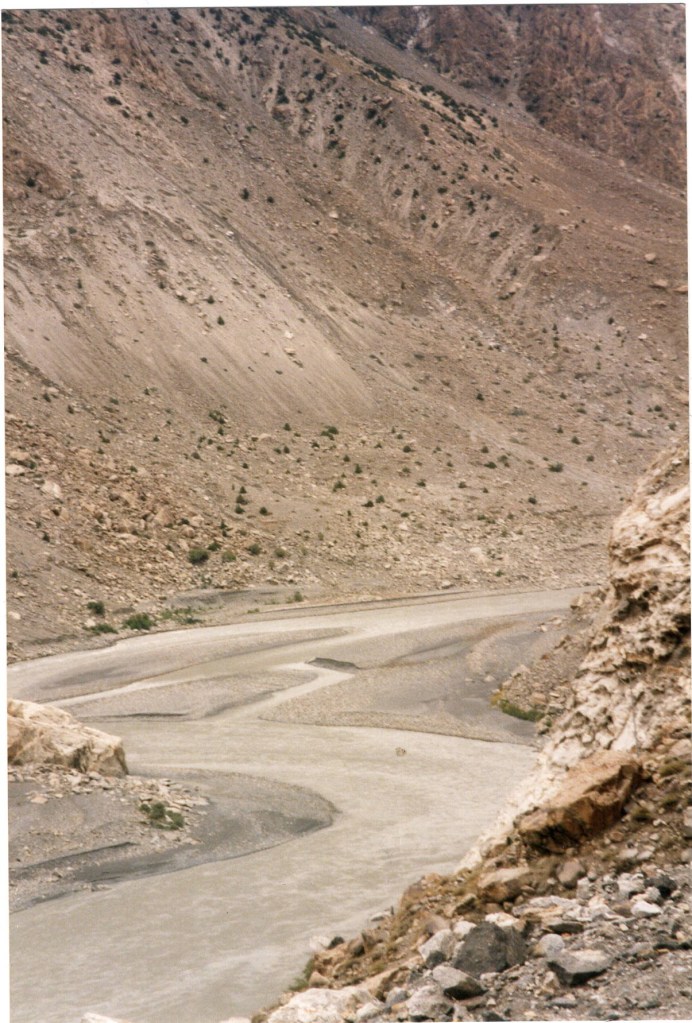
We entered the stern mountain pass, all grey rocks and sides of scree and rubble, which are so dangerous and have to be avoided if they’re on the move, the river crashing icily over the stones running beside us. It was not raining today and you caught glimpses of spiky mountain tops covered with snow streams crossing their way down to the river through and over stones and boulders. After while the landscape opened out and the snow line came nearer. We were climbing and soon there was snow reaching down to the road and eventually onto the road, which twisted and turned as we rose towards the pass.
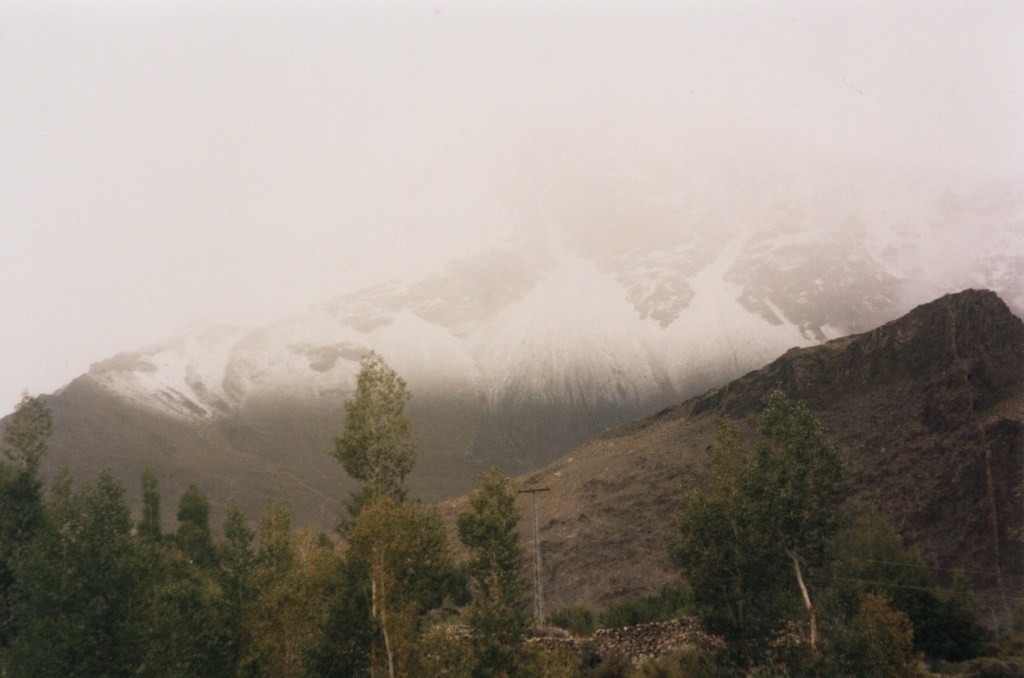
The frontier which is said to be the highest in the world is 16,000 feet and the more energetic of us, including me, climbed out so that we could walk over it. It was piercingly cold. As I stumbled through the snow towards the barriers, short of breath and with my heart pounding, I certainly realise I’ve made a big mistake but once back in my seat I soon recovered.
On our descent, which was gradual, we began to see our first Bactrian camels with long festoons of hair on their neck and bodies then a cow-like animal, a mixture between a yak and an ox, and one or two ponies, many sheep and goats, some in large herds guarded by big sheep dogs with curly tails. We were now running through a plain with mountains on either side, not so high, the foothills of the Pamirs.
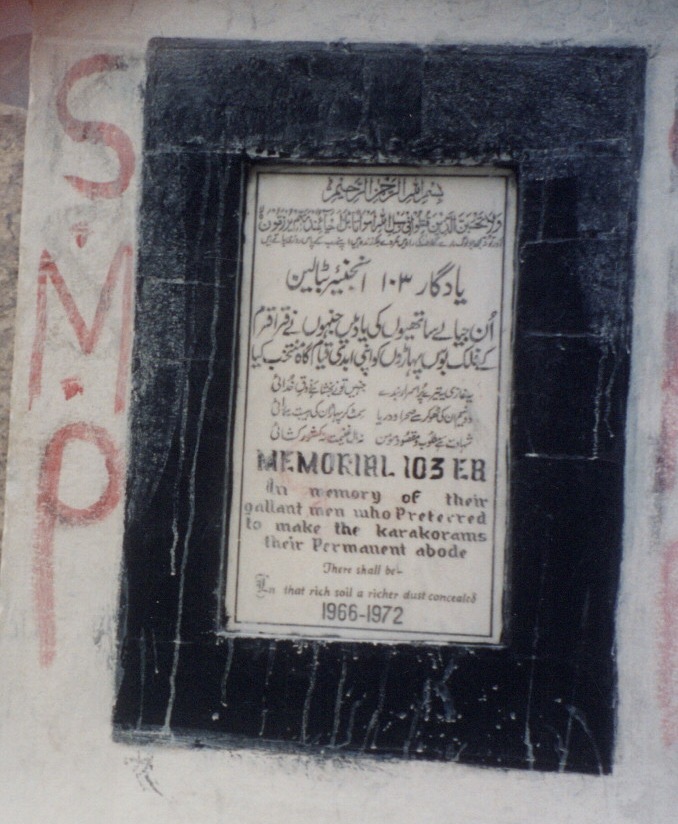
Throughout the journey on the Karakoram we were stopped at checkpoints when a list of passengers had to be presented. In Pakistan we were told it was to check for our safety between each post, but don’t know about China. At last the final checkpoint was reached: the official entered the bus and for the nth time our passports had to be produced and forms to be filled were handed round.
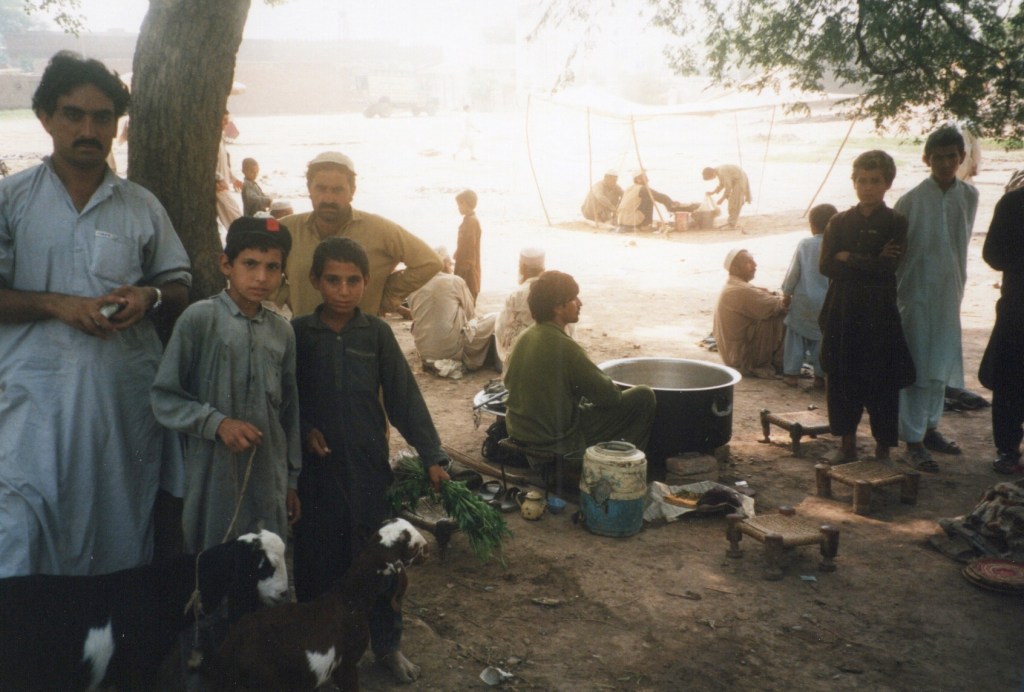
On the first night in China ‘the hotel had welcoming signs in peculiar English outside and could accommodate 500 guests but somewhat shabby…you are told your room number, no keys given out, the rooms are open and the girl is supposed to lock it up for you, but I couldn’t find her.’ Luckily the bathroom had a bath but it was much too cold to undress and after a good dinner and a talk that was interrupted by a power cut they went to bed – no hot water… she was lucky that she had a hot water bottle filled from the huge thermos provided in the room– ‘a great comfort’.
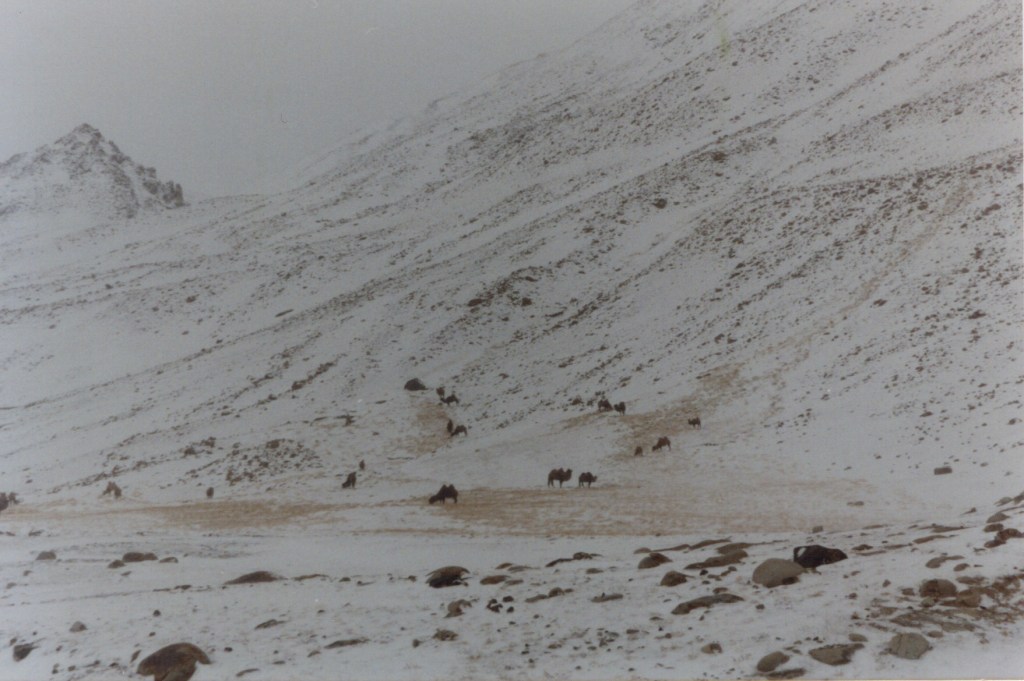
The following day was sunny and they drove along ‘through a rocky valley with little habitation or cultivation, snow-capped mountains, magnificent in the sun, on all horizons. Occasional groups of yak dotted the road and as we reached the snow line on a wide elevated plain, where the road snaked down in twists and turns towards a broad valley, we saw our first dromedary [Bactrian] camels of the day… I think the scenery today has been the most spectacular because it is so wild. We passed through a few settlements or villages every now and then; we had to drive very carefully because of landslips of stone and mud on the road. Luckily nothing came down on us.’
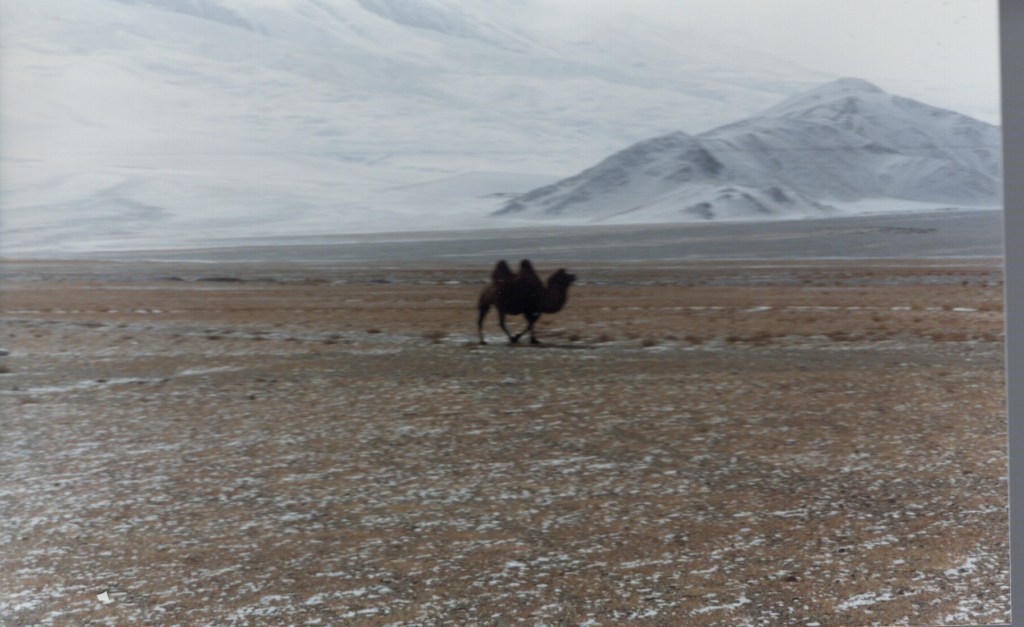
As we pushed on towards Kashgar, now in a plain with thick groves of thickly planted poplars lining the road, I dozed. Then to be woken up with the announcement that we had arrived!
Kashgar
Kashgar looks like any other city – low shops and booths lining the road, lorries, trucks and people on bicycles, a huge roundabout closely planted with gay flowering rose bushes, shrubby and unpruned, but attractive nonetheless. Soon we turned into the compound of our hotel, the nucleus of which was the Russian consulate of earlier times. The hotel was huge with lots of mod cons, beds with garish light gold quilted bedspreads of satin – vast with all sorts of different dining rooms. On Sunday we had three meals but never in the same place. The food is indifferent. I believe it is a four-star hotel China style but very unkempt and basically down-at-heel.
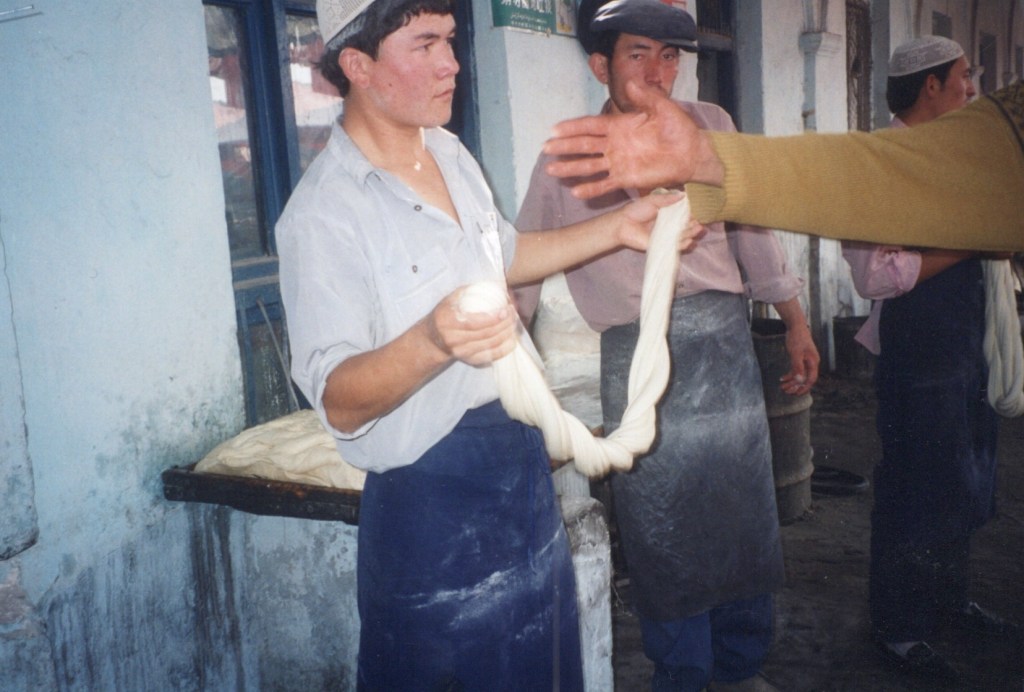
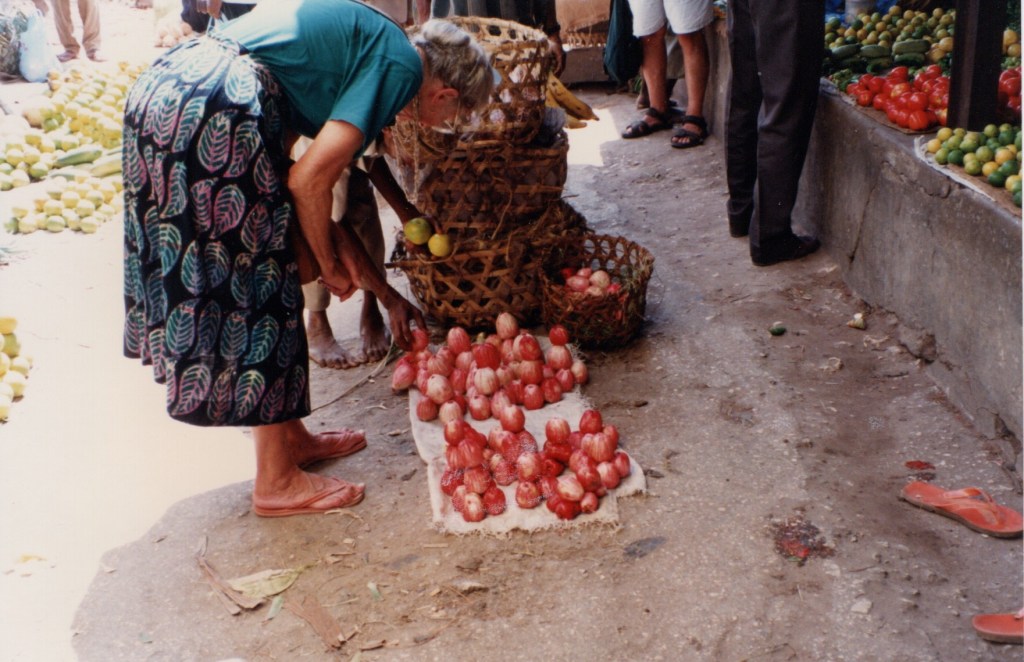
The Sunday Market is deemed to be the highpoint of the trip. There were indeed throngs of people walking along with families or carrying loads of items for sale – leading cattle, goats and sheep – the latter unwillingly – or urging on small donkeys, pulling two-wheel carts loaded with people and produce, all drawn down the long central avenue from which the market splurged. We left our bus and strolled down first on the right, where were the sellers of mats, large coarsley-woven floor, or perhaps roof, coverings. Everywhere were small booths at which pieces and entrails of sheep and goat were hanging: huge rotund tails of sheep, legs, ribs, lumps of unidentifiable meats – all of which seem to have ready customers. Everyone was very friendly and courteous, though perhaps a trifle solemn.

After visiting a mosque, they went to the government handcraft centre where she bought a couple of blue and white scent bottles and some scissors, which are rather unique, with circular handles. She was critical of the Uighur fashion sense which seemed to be a mixture of traditional and modern – ‘no one wears their clothes with elegance’.

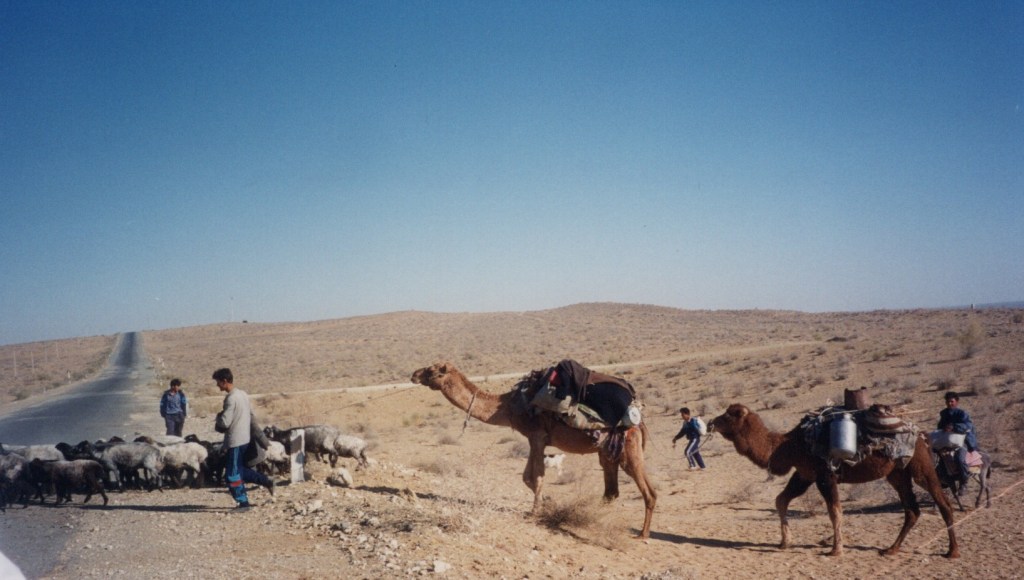
From there they journeyed on ‘almost desert like landscape, brown hills backed by snow, no people, but as we progressed small settlements emerged with large herds of sheep, goat and cattle and many small horses too. As we went on riders were rounding up the stock…The trip was becoming extremely tedious, the specially converted truck was comfortable enough internally, all the luggage at the back, but it was a kind of trailer truck with huge tractor-size wheels and I shouldn’t think many springs… although the road really wasn’t bad at all, it had been thought a bus wouldn’t manage it. I don’t think this was correct, anyway we bumped and lurched on in our boredom. I suggested a few silly word games which everyone joined in with enthusiasm and much laughter.’
Kyrgyzstan
Eventually they reached Narya in Kyrgyzstan where they met their Russian guides and had a splendid spread for dinner washed down by copious amounts of vodka and tea, ‘all spread out on a long table covered with a bright oil cloth. Toasts and speeches and general bonhomie after dinner, Sergei got out his guitar and sang softly, sad Russian songs, sometimes joined by Margarita; the host also played and sang. More and more vodka. We all joined in the songs and went to bed when the vodka was finished at about 1030.’
The next stop was Bishkek where they arrived very late due to the slowness of the truck. She was frustrated because you couldn’t see out of the windows which were dirty or shattered by a shot. On arrival, she telephoned Dad, the EU rep in Bishkek at the time, who picked her up and they went off for dinner. But first they went to his office to telephone me. ‘Tom seems to be quite good at Russian. We had a nice bottle of Bulgarian wine. I had fish he had some sort of liver concoction. We talked a lot and I tried very hard to reconcile him with Vicky with whom he is in a disagreement over Tommy.’ [I know he and I didn’t speak for a long time but I can’t remember what this particular disagreement was about. Maybe he thought I didn’t discipline Tommy enough as he was rather wild.]
Uzbekistan
From there to Tashkent a drive of at least eight hours ‘an almost modern city having been destroyed by an earthquake some 20 years ago, nothing of mention to do or visit.’ It was basically a ‘jumping off point’ for their flight from Urgench (which Ross and I visited in 1983) to go to Khiva, where for some reason she took no decent photos of the beautifully restored town. Few of her photos from this trip are good – I remember her saying she had camera trouble.
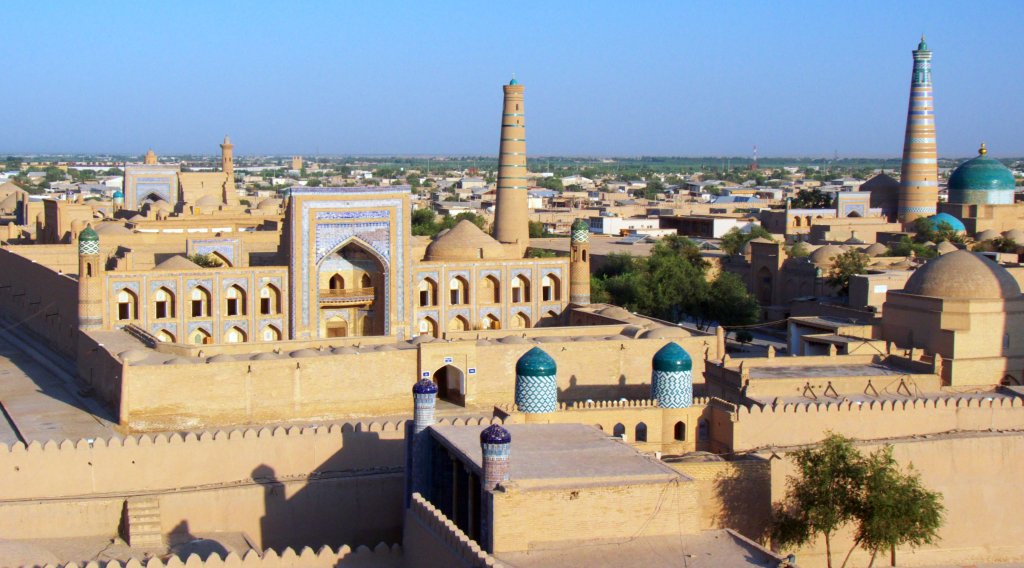
‘The old town has been almost entirely restored and all beautifully done. We were taken through mosque to madrasah to mosque to museums displaying old costumes, textiles and household equipment.’ I remember feeling rather the same although it is completely stunning. When we were there, the only other tourists were local groups of school children and students.

The next day they went to Bukhara and at a comfort stop along the way she got left behind – ‘it takes longer with a stiff leg and as I struggled up the road from the cotton field where we had been comforting ourselves the bus door slammed and it drove off in a cloud of exhaust into the distance. The stupid idiots hadn’t made a headcount; luckily the alarm was raised and it came to a halt, reversed and picked me up and I climbed on to the sound of applause all round.’
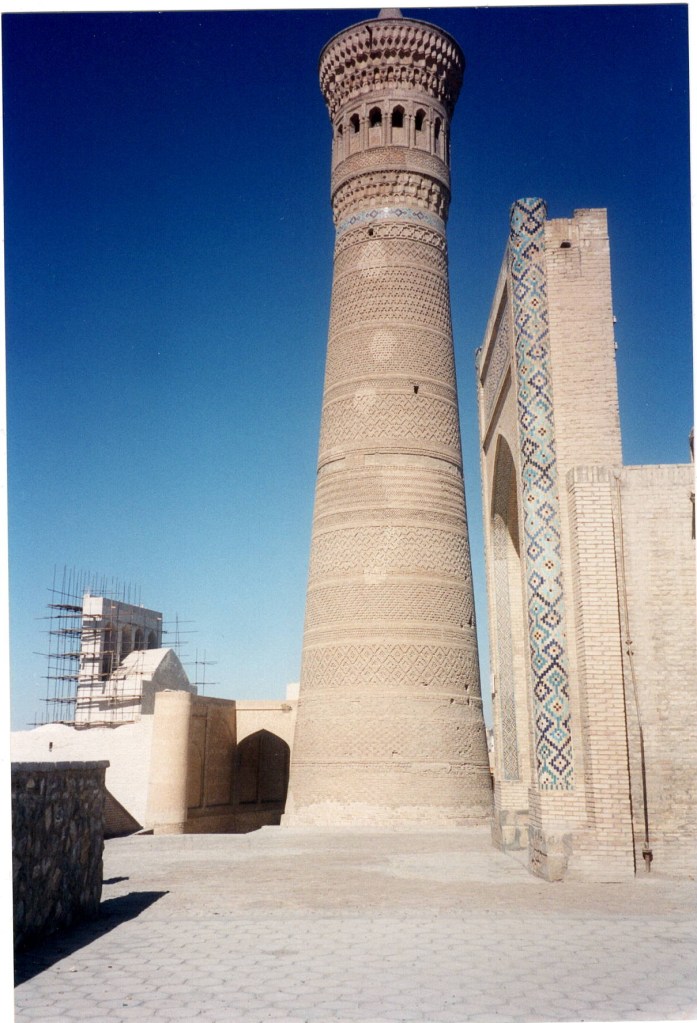
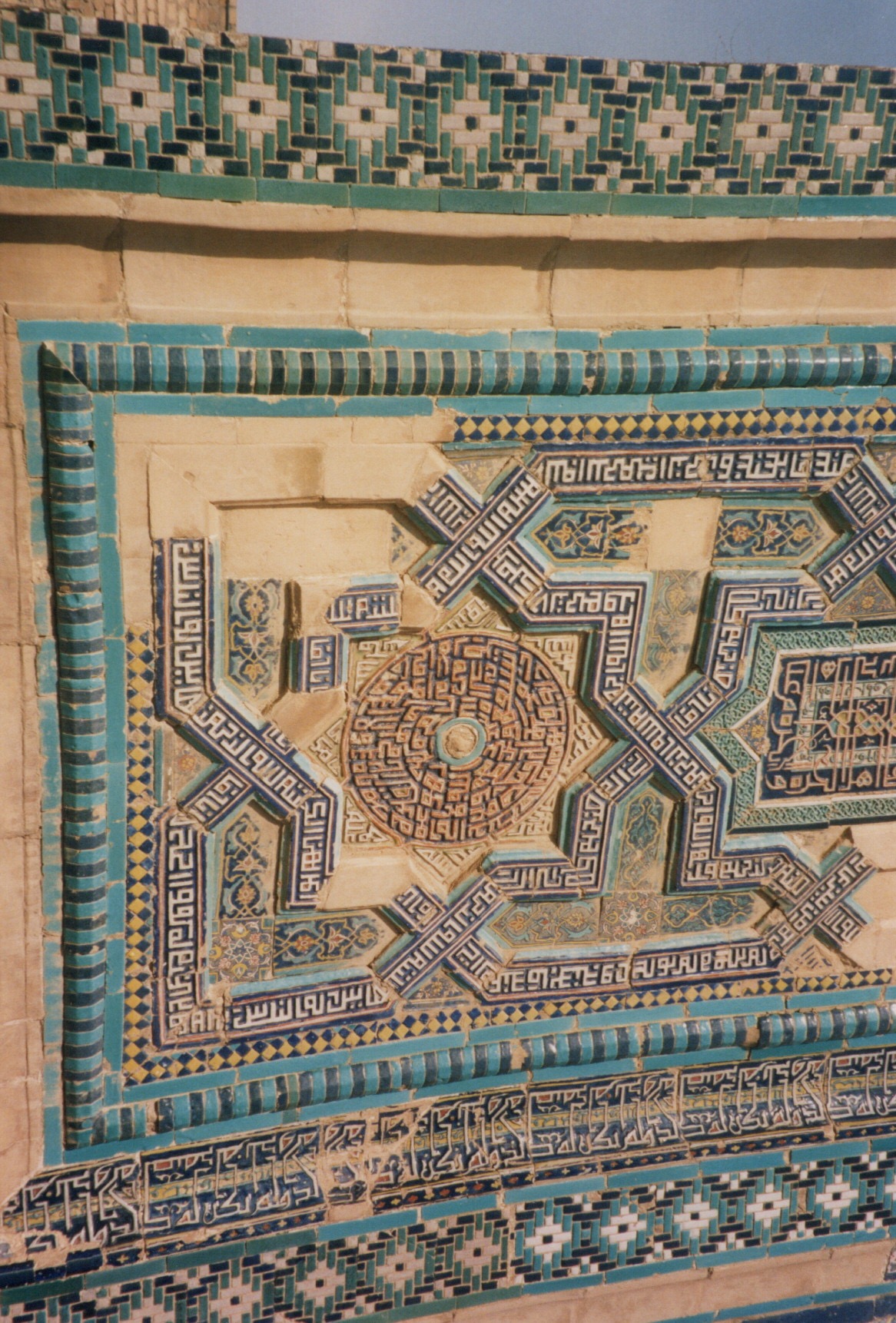
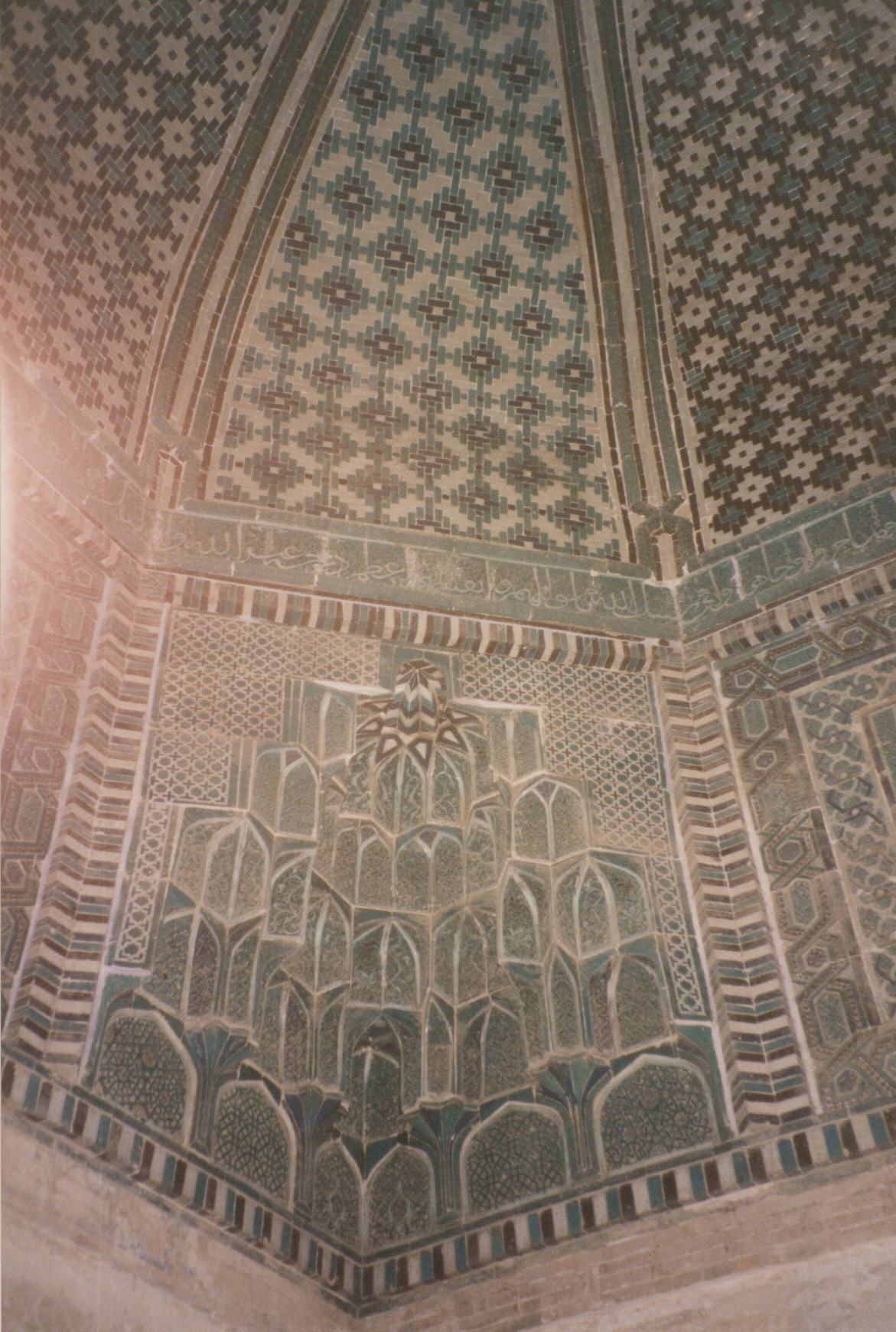
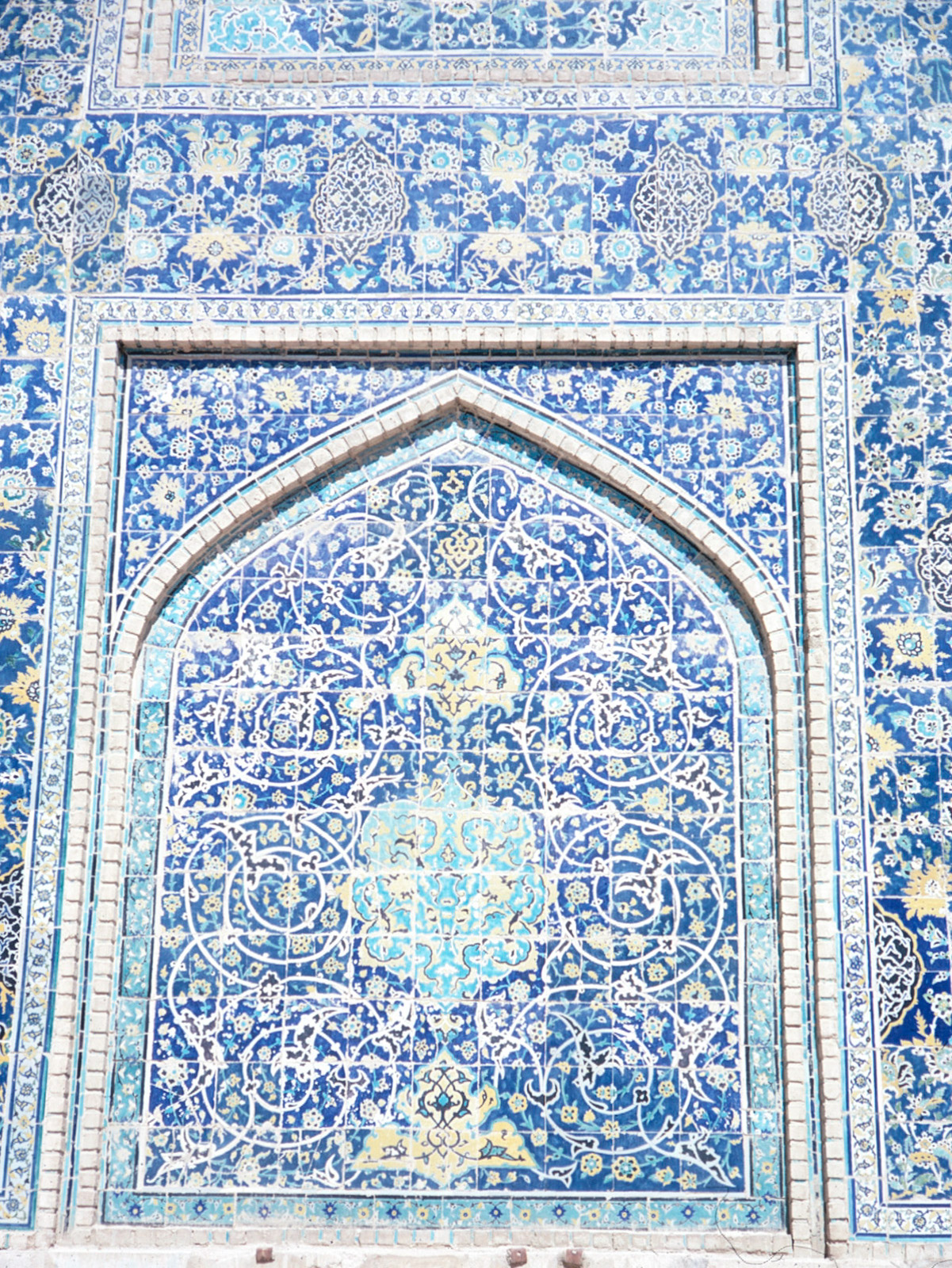
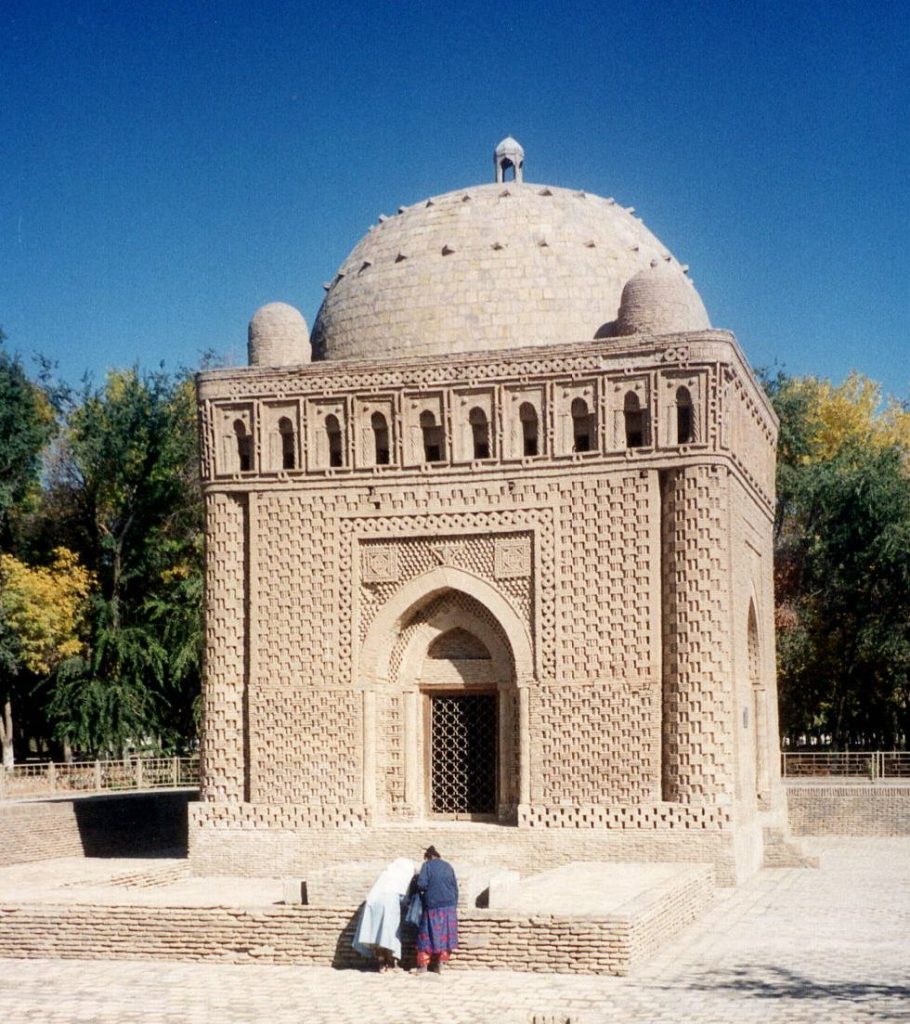
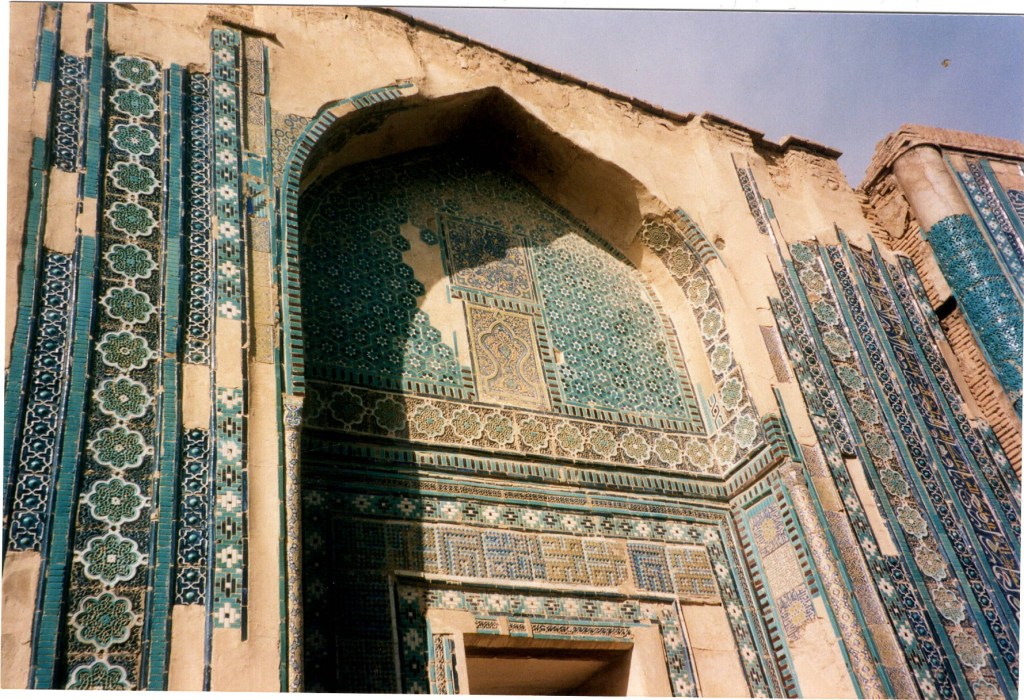
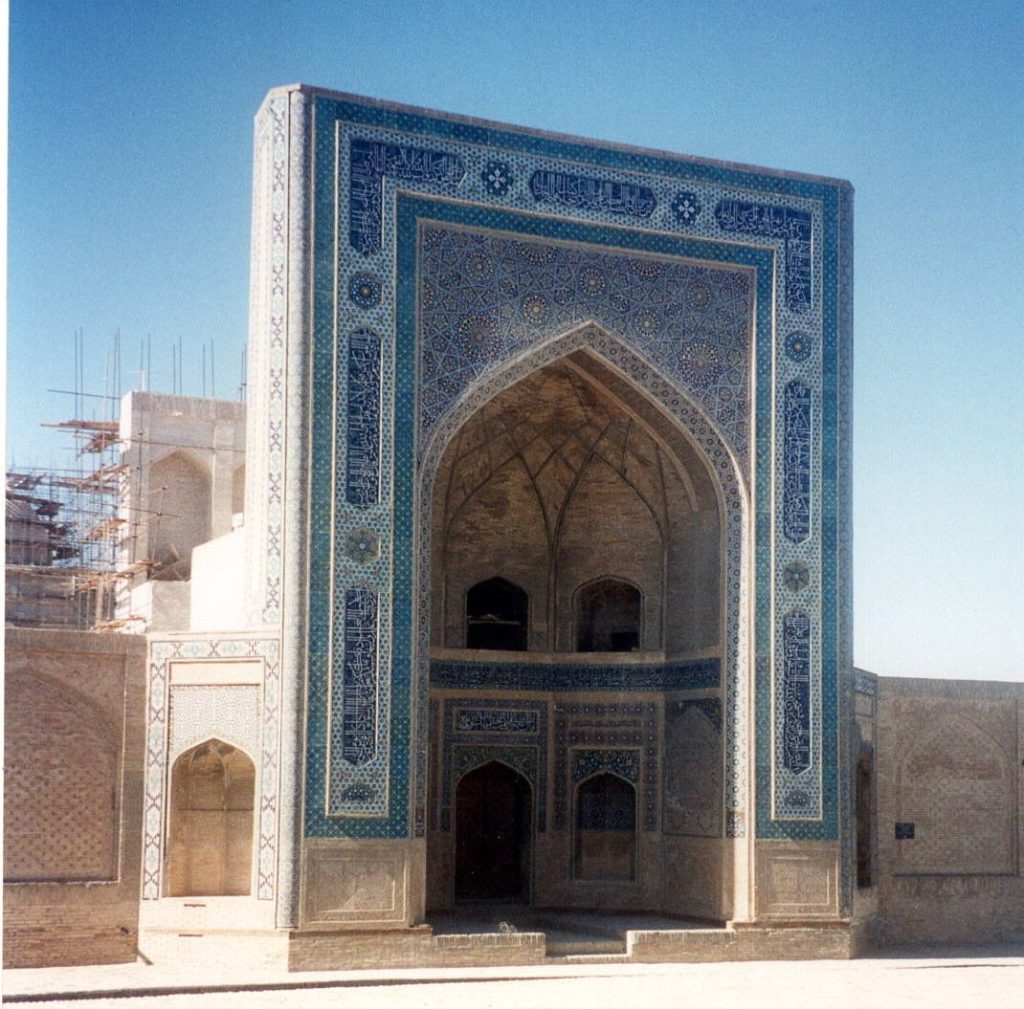
In Bukhara, they stayed at the Taj hotel, but there was no hot water much to her disappointment. They did the usual rounds of the tourist sites and again some shopping. She bought me a ‘fairly large faded red embroidery’ which I still have. Her main observation about Bukhara was ‘the tile work in central Asia is much more geometric than in Iran – to my mind Iran scores for richness of colour and flowing floral designs though if my memory is correct the minarets are tallerix central Asia as here in Bukhara.’ Below the tiles on the left are from Samarkand while the tiles on the right are from Isfahan.
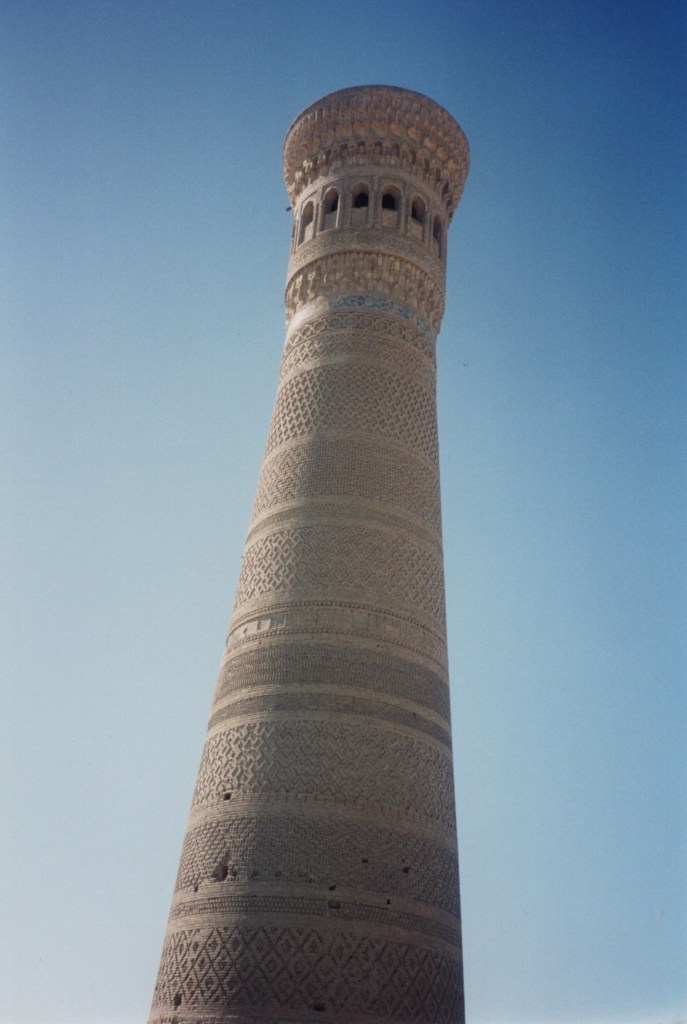
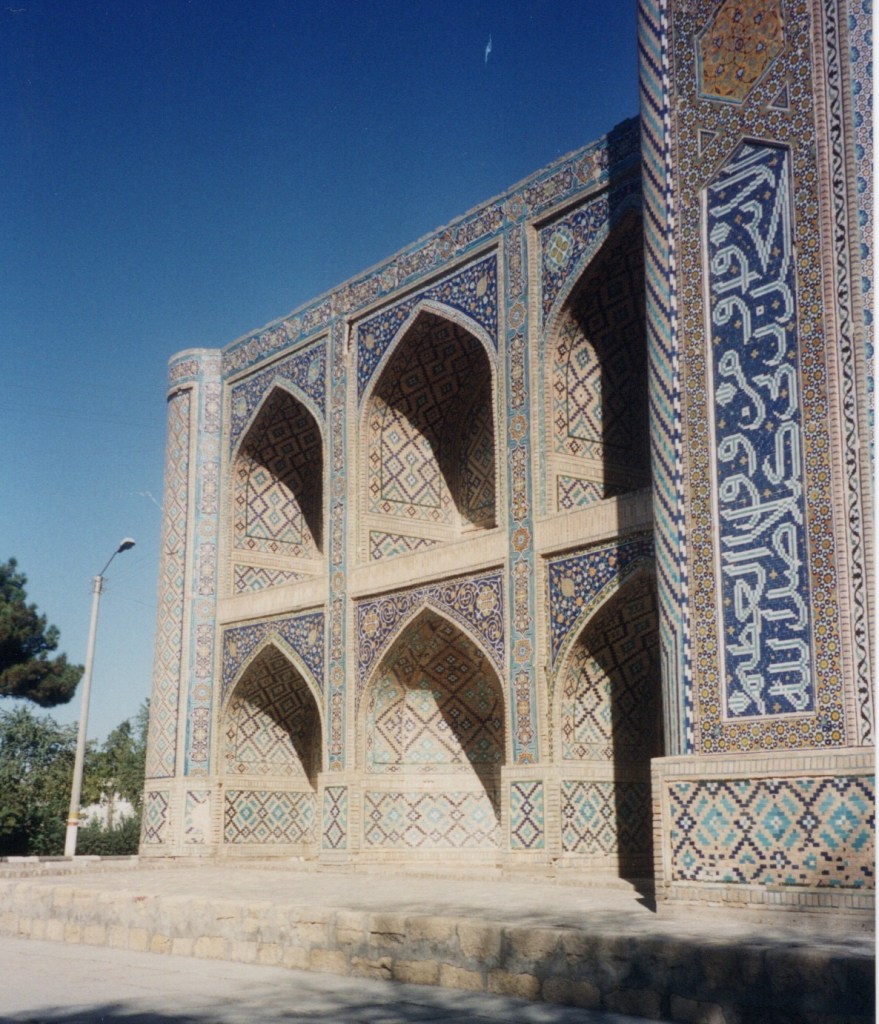
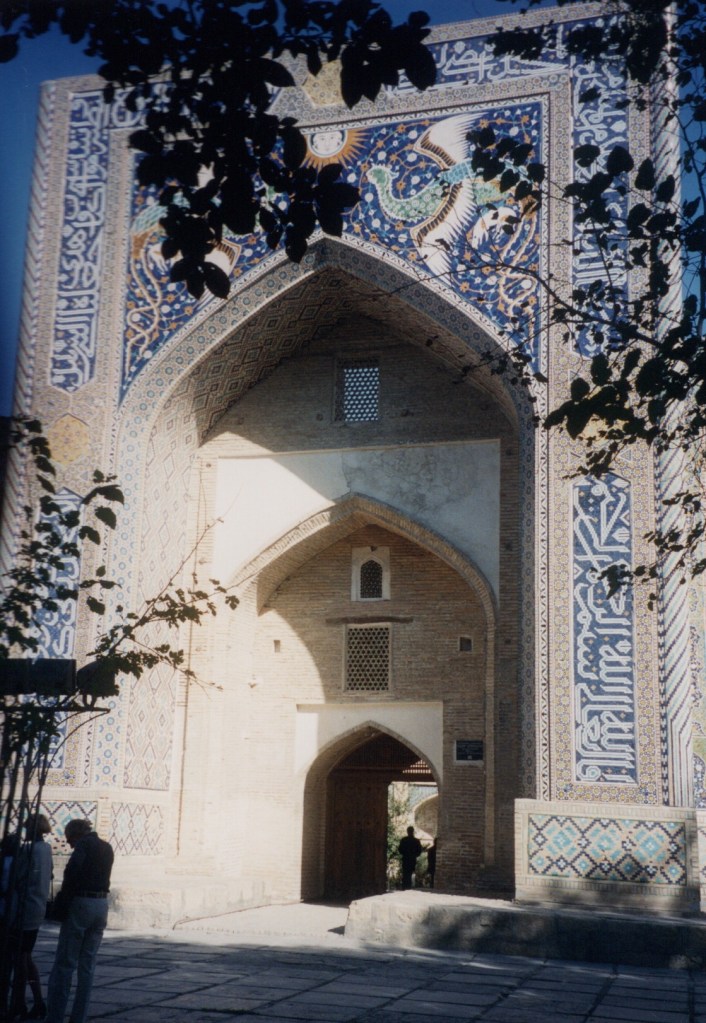
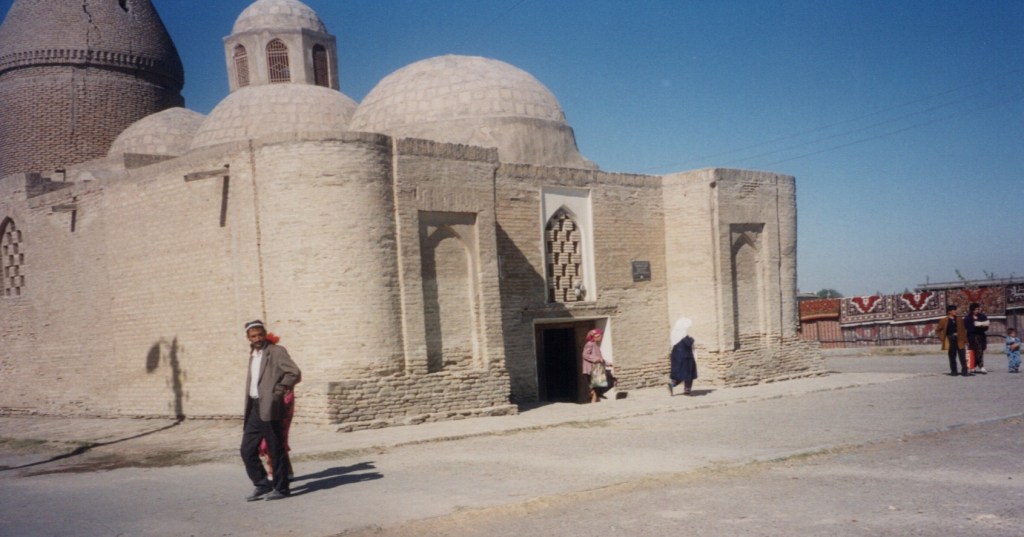
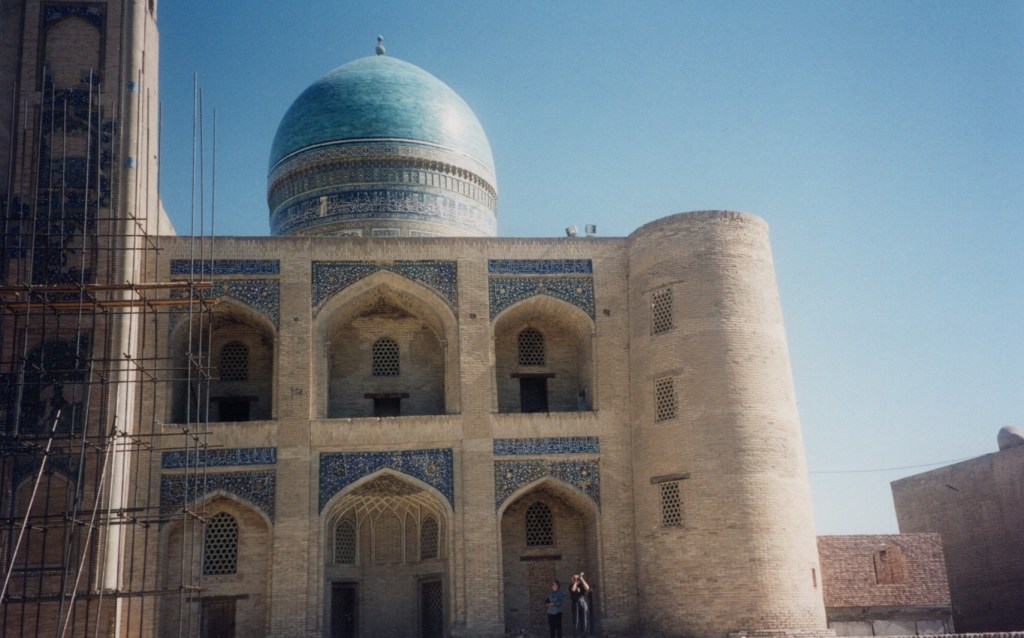
She was disappointed, as she was to be in Samarkand, that many of the places were undergoing repairs, ‘and scaffolding embraced many minarets and iwans of a mosque and often we were unable to go in at all’. She was also disappointed with the bazaars: ‘remembering the magical bazaars at Isfahan and Shiraz and even Tehran. Although it was some 20 years ago, they cannot hold a candle to them. You didn’t see for instance the workers in copper and brass brass banging away in deafening harmony – most shops seem to be selling not making; on occasion you came across a scissor-making workshop or potters’ yards, where the artisans proudly showed you recommendations and certificates awarded them by UNESCO or some other well-known body.’
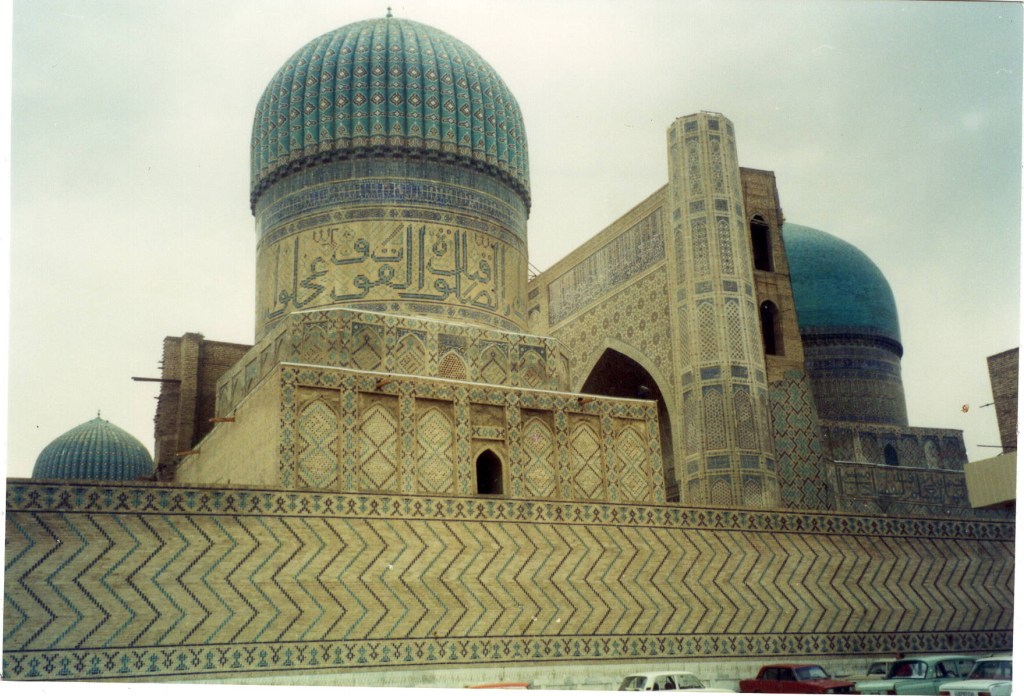
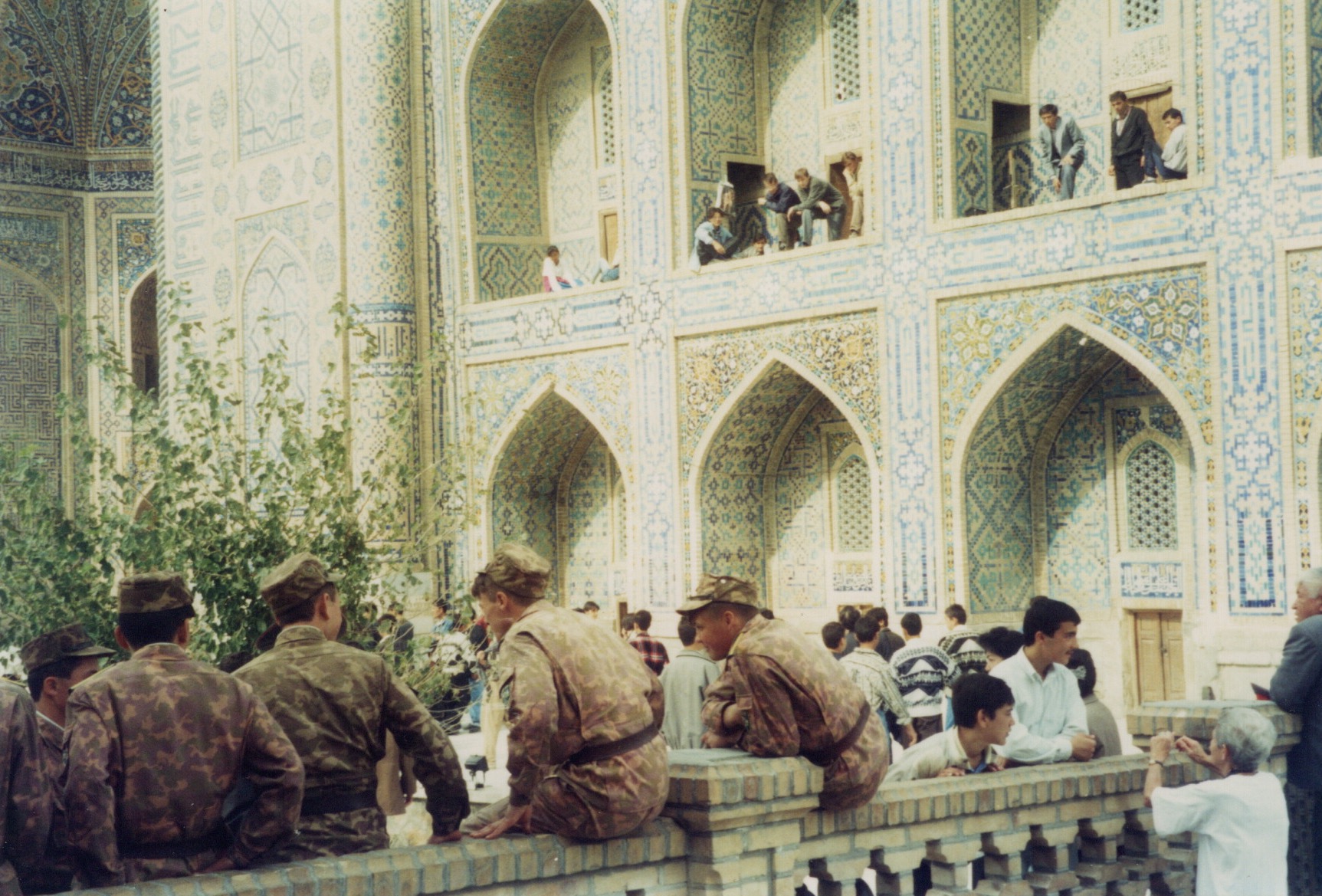
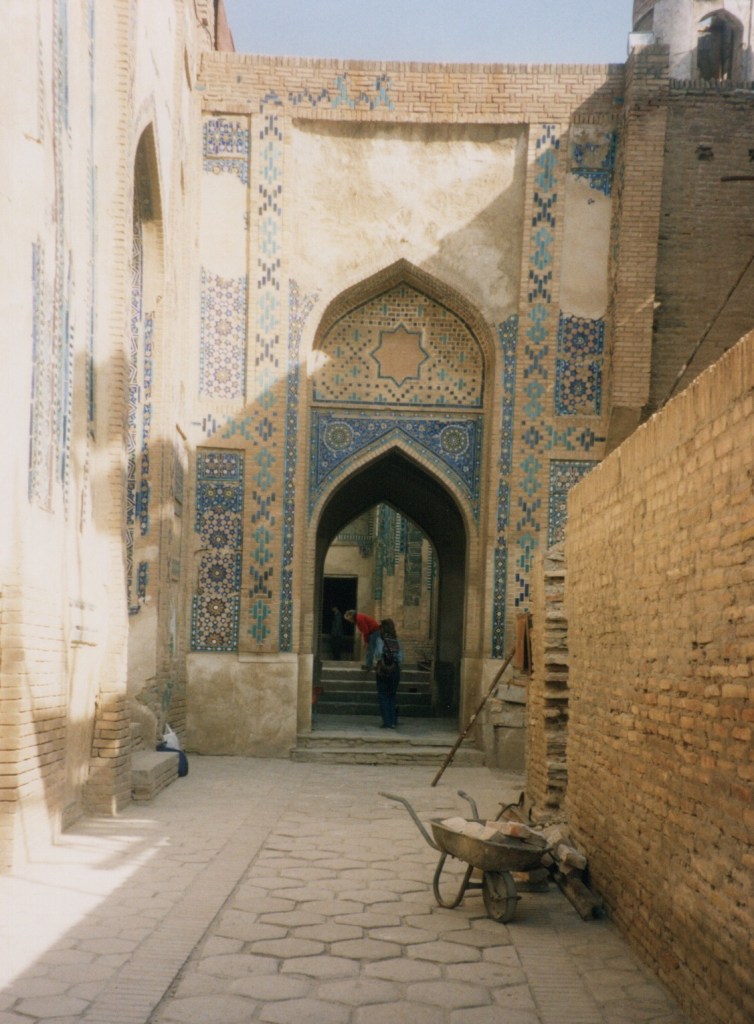
Samarkand I felt was another letdown: great renovations seem to be going on at every site we visited. First a mausoleum complex which you approached up a steep narrow road, the tombs built on either side and on the whole in poor repair. Quite a lot of tourists here, then down again and onto the central market, where all manner of produce and domestic items were on sale. Next to the market lay the impressive Bibi Khanum mosque under the watchful eyes of an army of cranes and workmen and a casing of metal scaffolding on all side sides. The famous Samarkand Registan was an even greater disappointment – you couldn’t get into it at all because rehearsals were going on for a great celebration to be held here at the end of the month. [See below!]
The only thing that cheered her up about this trip was that having opted not to pay for a single supplement, she nevertheless managed to get a single room for all but one night of the whole trip as there was no one to share with. ‘Well-heeled companions’ had opted for the single rooms! So she felt very chipper about that. She noted in her diary that ‘Vicky and Ross came here 20 years ago, the first group to visit central Asia and it sounds like it was far more fascinating though the accommodation probably left much to be desired.’ That was certainly true. The food was filthy and the accommodation extremely basic; luckily we had been forewarned and we had brought a plug with us as there was not one to be found on the whole of our trip.
In true Sheila style she made a rather critical summing up.
Well, too much driving, inevitable I suppose, but I didn’t think enough research had been done. I didn’t mind not seeing the Khyber pass. The Bholan [in Baluchistan – see here] is wonderful, remote and grand and probably gives as good impression as can be of what these stark areas were like during the 19th century campaigns. I thought the bone-shaking converted army truck which we were committed to from China to Bishkek was a disaster and unnecessary too, as the road wasn’t bad at all and you couldn’t even see out. No complaints about the accommodation, if anything it was a bit too grand for me. Food was unexpectedly good – I’d imagined endless tough meat and rice.
It should’ve been possible to know in advance about the Aga Khan’s visit and also the celebrations in Samarkand which prevented us from seeing the Registan, but I suppose no one is going to tell you, you may not see many of the beautiful monuments as they will be encased in scaffolding and a network of planks and walkways for wheelbarrows and workers.
And finally the leader, a diplomat and totally unsuited to lead such a group, slightly pompous obviously used to being waited on. He didn’t do much for us except lecture us on what we had already read. Selfish in that he only wanted to buy silver boxes and kelims and didn’t want the group around gaping. Well okay but doubtless he had a free trip, and may even have been paid. All the guides were good and the drivers managed well, sometimes under difficult conditions on the roads and with their vehicles. All in all interesting but overpriced at £3000 I thought.
Very Sheila. She hated going in a group and being told how and when to do things! Freya Stark would never have tolerated it.
 Travels with my mother