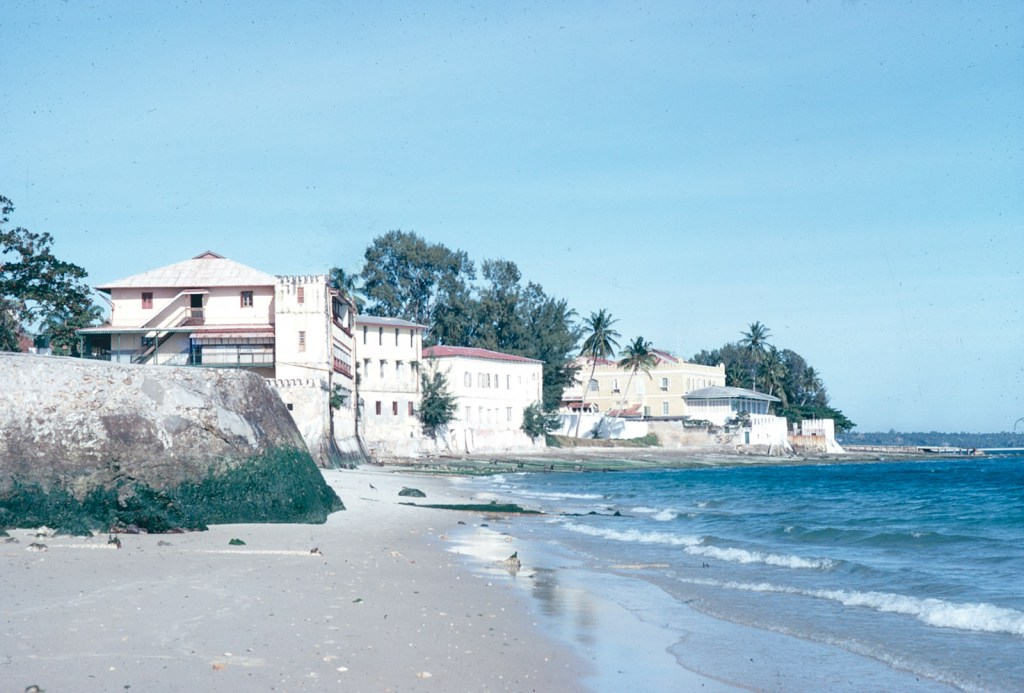
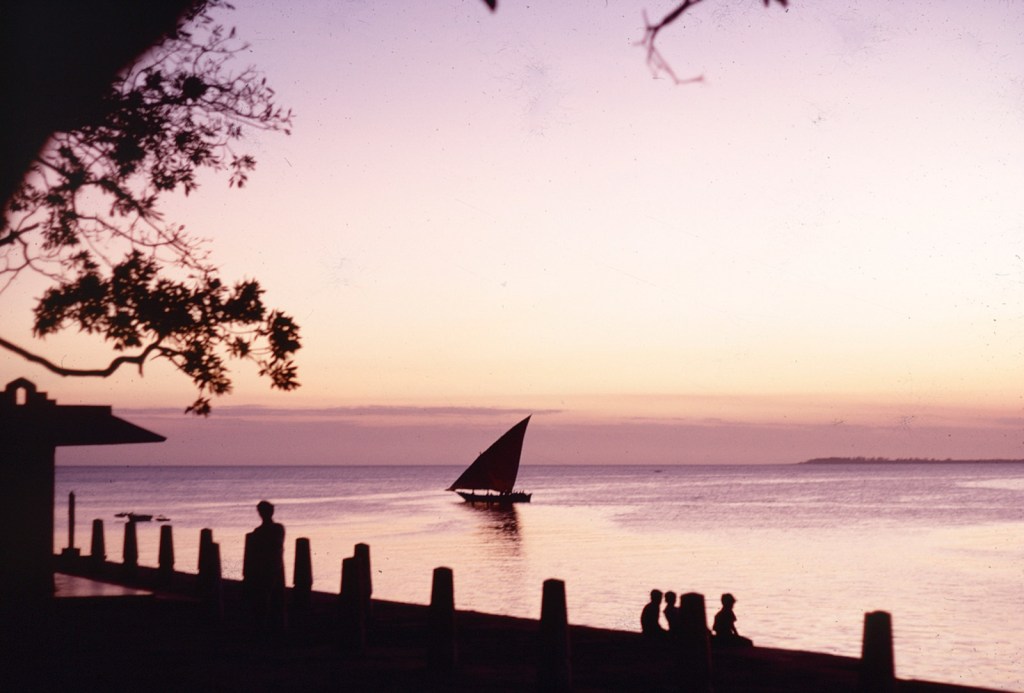
My mother first went to Zanzibar on ‘sick leave’ in 1948, while stationed in Kongwa. She was recovering from pneumonia. She was to visit frequently right up until 2008, when I took her there while I was running an editorial conference for Nation Media Group. She found it much changed on her last visit but still enjoyed wandering round the streets on her stick while I was working, chatting away in Swahili to all the old men lounging around (that hadn’t changed). It made me happy to give her such pleasure towards the end of her life. Business class all the way! And then a few days on the east coast in bandas, just like in Mafia (well, kind of…)
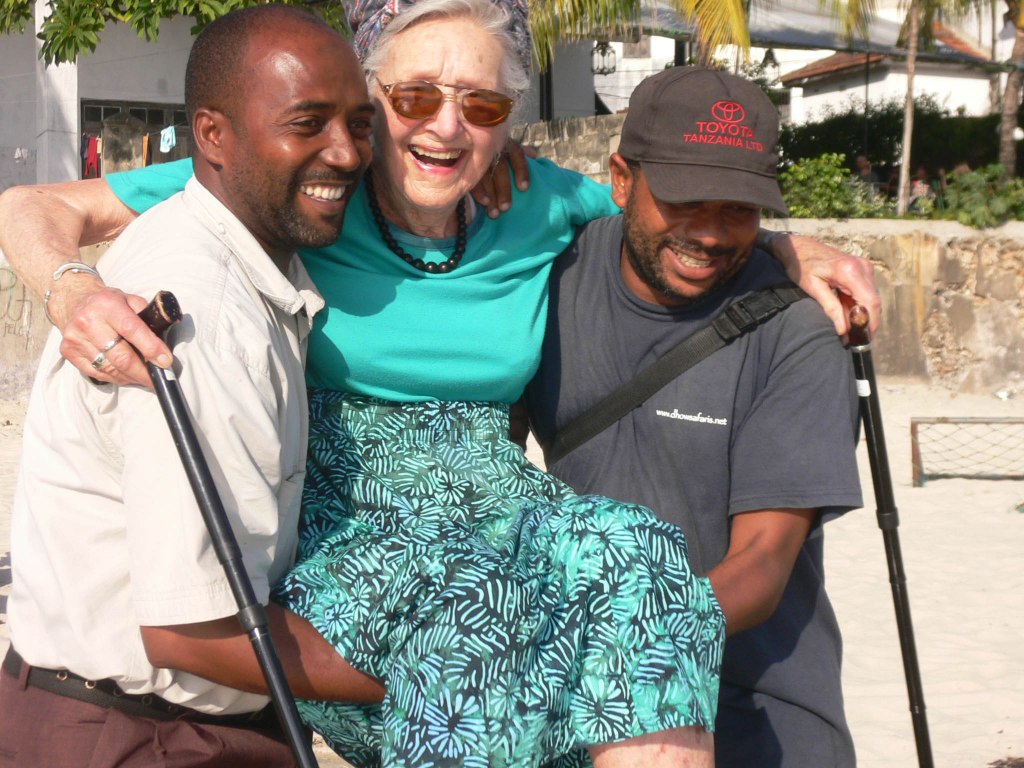
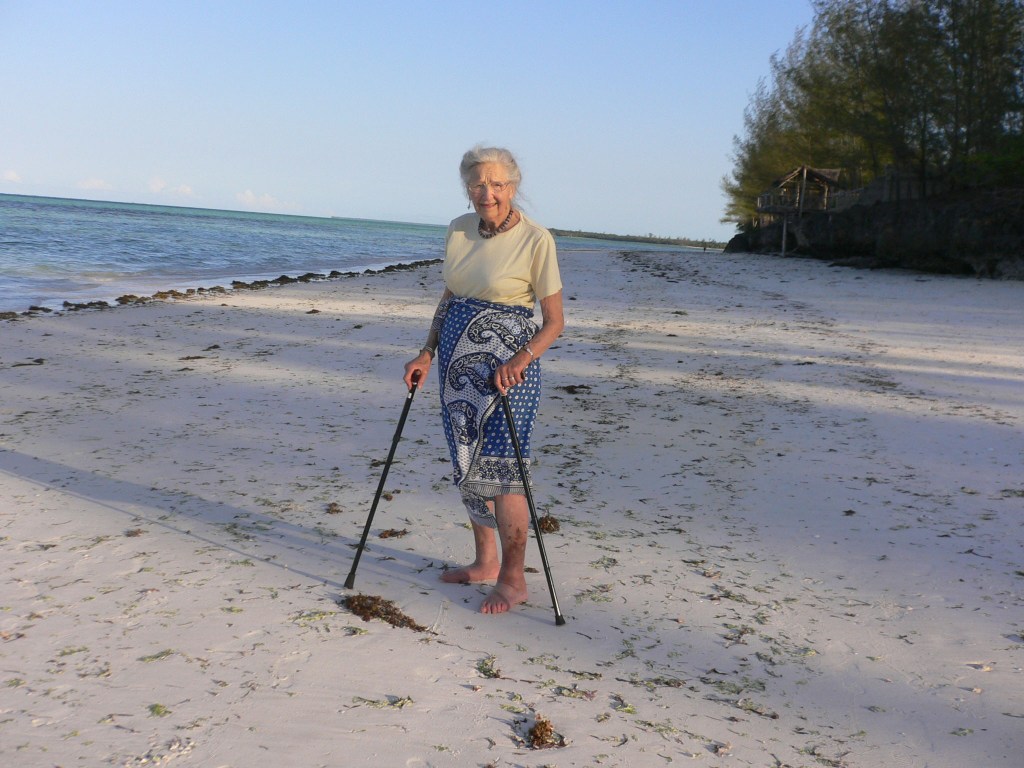
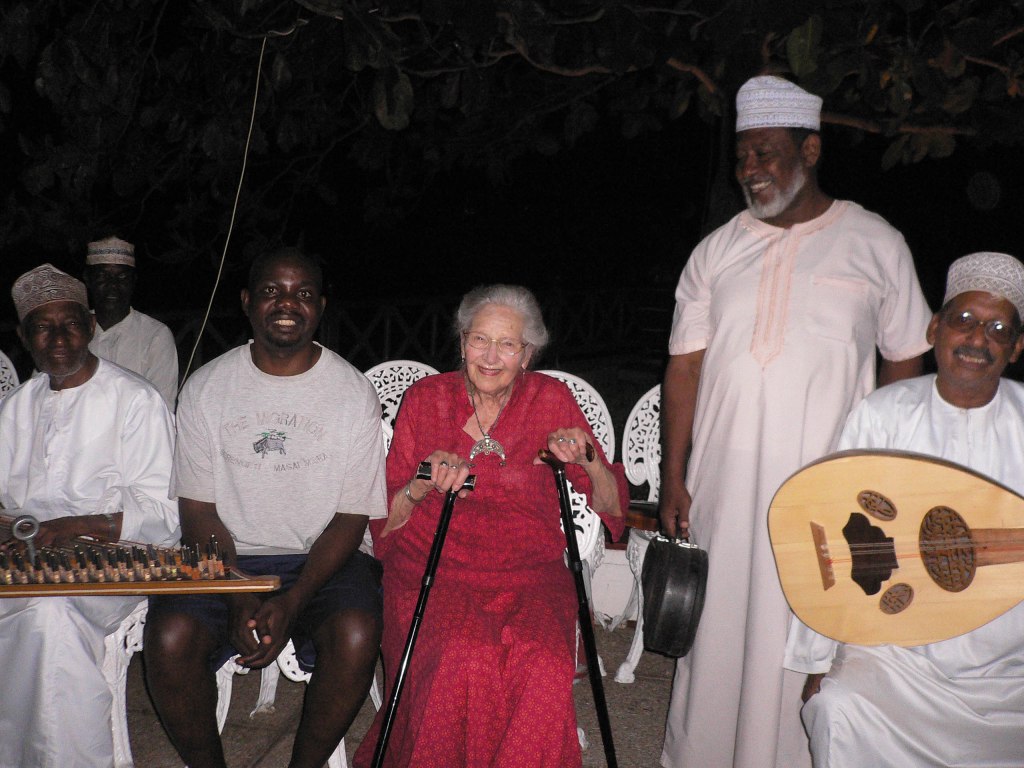
Her first encounter with Arab Chests, which were to form a life-long passion and interest, came about just before this first visit when she was staying with the Kirks, he Commandant of the Dar es Salaam Yacht Club, who had ‘lots of copper, all old Arab, and some lovely brass studded chests which they bought in Zanzibar’. Her interest was piqued and she was anxious to acquire her own camphor chest, initially.
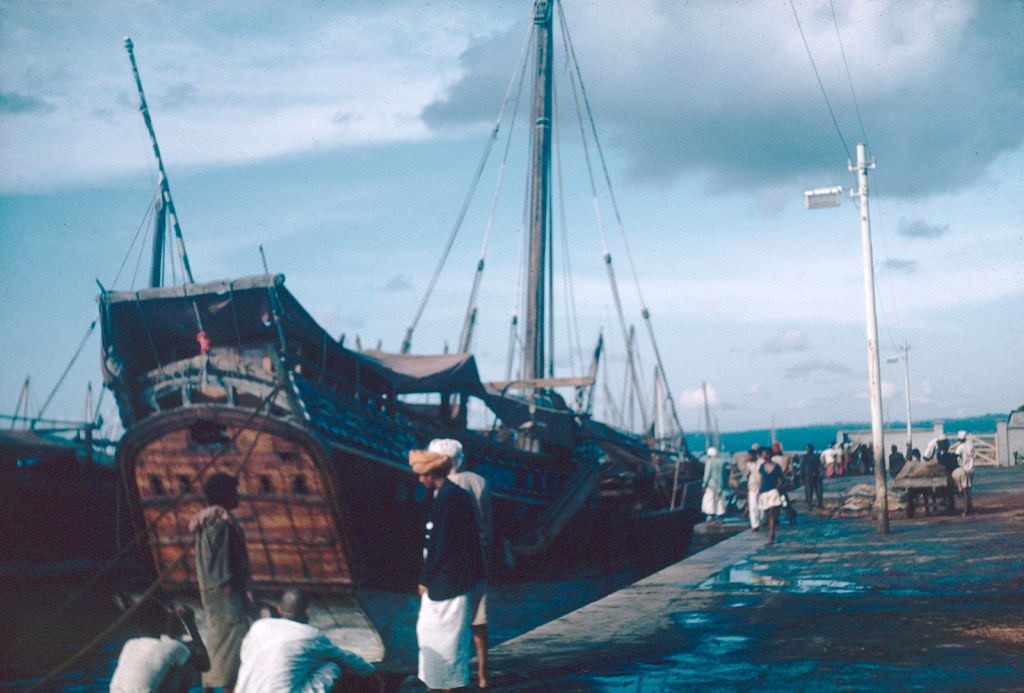
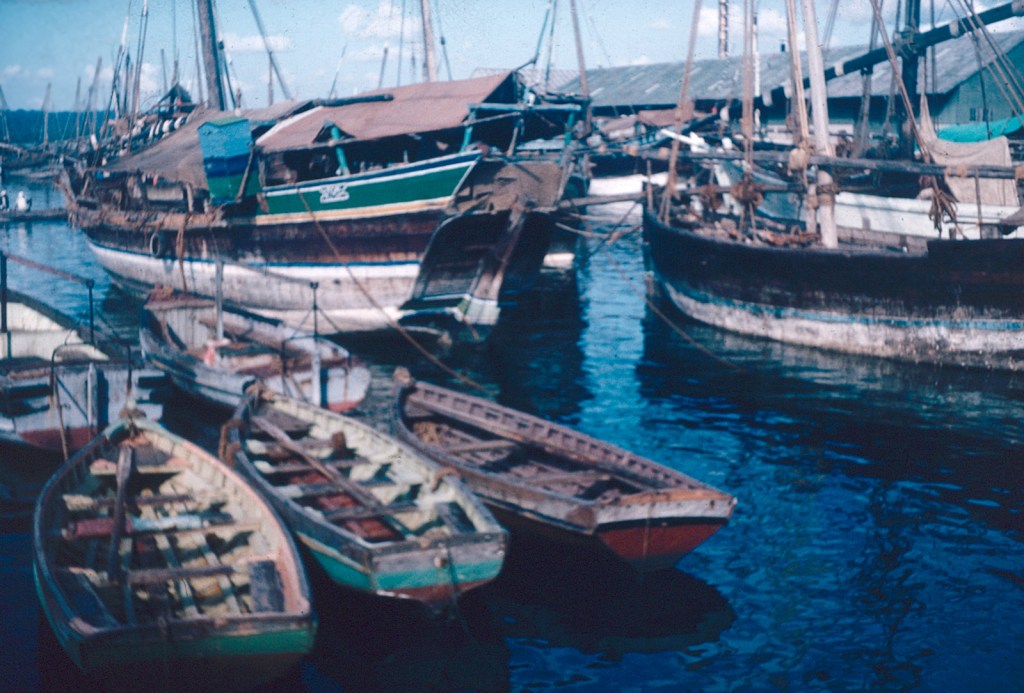
Her first purchases were in fact rugs (she didn’t buy her first chest until 1952), but she describes her impressions of the island in 1949 thus: ‘we really are having a magnificent time – I do wish we lived here. At the minute Z is full of wild Arabs who have sailed down from such places as Basra, Kuwait, Muscat, Aden and India and are now waiting for the wind to change so that they can sail back, by dhow of course.’ It was on this trip that they met the ‘other Unwins, son of the publisher”, who were stying a the same hotel and it caused much confusion.

I remember spending Eid el Fitr in Zanzibar in 1962 – big funfairs, lots of sugary sweets: ‘V adored the Idd fair, where she spent much time on the roundabouts, all the local children beautifully dressed in new clothes for the holiday [and] couldn’t understand whey we let her go “naked” (in pants only). They thought us most remiss.’ And so it was! The embarrassment rankles to this day.
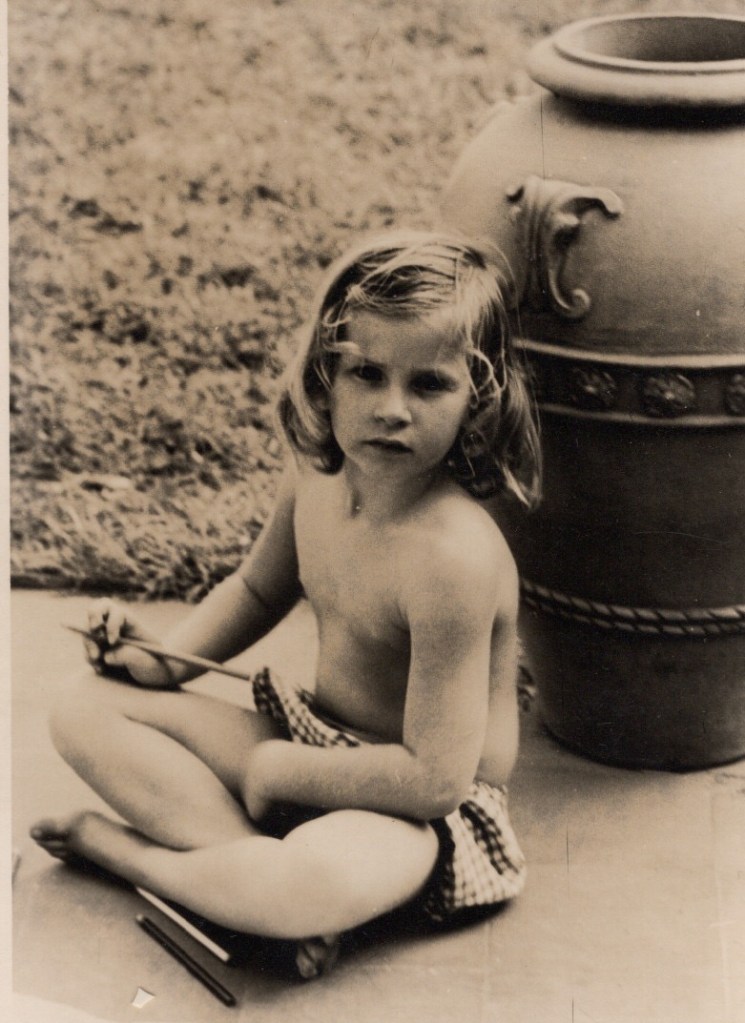
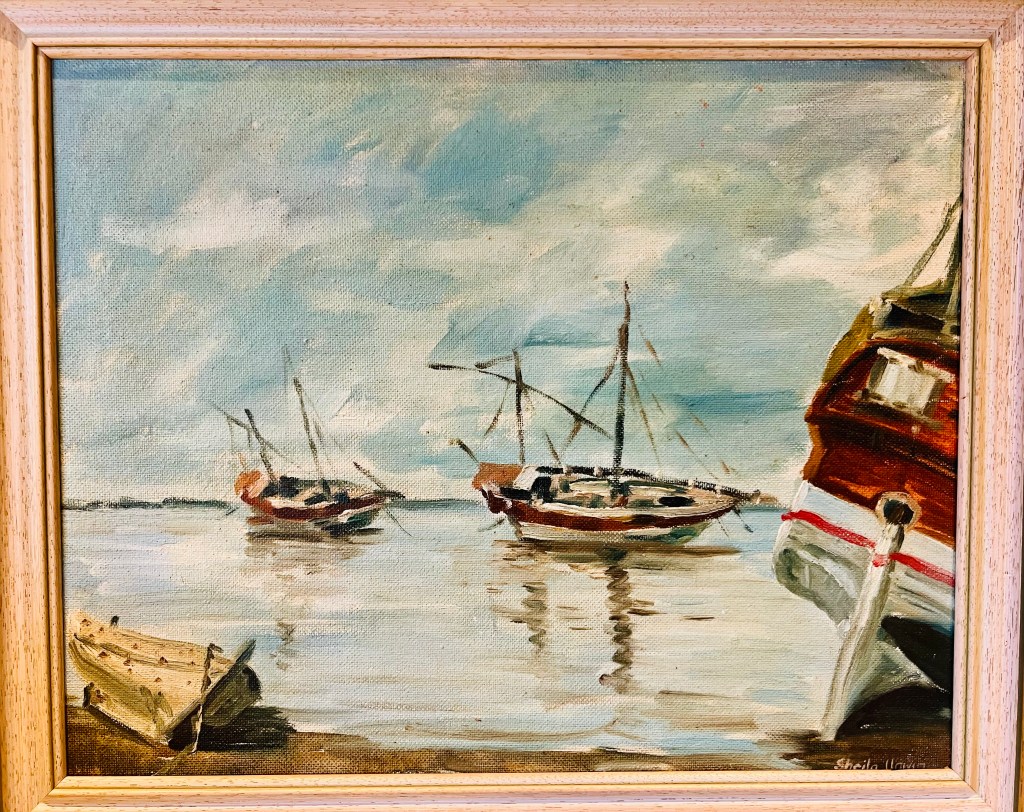
‘We witnessed what seemed to us a most antiquated ceremony, of the Sultan’s son receiving eminent people on the occasion of Idd – all the colonial people in full fig.’ It was also the first time she met Mohammed Matar, her chest dealer, ‘quite blind although young’. She made her first major purchases from him in 1963 and reckoned she made £100 profit. On that visit she painted a picture of dhows which I still have on my wall.
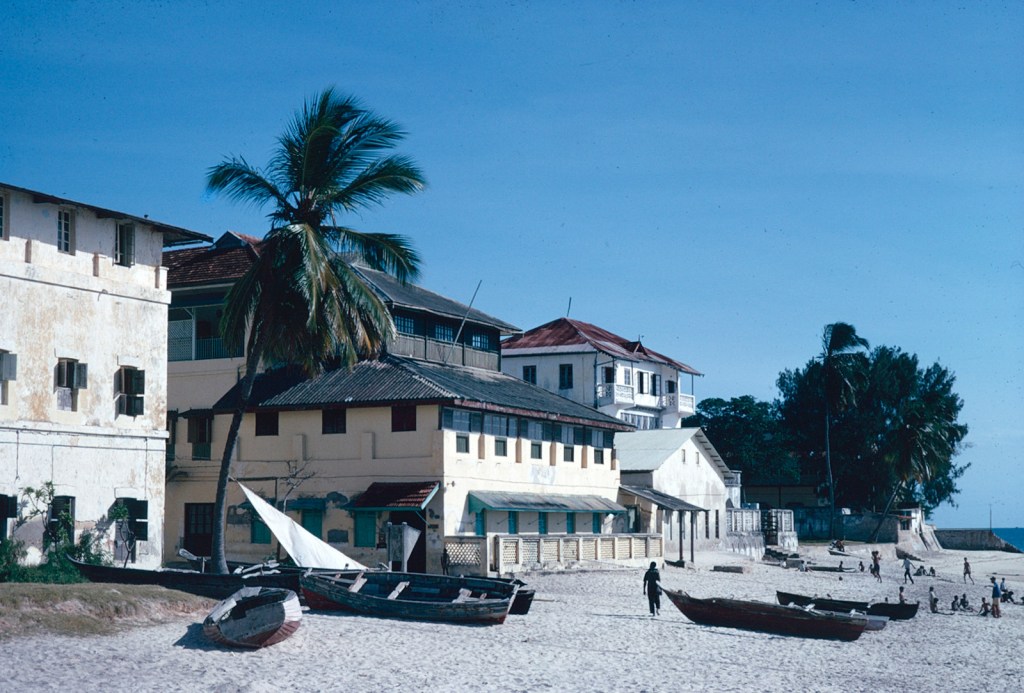
Easter 1964 finds her in Zanzibar, buying chests again, ‘the Marines [who were there to keep the peace after the Zanzibar Revolution ] came in useful offloading the chests from the dhow at the docks!..[despite] seemingly shocking social upheavals but still the most delightful place in eastern Africa’.
She returned for May Day, and provides her impressions of the celebrations of the union of Zanzibar and Tanganyika on 26 April 1964, which took them all by surprise. The union and the way the British civil servants were treated gave them added impetus to leave Tanzania.
I’ve been on a quick trip to Zanzibar as I wanted to be the first in after the union. However although I was assured the ban on visitors has been lifted, no one there knew anything about it and it took two hours of blustering on the part of myself and the manager of a local group of hotels to get them to let us in.
When I got to the hotel I found it was booked by government for May Day guests and I went to a local guesthouse, recently owned by an Arab who at the moment is ‘inside’. It seemed clean and comfortable and I ordered myself Arab food and felt quite pleased.
First I went to the British High Commission to find out about Mohamed Matar’s property, the house – which I’ve also visited – is still okay but I didn’t know about the shambas. The British could hold out no hopes for any of it and were rather cynical about the position in general. Certainly all in Zanzibar were more full of May Day and the decorations ( and all had been compelled to be put up) then union with Tanganyka. There was a big meeting held when I was when I was there at which the President, Kurume, addressed large crowds after which there was a procession of Russian trucks armed, it is true, by locals.
I found a real Communist state and even bought a flag issued by the revolutionary committee of trade unions, bearing crossed rifles and two clenched fists. I was most struck by the beautifully decorated houses which were occupied by the Russians, peacock wind vane on the top, East Germans, who were busy cordoning off a piece of common land, and the road in front of the house by way of a garden and the Chinese. The poor British are unable to get any help in doing up their new offices and several large crates of furniture were still on the key after six weeks as they were unable to clear them. All British civil servants gone save a doctor and dentist, and a director of PWD, I think it will be a very difficult to budge the Communist style they are so well and installed.
Despite moving to Zomba, Malawi (my father now had a job with the UN) she continued to visit Zanzibar in 1965, and bought 16 chests and 17 carpets which she sold almost immediately upon their arrival in Zomba.
In 1966 she and my father separated and she went to live and work in Nairobi, but Zanzibar lost out in the popularity stakes to Lamu, where excavations in nearby Manda and Pate with Neville took her in her free time.
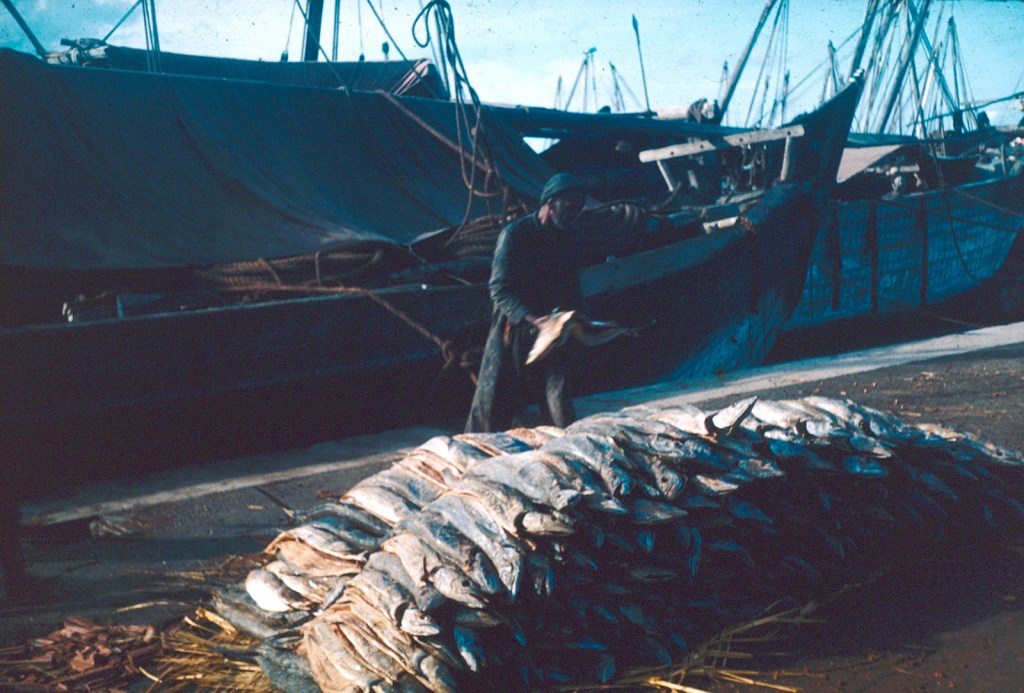
She returned once in 1990 while researching for her chest book; she would have been 70. I think most of the colour photographs date from then. Here are her impressions of Zanzibar as recorded in her diary:
Courtesy, kindness abound. Only one nasty remark, flung from a passing car for no apparent reason – ‘son of a bitch’ – if I’d been been quick enough I’d have said ‘your mother must be a dog’ in Swahili.
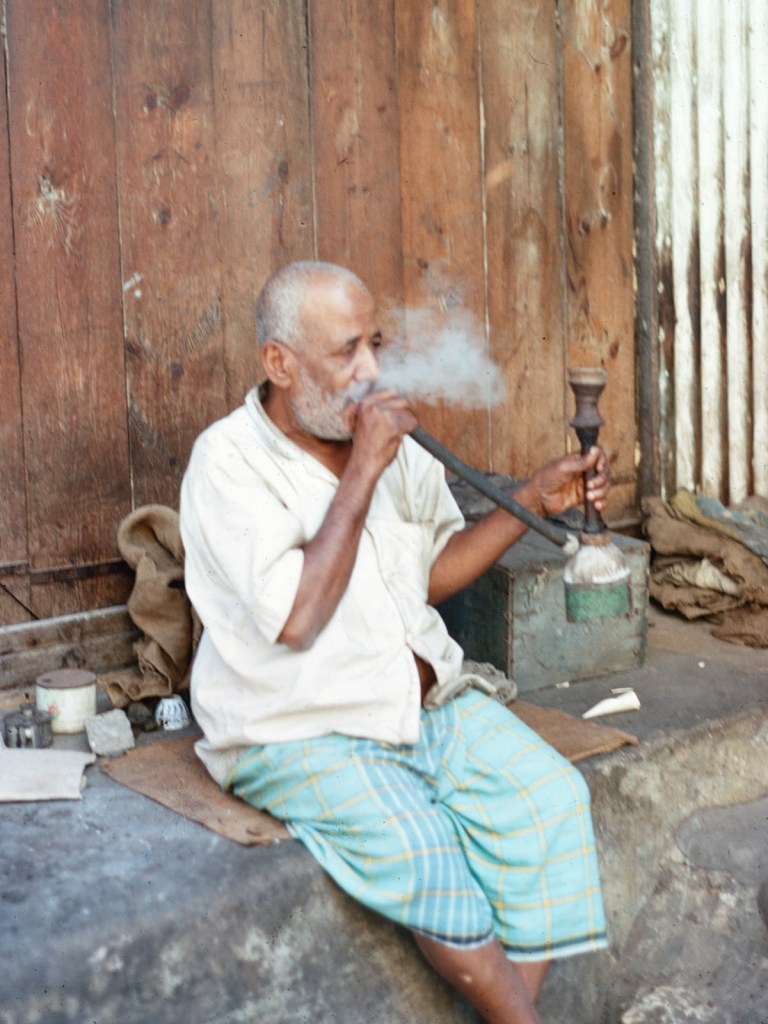

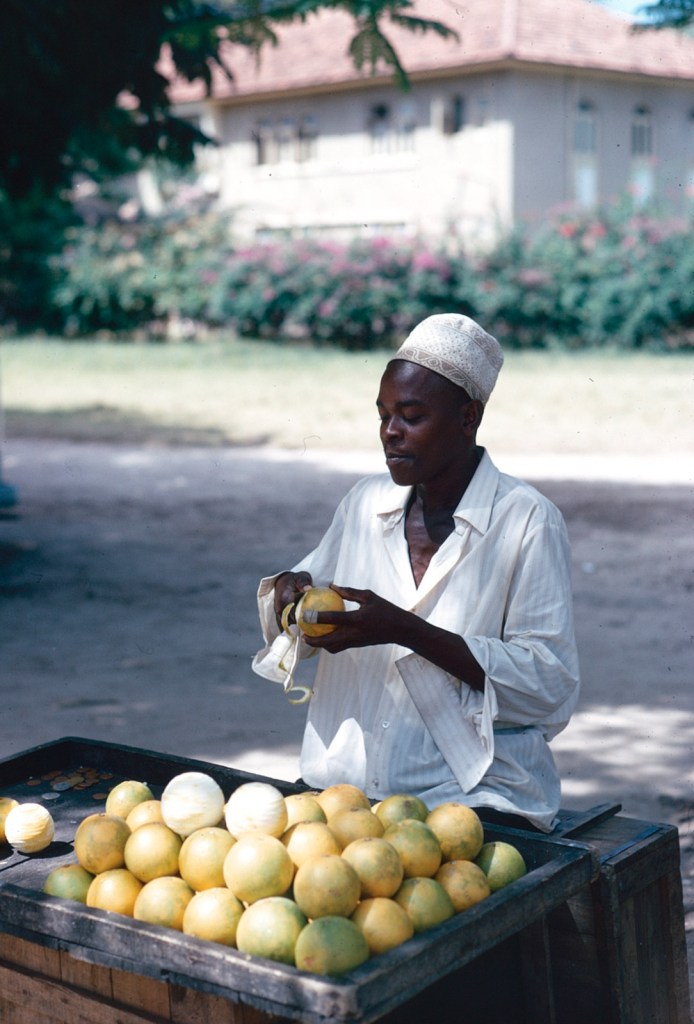
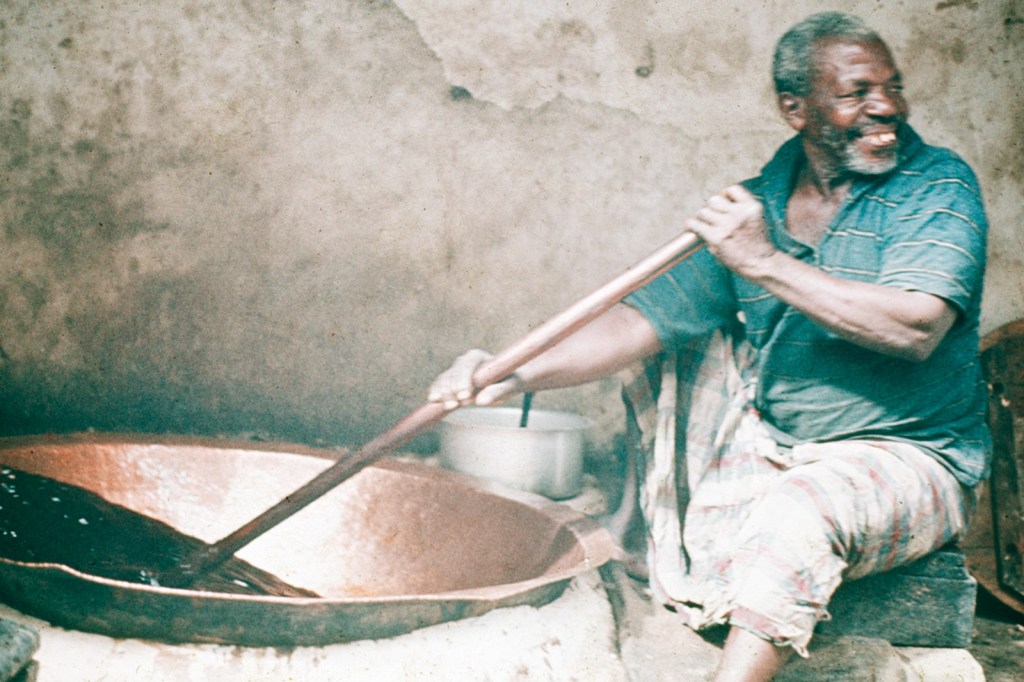
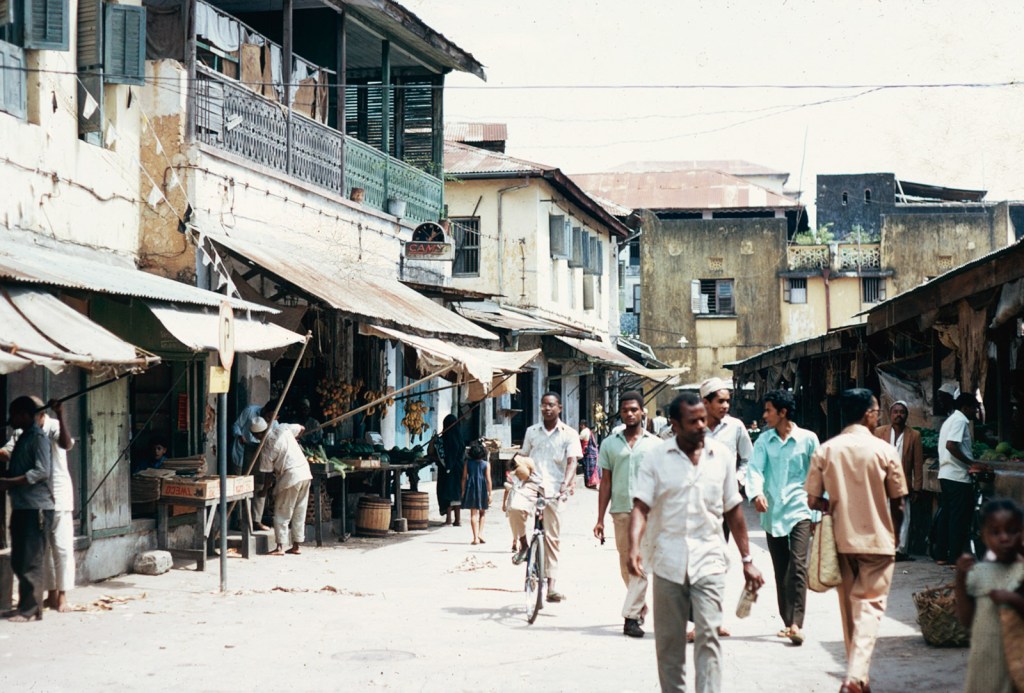
Despite the high prices, people seem prosperous and no more than the usual number of beggars, only children trying it on. Most people wear European dress nowadays which imparts an aura of drabness. As for the tourists they seem to be all of the traveller variety, wearing funny clothes and looking mostly rather grubby and un-ironed. I suppose I fit into this category myself, but I have managed to wash my tops and undies…however I’ve stuck to one skirt, which seems to have survived.

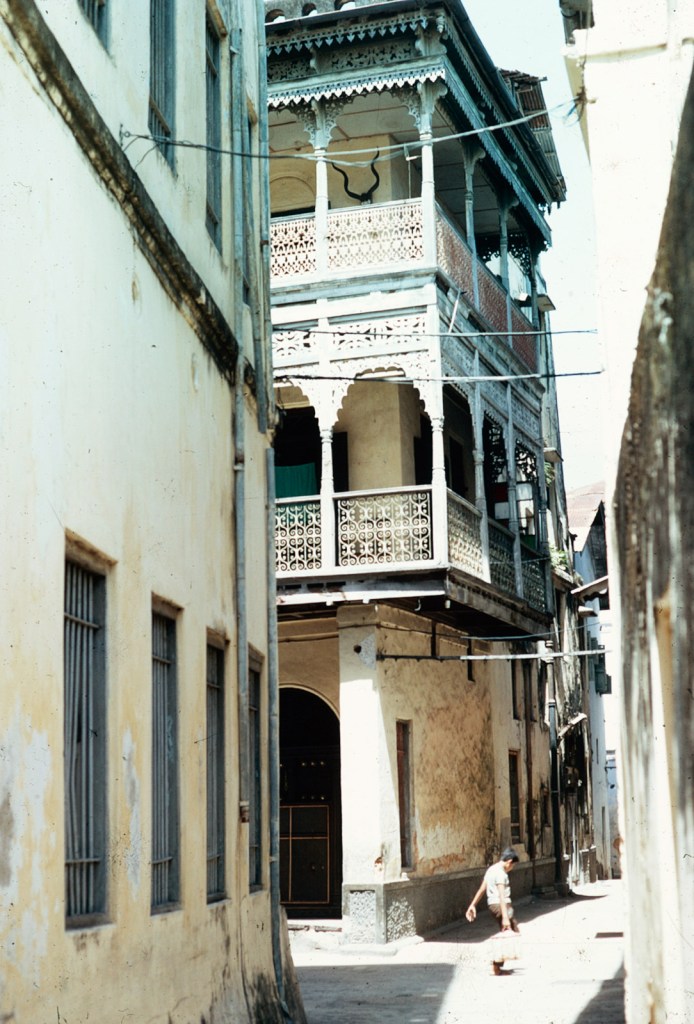
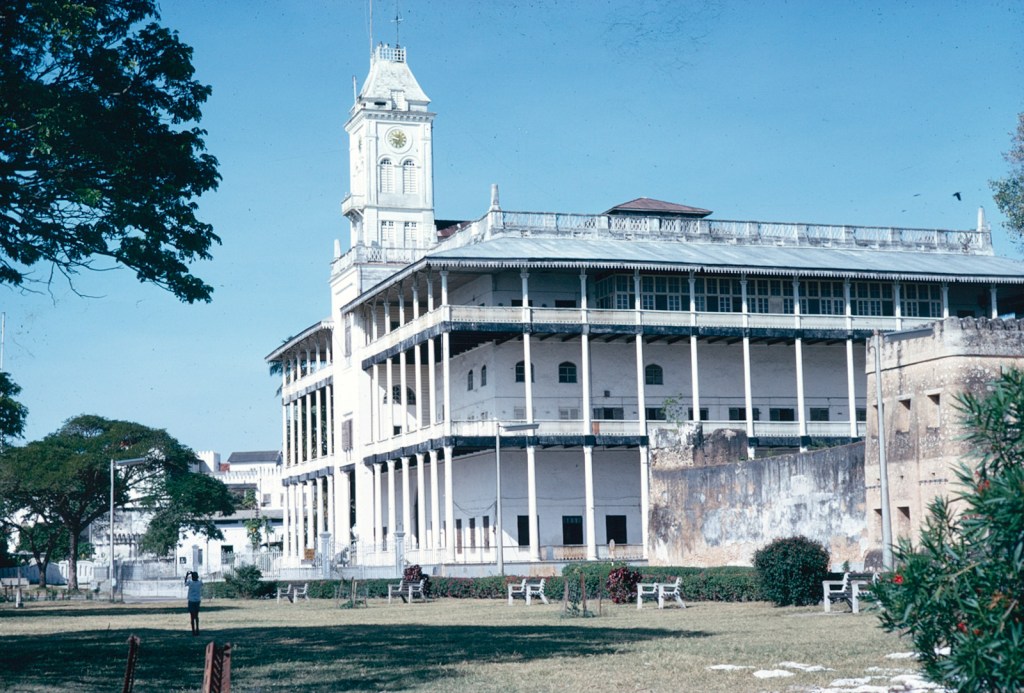
Of the architecture and buildings, far fewer houses have fallen down and have been replaced than I imagined. Some are heaps of ruins – some are being rebuilt – others replaced. The UNDP has a project for refurbish the old town…the existing houses on the whole are unwhitewashed and dingy but I suppose are a reflection of what Zanzibar was like before the tidy colonialists imposed their stamp. Many fine doors still stand, in quite good condition. `
 Travels with my mother